CAITLIN JENKINS:In my job I use a sponge.
CAITLIN JENKINS:Modelling tools.
CAITLIN JENKINS:I use lots of clay.
CAITLIN JENKINS:Can you guess what my job is?
CAITLIN JENKINS:My name is Caitlin Jenkins and I'm proud to be a potter.
NARRATOR:'A potter is a craftsperson who works with clay to make pottery. Such as vases, bowls or jugs.'
NARRATOR:'The job of a potter has been around for thousands of years.
NARRATOR:'And basic machinery has quickly developed to help potters do their work.
NARRATOR:'Like this potter's wheel that was invented over six thousand years ago. In Ancient Sumer.'
NARRATOR:'The job remained the same until a few hundred years ago
NARRATOR:'when machinery once again changed things.
NARRATOR:'Josiah Wedgwood was born in 1730. By the age of nine was showing great skill as a potter. His days at the potting wheel came to an end when he lost a leg to a disease called smallpox.'
NARRATOR:'So Josiah came up with a new way of making pots and was one of the first people to use large factories to make many pots at once.
NARRATOR:'His new approach made him very rich and famous and his methods are still used by some potters today.'
NARRATOR:'Caitlyn is at work in her studio in Wales.
NARRATOR:'Her family has been making pottery in the village of Ewennyfor hundreds of years.'
NARRATOR:'Ben has come to find out more about what she does in her job.'
BEN:Why was the pottery located in Ewenny?
CAITLIN JENKINS:Because the clay was here and we need the clay to make the pots.
BEN:How long has it been here?
CAITLIN JENKINS:It's been here a very long time, hundreds of years. The earliest records we know of is 1427.
BEN:How has pottery making changed since it first started?
CAITLIN JENKINS:Well today we use electric to power machinery.
CAITLIN JENKINS:They would have used coal to fire the kilns.
CAITLIN JENKINS:And with the wheel…
CAITLIN JENKINS:They would have used a kick wheel.
CAITLIN JENKINS:They would have kicked the pedal down the bottom of the wheel. To power this wheel up here, they would have just kept on kicking.
NARRATOR:'As technology advanced it became even easier to make pottery cheaply using moulds and machines.'
NARRATOR:'However some people still believe making pottery was a craft and not a process.'
NARRATOR:'In 1920, Bernard Leach opened a studio in St Ives Cornwall. Where he became famous for his pottery.'
NARRATOR:'He believes that pottery should be hand crafted by artists. Rather than mass produced in factories.'
BERNARD LEACH:'The pottery stands for an idea and a tradition. Which I want to keep alive.
BERNARD LEACH:'It would be my hope that others would enter into its spirit. So this idea should survive.'
NARRATOR:'Bernard felt that making pottery was not just about what the finished object would be used for.
NARRATOR:'For Bernard the job of a potter was also about being an artist.'
NARRATOR:'It takes great skill and practice to be a potter and the items you make can last for hundreds of years.'
NARRATOR:'Who will be the next master potter to create a word famous and collectable design?'
BEN:If I were a potter I would make jugs. Because I would like to see how the process is done. And I think I would enjoy it.
Video summary
Schoolboy Ben meets potter Caitlin Jenkins at her studio in south Wales, to find out more about her job. Pottery has been made in the town of Ewenny since at least the 1400s, because of the clay found there.
A timeline shows the craft of pottery going back 6000 years.
Caitlin explains how electricity has changed the equipment she uses for her job.
We focus on Josiah Wedgwood, who revolutionised pottery-making in Staffordshire during the Industrial Revolution, by creating mass production methods that made pottery much cheaper.
His approach is compared with 20th Century artisanal potter Bernard Leach, who believed pottery should be artistic as well as functional.
Teacher Notes
Key Stage 1:
For History the clip helps address the lives of significant individuals in the past who have contributed to national and international achievements.
Some could be used to compare aspects of life in different periods.
They could produce a simple zigzag book in the shape of a vase with the three different periods of history and record the significant people and developments of the pottery industry.
For Art and Design - there is the KS1 requirement to be taught about the work of a range of artists, craft makers and designers, describing the differences and similarities between different practices and disciplines, and making links to their own work.
Pupils could look at the examples of pottery images on the timeline and discuss the differences and their preferences.
They could have a go at making their own pottery – thinking what they would design, like Ben does, justifying their choice.
Key Stage 2:
History – look at the pottery produced by the earliest civilisations which they study – the first potter’s wheel was invented in Ancient Sumer and it was this which led to the invention of the wheel when someone had the inspiration to turn the potter’s wheel on its side.
Debate whether this was the greatest invention of all time. Look at further developments in pottery in Ancient Egypt and Greece, where pottery was used to tell stories and depict events as decorative art as well as functional.
Art and Design - The children could design their own vase to depict an event in the style of Ancient Greek Vases or Wedgewood thinking of the Art design process rather than just its function, in line with the views of Bernard Leach.
Children are required in Art and Design to be taught about great artists, architects and designers in history. The children could follow up by looking at an artist currently at work in their studio and compare with artists from earlier times in the same way.
They could produce a presentation or PowerPoint using various sources of information such as photographs, interviews and images. They would then apply their historical skills in investigating the earlier artists, using their own perspective and judgement.
This clip will be relevant for teaching History, Art and Design and Modern Studies (careers) at KS1 and KS2 in England, Wales and Northern Ireland and 1st and 2nd Level in Scotland.
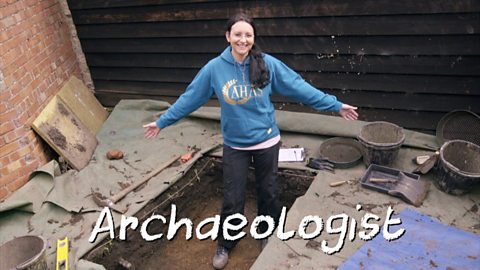
Proud to be an archaeologist. video
Schoolgirl Fayth meets archaeologist Pauline Carroll on the site of an archaeological dig in Oxfordshire.
Proud to be an architect. video
Schoolgirl Jenna interviews architect Arthur Timothy at Hay's Galleria in London - a building he designed.

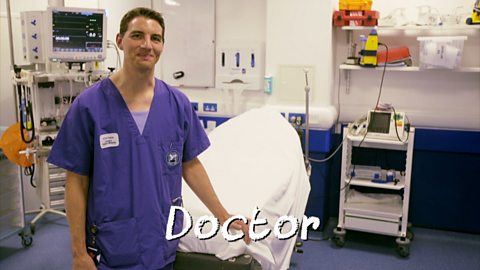
Proud to be a doctor. video
Schoolboy Lakshya visits the Edinburgh Royal Infirmary to interview Dr. Dave Caesar about his job.
Proud to be an inventor. video
Schoolgirl Ella interviews inventor Ben Board about his invention of an inflatable tube to save lives at sea.

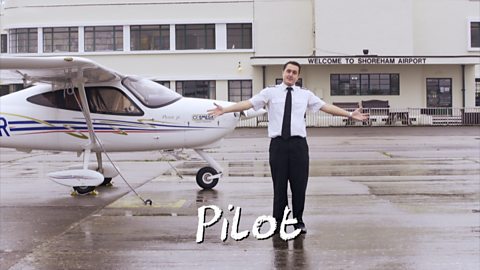
Proud to be a pilot. video
Schoolgirl Ayesha meets pilot Rob Billington at Brighton City Airport to learn about what it takes to become a pilot.
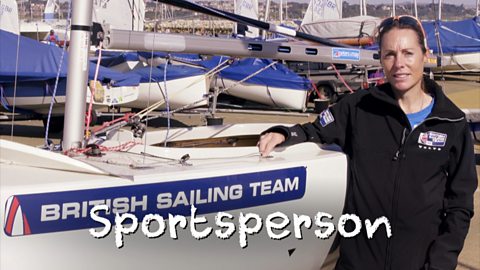
Proud to be a Sportsperson. video
Schoolboy Oscar meets Paralympic gold medallist Helena Lucas, to find out about her job as a competitive sailor.