Ben:In my job, I use machinery.
MACHINE NOISE
Ben:Computer aided design.And imagination.Can you guess what my job is?
Ben:My names Ben Board and I'm proud to be… An inventor.
Narrator:The job of an inventor can vary greatly. And is usually linked to other jobs such as an artist an engineer or a designer.
Narrator:They use maths, science and technology to think up solutions to practical problems. And create things to help make our lives easier.
Narrator:Every object that you use today is likely to be developed by an inventor.
Narrator:The ideas behind some modern inventions were first thought up hundreds of years ago.
Narrator:Leonardo da Vinci lived in Italy over 500 years ago. Most famous for his art including the Mona Lisa he was also a brilliant scientist, engineer and inventor.
Narrator:He had the vision to dream up ideas for cars, helicopters and diving apparatus. Long before it was possible to build them.
Narrator:Ben is an inventor.
Ben:And you see the switch on the top of the pump there?
Ella:Yep.
Ben:If you just want to switch that on?
Narrator:Ella has come to meet him to find out more about his job.
INFLATING SOUND
Ella:I've heard about your invention, can you explain what it is?
Ben:Yes we've had to invent and manufacture an inflatable tube to help save lives at sea.
Ella:Was it easy to think of a name?
Ben:It was easy to think of a name because… When we designed and built it we realised it would take 100 people and the word "centi-" means 100 and it floats so "CentiFloat" is what we came up with.
Ella:What invention are you most impressed with from history?
Ben:Well I'd have to go with the aeroplane on that one. The amazing thing about the aeroplane is that it's come on a long way in the last 100 years and can carry people all over the world to new places and see new things. So yeah the aeroplane I would say.
Narrator:The job of an inventor isn't always to build things.
Narrator:It is often about having the imagination to think of new things that will benefit all of us in the future.
Narrator:In 1966 an American nurse named Marie Van Brittan Brown came up with a new idea for a new type of security system with her husband Albert.
Narrator:Brown's invention was officially recognised in 1969.
Narrator:The paperwork calls it a home security system utilizing television surveillance.
Narrator:It was an early form of CCTV.
Narrator:Even though security cameras are very common today. Back then the Browns were unable to find anybody willing to take a chance on them and buy their idea.
Narrator:An inventors imagination and creativity has the power to change the word.
Narrator:Who will come up with the next great idea that we won't be able to live without?
CentiFloat presenter:Called a "CentiFloat" it's a 16 metre long rubber tube with grab handles. When a migrant boat capsizes passing ships can throw it to those in the water as they wait for a rescue vessel.
Ella:Being an inventor is not easy and you just have to work hard.
CentiFloat presenter:It's already in use, here helping to save hundreds of lives in The Med last month.
Ella:And if you put the effort in it'll hopefully turn out how you pictured it.
Video summary
This short film, first published in 2016, is for teachers and review is recommended before use in class.
Schoolgirl Ella interviews inventor Ben Board about his invention of an inflatable tube to save lives at sea.
An animated timeline helps us visualise the development of inventions through the centuries, from Ancient Greece onwards.
We focus on Leonardo Da Vinci, who lived over 500 years ago and designed cars, helicopters and diving equipment centuries before they could be made.
We also hear about American Marie van Brittan Brown, who designed an early version of CCTV, highlighting how invention is a process and sometimes it takes a lot of time and hard work for ideas to be recognised and accepted.
Teacher Notes
Key Stage 1:
In History, there are inventors listed in the non-statutory examples under the lives of significant individuals in the past who have contributed to national and international achievements. e.g. William Caxton and Tim Berners-Lee and there are links to these in the film.
It is required that “Some should be used to compare aspects of life in different periods.” Look at some inventions through time and notice how the inventions reflect big changes in lifestyle.
The children could produce a class museum with real artefacts on loan from museums. This also could be used to link to the Key Stage 1 unit changes within living memory.
Where appropriate, these should be used to reveal aspects of change in national life. Parents, grandparents and even great-grandparents could be interviewed about the inventions that made a massive difference to their lives. E.g. how mobile phones changed the need for the telephone box on the corner of the street, or the need to have a house landline phone.
The children could look at inventions that made a change in the kitchen or in entertainment in the home.
Design and Technology –one of the KS1 requirements is to design purposeful, functional, appealing products for themselves and other users based on design criteria. Could they use their imagination and design a new item to solve a problem of daily life and invent a name for it?
Key Stage 2:
In line with Black History month, pupils could consider and discuss the issue of why the Black inventor of early home security system, a nurse named Marie Van Brittan- Brown, could not get the backing of sponsors who were willing to take a chance in developing their ideas. They could look at other Black inventors or women inventors who challenge the stereotype or misconception that inventors are middle aged, white and male.
History – inventions could be the whole theme of a study of an aspect or theme in British history that extends pupils’ chronological knowledge beyond 1066.
Children could produce a balanced argument on what they think is the most important invention of all time and justify, saying why they believe this invention has changed the world.
Design and Technology – in Key Stage 2 they are required to understand how key events and individuals in design and technology have helped shape the world._
The children could start by discussing the chosen inventions in the film and then start to debate which other inventions could have been selected instead. Key Stage 2 pupils are required to be taught about great artists, architects and designers in history.
Maths, Science, Design and Computing:
Discuss how all these subjects are applied to the work of an inventor. Can they list other jobs that depend upon the application of knowledge and skills in these subjects?
The purpose would be to embed the importance of the relevance of what they are learning in subjects now. Applied to their future ambitions it underpins why they have to work hard in these subjects.
This clip will be relevant for teaching History and Modern Studies (careers) at KS1 and KS2 in England, Wales and Northern Ireland and 1st and 2nd Level in Scotland.
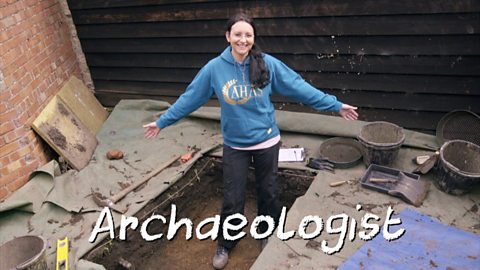
Proud to be an archaeologist. video
Schoolgirl Fayth meets archaeologist Pauline Carroll on the site of an archaeological dig in Oxfordshire.
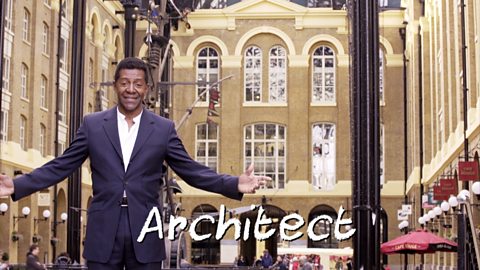
Proud to be an architect. video
Schoolgirl Jenna interviews architect Arthur Timothy at Hay's Galleria in London - a building he designed.
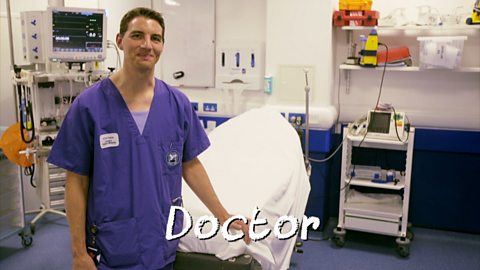
Proud to be a doctor. video
Schoolboy Lakshya visits the Edinburgh Royal Infirmary to interview Dr. Dave Caesar about his job.
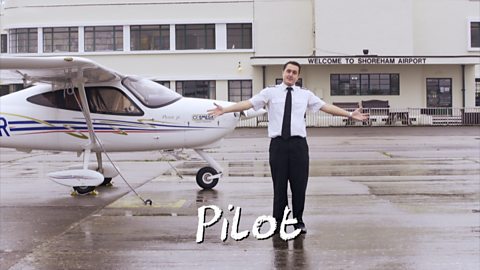
Proud to be a pilot. video
Schoolgirl Ayesha meets pilot Rob Billington at Brighton City Airport to learn about what it takes to become a pilot.
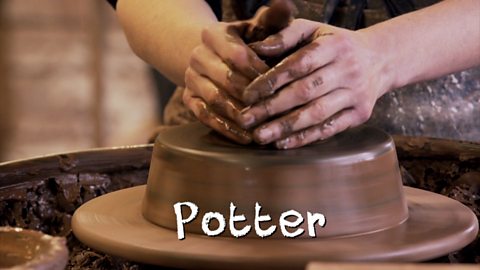
Proud to be a potter. video
Schoolboy Ben meets potter Caitlin Jenkins at her studio in south Wales, to find out more about her job.
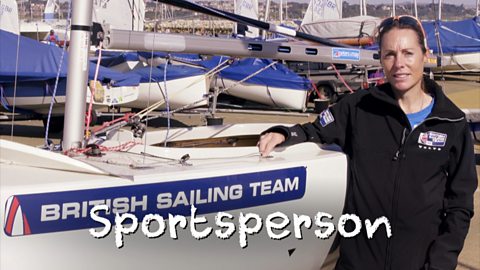
Proud to be a Sportsperson. video
Schoolboy Oscar meets Paralympic gold medallist Helena Lucas, to find out about her job as a competitive sailor.