Pauline:In my job I use a sieve.A trowel.Gloves.Can you guess what my job is?
Pauline:My names Pauline Carol and I'm proud to be… An archaeologist.
Narrator:An archaeologist is somebody who looks at ancient sites and objects to learn about the past.
Narrator:They use tools to carefully trowel or brush the layers of soil away.
Narrator:They are looking for clues or evidence about how people like us used the live a long time ago.
Narrator:Archaeology first became popular in the 1700's.
Narrator:It quickly caught on and many exciting discoveries were made all around the world.
Narrator:Augustus Pitt Rivers was one of the first archaeologists.
Narrator:He made a system of ordering what he found, from the oldest to the newest to discover how things had changed over time. His methods were widely copied and are still used today.
Narrator:Pauline is digging at an archaeological site in Oxfordshire.
Narrator:Faith has come to find out more about what she does in her job.
Pauline:Oh wow!
Pauline:Look what you've found, some more of that clay pipe.
Faith:I found clay.
Pauline:Yay!
Pauline:How special is that?
Faith:What inspired you to become an archaeologist?
Pauline:Well when I was about your age, I was in the garden and I used to find pieces of clay pipe just like this one. And if you look closely on the clay pipe. You can see the letters "I.N.G" "F.O.R.D". And that's spelling out "Wallingford".
Pauline:So we know it was made right here in the place where you're visiting. So just from a little piece of clay pipe like that inspired me to do what I love and what I do today.
Faith:What is the most mysterious… Mystery you have come across?
Pauline:Well I live in Leicester. And in Leicester, we dug a car park three years ago. And in that car park we found a very, very famous king. King Richard III.
2500:02:35:05 00:02:38:04Pauline:So it was very, very special and very, very important.
Narrator:In 1922 a British archaeologist named Howard Carter discovered the 3,000 year old tomb of the Egyptian king Tutankhamun.
Narrator:His discovery sparked huge excitement and interest in the history of ancient Egypt.
Howard Carter:As the last stone was rolled back. A gasp of wonderment escaped our lips. So gorgeous was the sight… That met our eyes.
Howard Carter:A golden effigy of the young King of magnificent workmanship filled the whole of the interior.
Narrator:Through their work an archaeologist can open a window to the past.
Narrator:What secrets still remain hidden below the surface?
Narrator:When will they be uncovered?
Narrator:And who will find them?'
Pauline:You see your piece of clay pipe?
Pauline:OK?
Faith:Mhmm.
Pauline:And you remember I told you it would have been very, very long?
Pauline:This is what it would have looked like.
Faith:If I was an archaeologist I would be looking for stuff that I saw today like charcoal and that pipe.
Video summary
Schoolgirl Fayth meets archaeologist Pauline Carroll on the site of an archaeological dig in Oxfordshire.
An animated timeline shows how archaeology has developed over the centuries, and Pauline tells Fayth about her job now, which has included working on the discovery of Richard III's skeleton in Leicester.
Augustus Pitt Rivers' work on creating a system to order objects found from oldest to newest is explored. We see and hear archive of the discovery of Tutankhamun's tomb in 1922.
Pauline shows Fayth how a piece of pipe she dug out of the ground would have looked when it was complete.
KS1 children will be inspired to see how you can dig up History to discover exciting things about the past. There is also the chance to revise the names of the 7 continents of the world.
This will support KS2 children with their work on prehistory and how discovery of artefacts help to form our understanding of the past.
It often is difficult to take children onto an archaeological site but this will transport them and would inspire writing about the excitement of discoveries.
Teacher Notes
Key Stage 1:
History - Helps to address the lives of significant individuals in the past who have contributed to national and international achievements. Some should be used to compare aspects of life in different periods. Look at the dress and equipment of the archaeologists through time. The tools don’t change, but the clothes do.
The children could also be encouraged to dig an area in the school grounds to discover some things which could be “planted” beforehand. They could then place the objects in order from oldest to newest, looking for clues in the materials used, the age, style etc., just like Augustus Pitt Rivers did.
This would be an engaging starting point for some art and descriptive writing about their own history mystery of one or more of their “archaeological finds”. They could start with art – a detailed observational sketch of their find. Then find out the facts by looking closely for clues and if this doesn’t answer all their questions, they can then use e-learning to help. This process nicely spells out “Artefact”.
This could be linked to the current theme in History – whether linked to changes within living memory, events beyond living memory that are significant nationally or globally or significant historical events, people and places in their own locality.
Geography - the chance to re-visit, name and locate the 7 continents of the world as the map zooms into Africa and Egypt.
Key Stage 2:
History: When studying Ancient Egypt, the discovery of Tutankhamun’s tomb by Howard Carter is a memorable event. Hearing Carter describe the moment of discovery would be the stimulus for some descriptive writing in role, in the form of Carter’s diary or a newspaper report from the time.
Geography – the children could map the other significant global archaeological discoveries around the world, revising the names of the continents, linking to a range of the historical periods they have to study in KS2. If children are inspired to dig in their gardens or school grounds as part of a” learning outside the classroom” activity, then they are most likely to find clay pipe stems – a piece of which is found by the child interviewer.
Examples of complete clay pipes are shown and explained by the archaeologist – the inspiration for her becoming an archaeologist in the first place.
This clip will be relevant for teaching PSHE, Social Studies and History at KS1 and KS2 in England, Wales and Northern Ireland and 1st and 2nd Level in Scotland.
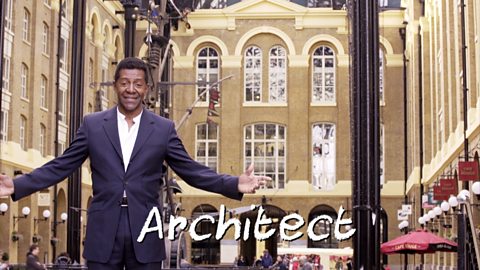
Proud to be an architect. video
Schoolgirl Jenna interviews architect Arthur Timothy at Hay's Galleria in London - a building he designed.
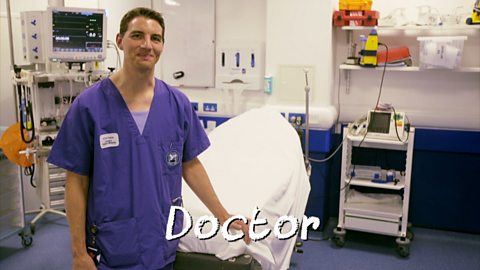
Proud to be a doctor. video
Schoolboy Lakshya visits the Edinburgh Royal Infirmary to interview Dr. Dave Caesar about his job.
Proud to be an inventor. video
Schoolgirl Ella interviews inventor Ben Board about his invention of an inflatable tube to save lives at sea.

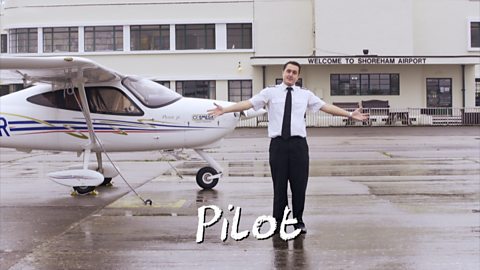
Proud to be a pilot. video
Schoolgirl Ayesha meets pilot Rob Billington at Brighton City Airport to learn about what it takes to become a pilot.
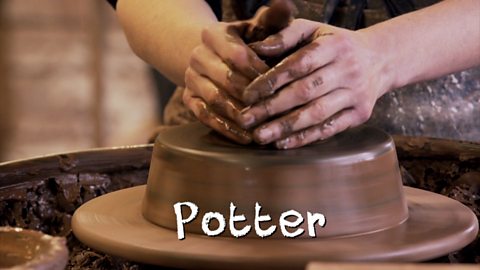
Proud to be a potter. video
Schoolboy Ben meets potter Caitlin Jenkins at her studio in south Wales, to find out more about her job.
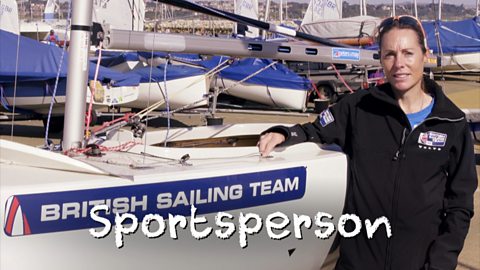
Proud to be a Sportsperson. video
Schoolboy Oscar meets Paralympic gold medallist Helena Lucas, to find out about her job as a competitive sailor.