DAVE CESAR:In my job, I use gloves.
DAVE CESAR:X-rays.
ELECTRIC BUZZING
DAVE CESAR:A stethoscope.
HEARTBEAT SOUND
DAVE CESAR:Can you guess what my job is?
DAVE CESAR:My name is Dave Cesar and I am proud to be… A Doctor.
NARRATOR:'A Doctor is somebody who looks after sick people and helps them get better.'
NARRATOR:'They use science to find out what's making their patient feel poorly and to decide the right treatment.
NARRATOR:'If medicine is needed they use maths to work out how much should be taken.
NARRATOR:'The job of a Doctor has been around since ancient times.
NARRATOR:'But it's a job that only men were allowed to do.
NARRATOR:'In Britain this changed in 1865. When Elizabeth Garrett became the first woman to qualify as a Doctor.
NARRATOR:'Many other Doctors were unhappy about her progress. Because they felt that only men we're smart and confident enough 'to do the job.
NARRATOR:'Elizabeth went on to set up her own Hospital in London And showed that both men and woman could be good Doctors.
NARRATOR:'Dr Dave works at this Hospital in Edinburgh.'
DAVE CESAR:This is one of our monitors that we use. So I'm going to put this on your finger. It doesn't hurt at all.
NARRATOR:'Lakshya has come to find out more about what he does in his job.'
DAVE CESAR:It measures the saturation of oxygen in your blood.
LAKSHYA:So, who or what inspired you to be a Doctor?
DAVE CESAR:Well, I always liked and was interested in how the human body worked. And I've been interested in people for a long time so the combination of those two things really led me down the path of becoming a Doctor.
LAKSHYA:My favourite colour is green. But why do surgeons wear green when they're doing a surgery?
DAVE CESAR:That's a very good question, I have no idea. You can see purple. So we can stand out from the crowd
DAVE CESAR:In the very olden days, surgeons used to wear their suit and that’s why there are buttons on the sleeve. So that they could undo their sleeves, roll their sleeves up so they wouldn’t get blood on their sleeves. That was what surgeons used to wear.
LAKSHYA:Right.
NARRATOR:'Medicine is a science that is constantly changing.'
NARRATOR:'In 1928 there was a big discovery of Medicine.
NARRATOR:'A Doctor named Alexander Fleming was working In his lab when he noticed some mould growing on a dish he was using to grow germs.
NARRATOR:'Completely by accident he had discovered one of the first antibacterial treatments that could be used as a medicine.'
ALEXANDER FLEMING:Penicillin have started a new line of research and we cannot yet foretell all the advantages which may come of it. Now already we have many benefits and we can hope for many more.
NARRATOR:'The job of a Doctor can be about helping people when they are sick.
NARRATOR:'But is also about finding new cures to help prevent illness.
NARRATOR:'What new treatments will be found to treat deadly diseases? And who will be there to look after us when we feel unwell?'
LAKSHYA:If I was to be a Doctor In the future I would make medicine that would be made out of paper. So that it would be cheap…
LAKSHYA:You could make it at home and it could be used for deadly diseases like Ebola, Heart Disease or Cancer.
Video summary
Schoolboy Lakshya visits the Edinburgh Royal Infirmary to interview Dr. Dave Caesar about his job.
We hear how an interest in the human body and people led him to choose medicine as a career.
An animated timeline tells us about doctors through the ages, and focuses on Elizabeth Garrett Anderson, the first woman to qualify as a doctor in Britain. We also hear how Alexander Fleming discovered penicillin by accident.
Teacher Notes
Key Stage 1:
Your class could produce a simple zigzag book to show the developments of medicine over time to start an understanding of chronology. It could be in the shape of an ambulance to link to the moving image on the timeline. They could stick pictures of the stethoscopes, gloves/gowns and other medical equipment, to show the changes through time on their timeline.
Key Stage 2:
Medicine could form part of the unit a study of an aspect or theme in British history that extends pupils’ chronological knowledge beyond 1066 or the timeline could be used to encourage children to find out more about the influence of the medical achievements of the period of history being studied. For instance when comparing the achievements of the four Ancient Civilisations look at the medicine beliefs of the Egyptians and the Ancient Sumerians, who were filling bad teeth by 3000 BCE. The Ancient Greeks started to use scientific observation and the work of Hippocrates led modern doctors to swearing the Hippocratic oath. The children could look at the impact of the Romans on public health and sanitation or the developments and understanding by Roman Doctors.
This clip will be relevant for teaching History and Modern Studies (careers) at KS1 and KS2 in England, Wales and Northern Ireland and 1st and 2nd Level in Scotland.
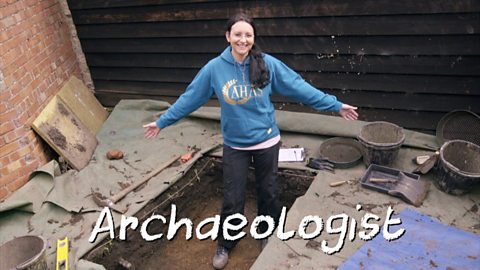
Proud to be an archaeologist. video
Schoolgirl Fayth meets archaeologist Pauline Carroll on the site of an archaeological dig in Oxfordshire.
Proud to be an architect. video
Schoolgirl Jenna interviews architect Arthur Timothy at Hay's Galleria in London - a building he designed.

Proud to be an inventor. video
Schoolgirl Ella interviews inventor Ben Board about his invention of an inflatable tube to save lives at sea.

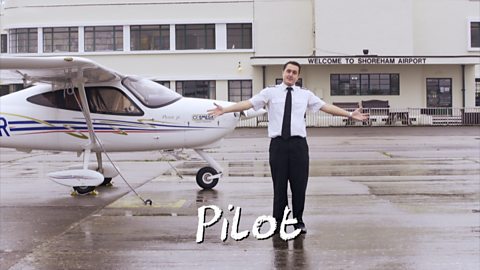
Proud to be a pilot. video
Schoolgirl Ayesha meets pilot Rob Billington at Brighton City Airport to learn about what it takes to become a pilot.
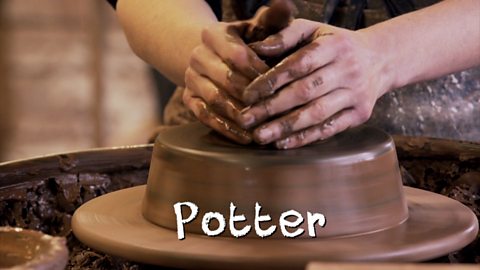
Proud to be a potter. video
Schoolboy Ben meets potter Caitlin Jenkins at her studio in south Wales, to find out more about her job.
Proud to be a Sportsperson. video
Schoolboy Oscar meets Paralympic gold medallist Helena Lucas, to find out about her job as a competitive sailor.