Arthur:In my job I use a computer.Drawings.Models.Can you guess what my job is?
Arthur:My name is Arthur Timothy and I'm proud to be an architect.
Narrator:An architect is somebody who designs and is in charge of making buildings.
Narrator:They also use maths to produce plans for their design. And science to make sure that it won't fall down when it's built.
Narrator:The job of an architect developed when the design of buildings became more complicated.
Narrator:One of the most famous architectural plans in history was to rebuild London following The Great Fire in 1666.
Narrator:Christopher Wren was a great architect working at this time. He was asked to help rebuild the city after the fire.
CHURCH BELLS
Narrator:The centrepiece of his design was the stunning dome of St. Pauls Cathedral which remains a landmark in modern London.
Narrator:Arthur is an architect. He designed this building… Hay's Galleria in London.
Arthur:And this has actually got the correct–
Narrator:Jenna has come here to find out more about his job.
Jenna:So Arthur why did you decide to become an architect?
Arthur:I decided to become an architect because I was very interested in art I liked drawing. And I also liked history. And then when I was at school I became interested in architecture. So It seemed to me to combine all the things that I was good at and that I really enjoyed.
Jenna:Has the way you design buildings changed since you started?
Arthur:Yes. When I started and when we actually designed this building we used to work on drawing boards with just pens and the drawing boards and set squares. And of course we now use computers and so you can produce information very quickly.
Arthur:And I think that’s one of the main benefits of the computers. But I still like drawing.
Jenna:Yeah, I like drawing too.
Arthur:It's great yeah.
Narrator:As time passed, new technology made it possible to bring more ambitious plans to life.
Narrator:It became possible to work with lots of new building material such as concrete, steel and glass.
Narrator:In 1984 the Chinese born architect I. M. Pei was asked to rebuild the entrance to one of the world's largest museums the Louvre in Paris.
Narrator:Influenced by the great pyramids in Egypt, he came up with the idea of creating a giant glass pyramid at ground level that would act as the roof for the underground entrance below.
Narrator:The job of the architect is not just about making things look nice. It's also about building things that people can use easily.
I. M. Pei:I remember when I went to the Louvre back in 1951. My first experience. There were only two little toilets in that huge museum. And you don’t find it. One simply did not find those things you know? So it didn’t function as a museum.
Narrator:Architects creates buildings that we all use. And it all begins with the drawings and designs they dream up.
Narrator:What great buildings will we see in the future? What will they be made from? And who will provide the inspiration?'
Jenna:If I were an architect I'd like to build something that really stands out and people would look at and go, "That's amazing".
Video summary
Schoolgirl Jenna interviews architect Arthur Timothy at Hay's Galleria in London - a building he designed.
We hear how his combined love of art and history led him to become an architect.
We see an animated timeline of the history of architecture, including Christopher Wren and the redesign of London after the Great Fire of 1666.
We also hear how architect IM Pei was commissioned to rebuild the grand entrance to the Louvre in Paris – and chose to create an enormous glass pyramid.
Teacher Notes
Key Stage 1:
History - Helps address the lives of significant individuals in the past who have contributed to national and international achievements. Some could be used to compare aspects of life in different periods.
As part of the study in History of events beyond living memory that are significant nationally or globally, the children will have probably looked at the Great Fire of London, so they could follow up with a study of Sir Christopher Wren, noticing how they can use the range of historical sources of information as seen such as the statue, building, plans etc.
Maths – look at and name the different solid or 3 dimensional shapes in buildings.
Science – through play and building with bricks or other modelling materials, investigate the scientific principles of buildings and bridges. How do they stay up and not fall down? How can we make the structures stronger? Which materials are used and why?
Key Stage 2:
History/ Art and Design – as part of their chronological study, it would be good to use this as a starting point to show how the designs of buildings have changed through time and how computers have made a difference.
Geography – locate some of the world’s most stunning buildings now and in the past on maps. There is a global map included as a starting point.
Maths – consider the narration: how and why Maths is important in the design of buildings. Collect Mathematical data on the size of buildings selected for the Geography activity above.
Design and Technology link - They could produce a simple fold out book based on a square-based pyramid to show the three different periods of history, in line with the images on the timeline and the design of the Louvre, but also include their own design idea for a building in the future, following up the final comments of the film. Like the architect, I. M. Pei, they could think of the limitations of a current building and show how they could improve the design of the building to meet current demand or issues.
This clip will be relevant for teaching PSHE, History and Modern Studies (careers) at KS1 and KS2 in England, Wales and Northern Ireland and 1st and 2nd Level in Scotland.
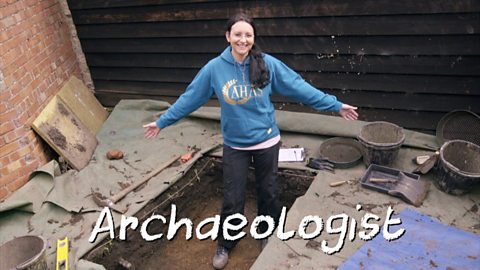
Proud to be an archaeologist. video
Schoolgirl Fayth meets archaeologist Pauline Carroll on the site of an archaeological dig in Oxfordshire.
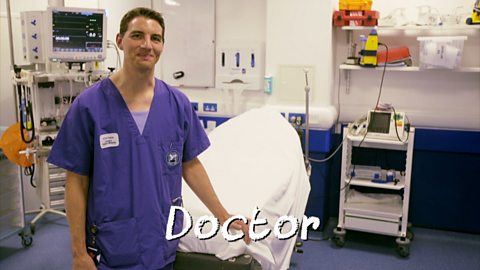
Proud to be a doctor. video
Schoolboy Lakshya visits the Edinburgh Royal Infirmary to interview Dr. Dave Caesar about his job.
Proud to be an inventor. video
Schoolgirl Ella interviews inventor Ben Board about his invention of an inflatable tube to save lives at sea.

Proud to be a pilot. video
Schoolgirl Ayesha meets pilot Rob Billington at Brighton City Airport to learn about what it takes to become a pilot.

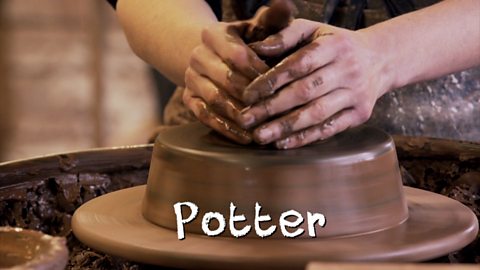
Proud to be a potter. video
Schoolboy Ben meets potter Caitlin Jenkins at her studio in south Wales, to find out more about her job.
Proud to be a Sportsperson. video
Schoolboy Oscar meets Paralympic gold medallist Helena Lucas, to find out about her job as a competitive sailor.