Professor Robert Bartlett:
King Richard the Lionheart had survived 10 violent years on the throne…but his luck ran out in France in the spring of 1199. While laying siege to the castle of a rebellious baron in his home duchy of Aquitaine, Richard was killed by a crossbow bolt.
His brother John was now the only surviving son of Henry Plantagenet and Eleanor, and quickly secured his coronation.But John’s teenage nephew, Arthur, also had a claim to the crown, and was supported by the King of France.In 1202, despite his youth, Arthur led an army into Anjou, hoping to capture Eleanor. John rushed there to free her…and it was Arthur who was taken prisoner.
No one is certain what happened to Arthur after that, but a contemporary chronicler claims that Arthur's own jailor told him of the boy’s fate.
According to him, John at first kept his 16 year old nephew a prisoner. But then one night after dinner when John was drunk and full of the devil, he went to Arthur's cell and killed him with his own hands. Then tied a huge stone around the corpse and tossed it into the river Seine.
King Philip of France refused to make peace with John until Arthur was handed over alive.He probably knew this was impossible.
One by one, Philip conquered John’s French domains.
Soon all that remained of his continental empire was Gascony.
With France lost, John was determined to tighten his grip on England.
He dispossessed barons who opposed him, and exploited his royal powers to accumulate vast personal wealth.John also resented Rome’s power in his realm, and in 1206 he refused to accept the pope's latest choice of archbishop.
In retaliation, the Pope deployed his most fearsome weapon – the Kingdom of England was placed under an ‘interdict’. This meant that all church services in England were suspended.The churches and cathedrals stood empty. No baptisms or marriages could take place in church. The dead could not be buried in churchyards. No church bells were heard in England… and this lasted 6 years. For believers in a so called “Age of Faith” this must have been deeply disturbing. But it made John rich.
Because John hit back by confiscating the clergy's lands and possessions.
The King and the Pope eventually came to terms. John would accept the Pope’s nominee as archbishop but he would keep all the money that he'd squeezed out of the church.
But John wanted even more money, to fund an army to win back the territories he had lost in France.His barons were not enthusiastic, so John began to bleed them dry, extracting what he needed through draconian taxes and exploiting the royal courts.He didn’t trust his barons, making them hand over family members as hostages.When one of his nobles, William de Braose, prepared to give up his sons, his wife remembered how the King had treated his own nephew.
William de Braose was the baron who had served as Arthur’s jailor. His wife shouted at him, “I will not hand over my boys to your lord, King John, because he foully murdered his nephew Arthur, when he should have kept him in honourable captivity.” The King’s reaction was savage: de Braose managed to escape to France, but John captured his wife and son and imprisoned them. He commanded that their food be stopped. After 11 days they were found starved to death. The son's cheeks had been eaten away by his ravenous mother.Plantagenet cruelty had sunk to new depths.
John's invasion of France failed. And in May 1215 many English barons renounced their allegiance to him and occupied London.
They demanded a settlement liberating the nobility from absolute royal power.
In desperation, John agreed to accept the demands they made.
The agreement was issued in a charter sealed at Runneymede.
Magna Carta – the Great Charter – is one of the most famous documents in English history.
Some of its clauses seem quite mundane, like the one fixing the level of death duties, but this was a royal power that John had exploited for financial gain. Other clauses have a more ringing tone.
Reads:“No free man shall be seized or imprisoned except by the lawful judgement of his peers and by the law of the land … to no one will we sell, to no one deny or delay right and justice.”
All the clauses are based on the idea that there is a right way of doing things - enshrined in Magna Carta as "the Law of the Land". And the most important thing was, that it bound both King and subject. Plantagenet dynastic ambition had provoked a new settlement between the monarchs and those they ruled.
Video summary
Using contemporary images and historical sites, Professor Robert Bartlett tells the story of the succession of King John in 1199.
He gives a brutal contemporary account of John’s alleged murder of his nephew Arthur, and uses a map to show the king’s loss of most of his French lands. He explains John’s quarrel with the Pope that led to England being put under an interdict from Rome in 1206, and how the king exploited this opportunity to take money and land from the church.
He suggests that John’s desire to raise money for war was the key point of conflict with his barons, and highlights the king’s treatment of William de Braose to show their lack of trust in him.
John’s revenge in apparently starving Braose’s wife and son to death in gruesome circumstances are recounted.
The king’s failed invasion of France and the barons subsequent occupation of London in 1215 are detailed, along with John’s desperate concession to sign the Magna Carta at Runnymede.
The significance of this contract between king and subject, which limited the king’s absolute power, established a law of the land and the right to justice, are discussed.
This clip is taken from the original BBC Two series, The Plantagenets.
PLEASE NOTE: THIS CLIP CONTAINS DESCRIPTIONS OF VIOLENCE THAT SOME PUPILS MIGHT FIND UPSETTING. TEACHER REVIEW IS RECOMMENDED PRIOR TO USE IN CLASS.
Teacher Notes
After viewing this clip, your pupils could study a version of the charter suitable for 14-16 year-olds and create their own version.
Alternatively, they might create one for their school balancing pupil rights and responsibilities against those of their teachers.
Pupils could identify the clauses most significant for limiting the royal power and enshrining the nobles' rights. Then, they could consider how far the charter was a liberation for all English people at the time.
This clip will be relevant for teaching history at KS4 / GCSE in England, Wales and Northern Ireland and National 4, National 5 and Higher in Scotland.
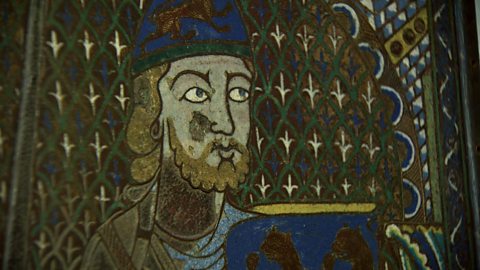
The rise of the Plantagenets. video
This clip explains how the marriage of Princess Matilda to a French duke founded the 331-year-long Plantaganet dynasty. Following a civil war with King Stephen, their son Henry II ruled vast lands in England and France.
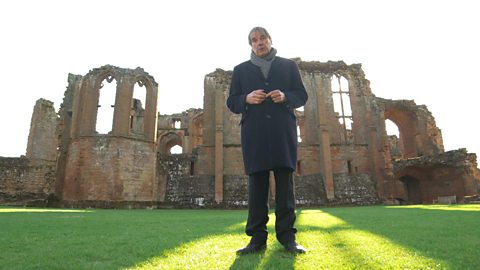
The birth of parliament. video
This clip explains how De Montfort’s Parliament of 1265 laid the foundations for the two houses of our modern Parliament.
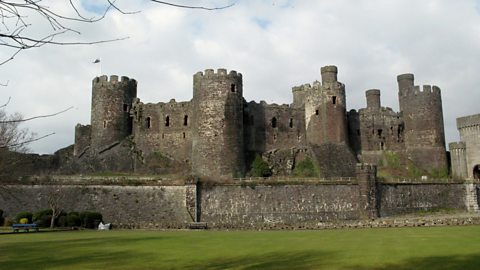
Edward I, the Welsh and the Scots. video
This clip explores Edward I of England’s determination to take control of the whole of Britain, how he achieved this in Wales, but failed to do so in Scotland.
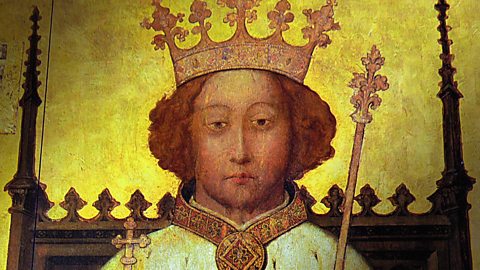
The Peasants' Revolt. video
This clip explains how an unpopular new tax led to the greatest uprising in the history of Medieval England, the Peasants' Revolt of 1381, and how young Richard II defused it.
The fall of the Plantagenets. video
This clip explores the battle for supremacy between two branches of the Plantagenet family during the Wars of the Roses, and the events that led up to the death in battle of Richard III, the last Plantagenet king.