Professor Robert Bartlett:
In the Summer of 1381, thousands of armed peasants stormed London.
They set fire to palaces and property.Nobles, lawyers and foreigners were hunted down and killed.This became known as "The Peasants' Revolt" the greatest uprising in the history of Medieval England.The Plantagenets were confronted by the most serious threat the lower classes had ever posed to royal power
And sitting on the throne was a boy king. Richard II had been crowned 4 years earlier at the age of 10. He was forced to flee from his own subjects.
Richard was just 14 years old. He sought refuge here in the Tower of London. It must have been terrifying as he looked out from the top of a turret to see his capital engulfed in flames. And everyone looked to him to bring an end to the violence.This was the first real test of his kingship.
A new tax had triggered the riots. It was levied in the name of the king to pay for the Plantagenet’s war against the French monarchy.It was a "poll tax", imposed on every man and woman over the age of 14 - regardless of income.It inflamed resentment against the great inequalities in Medieval society.
According to the chronicler Henry Knighton, the rebels outside were demanding that ‘every man in the kingdom of England should be free and remain free of the yoke of servitude forever’.A particular target of their hostility was the boy-king's inner circle, the councillors who had been ruling on his behalf.These powerful officials were responsible for levying the reviled poll tax. And they would face the wrath of the rebels.
One of the king’s closest advisors, and his chancellor, was Simon Sudbury, the Archbishop of Canterbury. In terror he'd also taken refuge in the Tower.On the third day of rioting he was here in St John's Chapel praying for his life. The insurgents broke in and seized him along with the king’s treasurer.
Their heads were hacked off and paraded through the city on pikes.
On the fourth day, in a bid to end the riots, Richard rode out to negotiate with the rebels.
Some open ground here just outside the city walls was chosen for the meeting. A place called "Smooth Field" or Smithfield used for tournaments, fairs and festivals. The king was meeting the people on their own territory. This was a promising start.But with the royal forces vastly outnumbered by the rebels Richard was placing himself in a perilous position.
The peasants’ leader was called Wat Tyler. He approached the king and repeated the demands for freedom and equality.The king agreed.But then a scuffle broke out. Tyler lashed out with his dagger. And the mayor of London plunged his sword into Tyler’s neck.
These are the gates of the priory that stands on the edge of Smithfield. Just behind me was where Wat Tyler was stabbed and was seen to fall from his horse.The rebels drew their weapons to avenge him. At that moment the future of the Plantagenet dynasty hung in the balance.But Richard took the initiative. He spurred his horse forward into the crowd and pledged: “I will be your king, your captain and your leader’.
The mood changed.With the added assurance of a charter granting the rebels pardons and freedom, they began to disperse.But any hopes for the future were dashed when the boy king later reneged on his promises. The leaders of the rebellion were rounded up and Richard proclaimed, “You will remain in permanent bondage, not as it was before, but incomparably harsher.”The peasant’s revolt had failed.
Video summary
How an unpopular new tax led to the greatest uprising in the history of Medieval England, the Peasants' Revolt of 1308, and how young Richard II defused it.
Professor Robert Bartlett tells the story of how thousands of armed peasants stormed London in protest against the king’s poll tax, attacking property and people in power. Contemporary images and records are used to illustrate the narrative and deepen understanding.
We hear the rioter’s demands for freedom and equality for all Englishmen.
We see the Tower of London, where the 14-year-old Richard II took refuge, and see St John’s Chapel where the rioters' attacked and beheaded the Archbishop of Canterbury Simon Sudbury and the king’s treasurer.
We hear how the king’s attempt to make peace with the rebels at Smithfield nearly failed because of the murder of the rebel leader Watt Tyler.
We hear how the king pacified the rebels with promises he later broke, allowing Plantagenet power to continue unchecked.
This clip is taken from the original BBC Two series, The Plantagenets.
Teacher Notes
You could use this clip to stimulate a performance roleplay of the revolt, with different groups of pupils selecting different aspects of the revolt.
Pupils could then perform to the wider group before peer assessing each other's performance.
After viewing the clip, pupils could assess the significance of this threat to Plantagenet power alongside other threats.
These should include Magna Carta, Simon De Montforte, and the War of the Roses, before reaching a balanced judgement as to which was the biggest threat to their power and why.
This clip will be relevant for teaching history at KS4 / GCSE in England, Wales and Northern Ireland and National 4, National 5 and Higher in Scotland.
The rise of the Plantagenets. video
This clip explains how the marriage of Princess Matilda to a French duke founded the 331-year-long Plantaganet dynasty. Following a civil war with King Stephen, their son Henry II ruled vast lands in England and France.
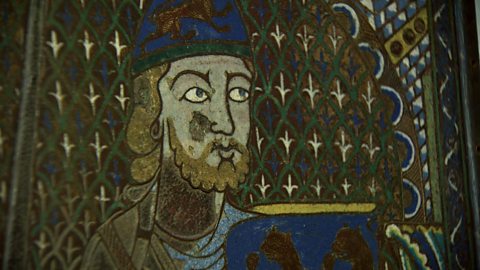
Magna Carta. video
Magna Carta is one of the most famous documents in British history. This clip explains how King John’s conflicts with his barons led to them demanding he sign a document limiting his absolute power.
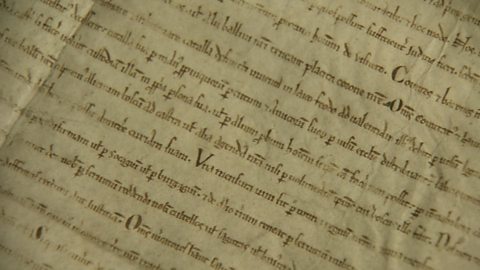
The birth of parliament. video
This clip explains how De Montfort’s Parliament of 1265 laid the foundations for the two houses of our modern Parliament.
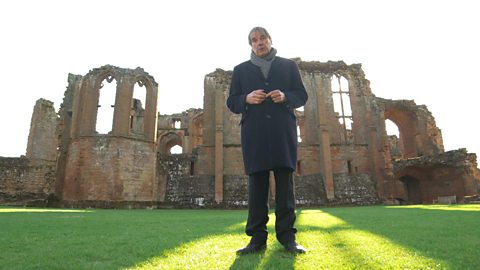
Edward I, the Welsh and the Scots. video
This clip explores Edward I of England’s determination to take control of the whole of Britain, how he achieved this in Wales, but failed to do so in Scotland.
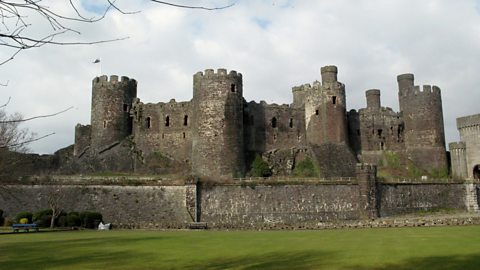
The fall of the Plantagenets. video
This clip explores the battle for supremacy between two branches of the Plantagenet family during the Wars of the Roses, and the events that led up to the death in battle of Richard III, the last Plantagenet king.