Professor Robert Bartlett:
The story of England's longest reigning dynasty begins here in Anjou, Western France.
In 1128 an enraged princess arrived here. Her name was Matilda and she was the only surviving legitimate child of King Henry I of England and his acknowledged heir. Her father had commanded her to marry a 15 year-old boy, Geoffrey, the eldest son of the Count of Anjou.
King Henry hoped the arranged marriage at Le Mans Cathedral would produce a male heir, who would ultimately become Count of Anjou…Duke of Normandy…
and… King of England.
Things didn't go according to plan. Both Geoffrey and Matilda were proud and quarrelsome people, and after a tumultuous year they separated. But this was above all a political union and a reconciliation was soon imposed. Matilda rejoined her teenage husband and performed her royal duty: giving him three sons in three years. This ended any doubts about the succession and also laid the foundations of a powerful new dynasty.
Geoffrey was an energetic, intelligent man with golden-red hair.He also had a nickname, that comes from the Latin for the broom plan: planta genista…“Plantagenet”.
No one knows for certain why Geoffrey was called "Plantagenet". One theory is that it’s because he wore a sprig of the plant in his hat.
But in any case for over 300 years none of his descendants bore the name. Kings don’t need surnames. But it’s proved a useful label for historians to describe that long line of monarchs who descended from Matilda and the young Geoffrey of Anjou.
King Henry I had named Matilda his heir. But when he died in 1135 the English throne was seized by Matilda's cousin: Stephen.
The Plantagenets fought back. Geoffrey led a successful invasion of Normandy, which had been part of Henry I’s dominions, while Matilda crossed the channel to claim her crown. This started almost two decades of civil war. Government virtually collapsed and England descended into a period of bloody conflict often called simply "The Anarchy".
Geoffrey and Matilda’s eldest son, Henry, inherited his parent’s claim to the English throne and much of Northern France.
As a young man he was granted Normandy.
Later he inherited Anjou.
Then by marrying the greatest heiress in Europe, Eleanor of Aquitaine, he took control of one of the most powerful Duchies in France.
Henry now set his sights on winning the greatest prize of all:the English crown.
Crossing the Channel with a small army Henry found England devastated by nearly two decades of civil war between Stephen and Matilda’s supporters.
His arrival persuaded many barons to join the Plantagenet cause.
Henry’s and Stephen's armies confronted one another here at Wallingford Castle. A contemporary chronicle, the 'Gesta Stephani' describes what happened next.
“It was a terrible thing to see so many armed men with drawn swords, ready to kill their relatives and fellow countrymen.And so the chief men on each side shrank in horror from civil war…and the destruction of their kingdom.”
Because the two armies refused to fight, Henry and Stephen were forced to talk. According to the chronicles, they met outside the castle one on either side of the stream. Eventually they reached an agreement:
King Stephen would continue to rule but he recognised Henry as his lawful heir.The very next year, Stephen was seized by “a terrible pain in the gut and a flow of blood.”
The King was dead.The negotiations that began here would lead to more than three centuries of Plantagenet rule in England.
On the 19th December 1154, Henry the Second became the first Plantagenet king of England.This French speaking monarch now ruled a vast empire that stretched from the Scottish borders…to the Pyrenees.
But keeping hold if it would involve intrigue, murder and bloody warfare….
Video summary
Professor Robert Bartlett travels to western France, to see the castle where Princess Matilda of England came to be married to Geoffrey of Anjou in 1128, founding the 300 year long Plantaganet dynasty.
We see a tapestry image of Geoffrey, and hear how his nickname later led to his family being described as Plantaganets.
Professor Bartlett details how Matilda’s cousin Stephen seized her throne, starting the 20-year civil war known as “the anarchy”.
We see a map of the vast regions of France controlled by Matilda and Geoffrey’s son Henry, mostly acquired by his advantageous marriage with Eleanor of Aquitaine.
We see the ruins of Wallingford Castle in Oxfordshire where Henry and Stephen’s armies met for battle and, using re-enactment and contemporary accounts, how they decided to make peace instead, with Henry becoming Stephen’s heir. Henry II’s vast kingdom stretching from the Scottish borders to the Pyrenees is detailed.
This clip is taken from the original BBC Two series, The Plantagenets.
Teacher Notes
After watching this clip, your pupils could act as chroniclers of the meeting of Stephen and Henry at Wallingford Castle, recording their own interpretations of what perhaps was said at the meeting.
Pupils could create a family tree to analyse the relationships of the key figures who established the Plantagenet dynasty.
This clip will be relevant for teaching history at KS4 / GCSE in England, Wales and Northern Ireland and National 4, National 5 and Higher in Scotland.
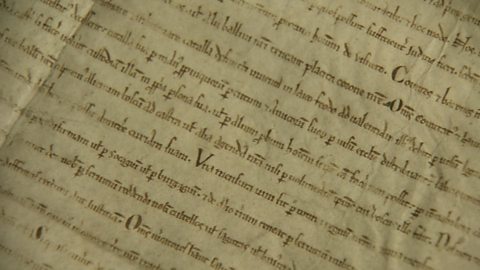
Magna Carta. video
Magna Carta is one of the most famous documents in British history. This clip explains how King John’s conflicts with his barons led to them demanding he sign a document limiting his absolute power.
The birth of parliament. video
This clip explains how De Montfort’s Parliament of 1265 laid the foundations for the two houses of our modern Parliament.

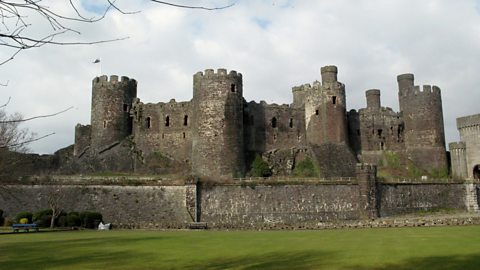
Edward I, the Welsh and the Scots. video
This clip explores Edward I of England’s determination to take control of the whole of Britain, how he achieved this in Wales, but failed to do so in Scotland.
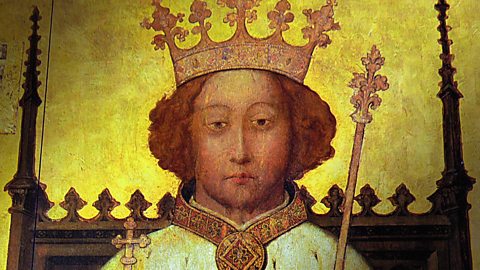
The Peasants' Revolt. video
This clip explains how an unpopular new tax led to the greatest uprising in the history of Medieval England, the Peasants' Revolt of 1381, and how young Richard II defused it.
The fall of the Plantagenets. video
This clip explores the battle for supremacy between two branches of the Plantagenet family during the Wars of the Roses, and the events that led up to the death in battle of Richard III, the last Plantagenet king.