Professor Robert Bartlett:
Henry III was nine years old when he became the fourth Plantagenet king of England. The French dynasty had ruled England and much of France for 50 years.
But Henry's father, King John, had lost most of the family's continental lands to the French king.Henry grew up to be a pious ruler, devoted to pilgrimage and prayer. But like his ancestors, Henry was determined to expand his empire.
Henry wasn’t a warrior king. But he could use the revenues of England to add to the Plantagenet dominions.The Pope was inviting Henry to purchase the rights to the kingdom of Sicily. And he couldn’t refuse the chance to add to the family’s lands. He accepted, on behalf of his younger son, Edmund.The only snag was the price tag.
Henry agreed to pay the Pope three times his annual income for the chance to secure Sicily for his son.This huge expenditure put his own family's interests above those of his powerful barons, and a group of them decided the king had to be constrained.
Things came to a head one April morning in 1258.
Seven barons in full armour confronted Henry here in Westminster Hall.The King was startled. “What is this, my lords? Am I your captive?”They reassured him that they were not rebels, but friends of the Crown.
Nevertheless, the barons had demands, and the King was forced to submit to them. This triggered a chain of reforming legislation that transformed the way England was governed.
The reforms would be agreed by a committee of twenty-four – twelve chosen by the King, twelve by the barons.For the first time in English history, the king would share his power with a council.
These historic reforms are known as the Provisions of Oxford.
Medieval kings had always claimed to rule by the grace of God, but Henry now reluctantly swore an oath to share power with the barons in the name of le commun de Engleterre – the community of England.
Provoked by Plantagenet extravagance, the Provisions of Oxford mark an important moment in the history of England, and of the limitation of royal power.
For twenty years, the assemblies where the king consulted with his bishops and barons had been known by a term derived from the French, parley, to talk. This gave us the name of a new institution – Parliament.
Henry appealed to the Pope to annul the Provisions of Oxford.
But this provoked his own brother-in-law, Simon de Montfort, to raise an army from his base here at Kenilworth Castle.
He confronted the king’s forces outside Lewes in Sussex.
De Montfort’s men were outnumbered. But they inflicted a humiliating defeat on Henry, and took his son and heir Prince Edward prisoner.
Henry remained king in name only.
For the next fifteen months, England was ruled by Simon de Montfort.And he did so through Parliament.
De Montfort’s Parliament of 1265 is often regarded as the forerunner of the modern Parliament.As always, it included barons and bishops – who sit nowadays as the House of Lords.
But for the first time, knights and burgesses were sent from the shires and from the boroughs, elected to Parliament by the property owners of England.
Parliament now had the beginnings of a second house – later to be known as the Commons.
Henry III seemed to be a spent force.But his son Edward escaped captivity. He raised an army and confronted de Montfort.
At the battle of Evesham, Edward reasserted Plantagenet rule in England.De Montfort’s supporters were slaughtered, and de Montfort himself killed in the battle.
De Montfort’s rule was over. But the English parliament lived on. And future Plantagenet kings would ignore it at their peril.
Video summary
An overview of the conflict between King Henry III and his barons that led to the establishment of the first English Parliament.
Professor Robert Bartlett analyses how Henry III’s growing territorial ambitions in Europe were placed above the interests of his nation.
Using re-enactments and presentations from key places such as Kenilworth Castle and the Palace of Westminster, Professor Bartlett explains the short and long term consequences of the barons’ demand for a voice in governing England. He details the Provisions of Oxford, which established the first parliament and challenged the divine right of the Plantaganet kings.
Henry’s attempt to overturn these and the subsequent coup of Simon De Montfort, who then ruled the country through parliament, underlines the importance of this early council.
The concept of an early forerunner to the elected House of Commons is explained. The survival of Parliament despite De Montfort’s defeat and downfall is highlighted.
This clip is taken from the original BBC Two series, The Plantagenets.
Teacher Notes
Pupils could draw diagrams to illustrate the relationship of the monarch to his nobles prior to the establishment of parliament.
They can then contrast this with another diagram to illustrate the changed relationship as a consequence of parliament.
Pupils could draft and perform a 'hot seat' activity where one pupil plays the role of Henry whilst another is De Montfort.
The remaining class members then ask questions of each character to establish the conflicting points of view in the debate leading to the creation of the first parliament.
This clip will be relevant for teaching history at KS4 / GCSE in England, Wales and Northern Ireland and National 4, National 5 and Higher in Scotland.
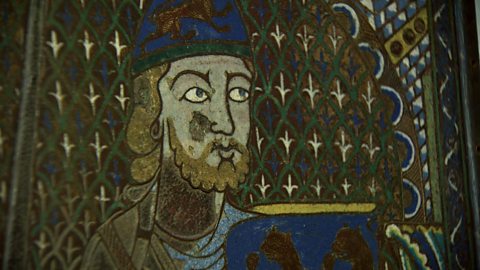
The rise of the Plantagenets. video
This clip explains how the marriage of Princess Matilda to a French duke founded the 331-year-long Plantaganet dynasty. Following a civil war with King Stephen, their son Henry II ruled vast lands in England and France.
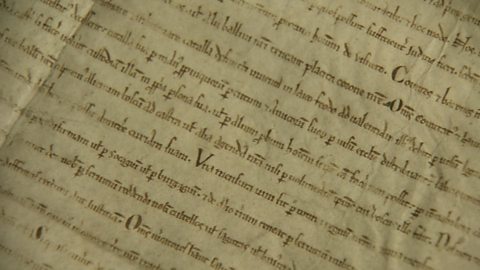
Magna Carta. video
Magna Carta is one of the most famous documents in British history. This clip explains how King John’s conflicts with his barons led to them demanding he sign a document limiting his absolute power.
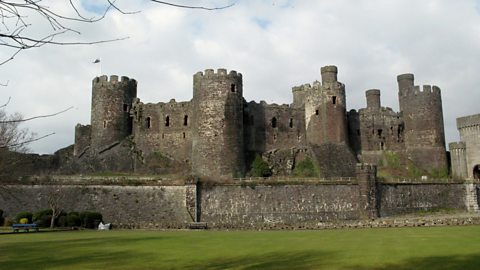
Edward I, the Welsh and the Scots. video
This clip explores Edward I of England’s determination to take control of the whole of Britain, how he achieved this in Wales, but failed to do so in Scotland.
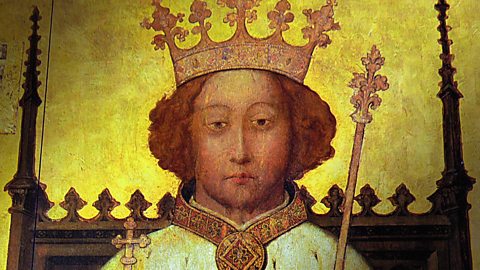
The Peasants' Revolt. video
This clip explains how an unpopular new tax led to the greatest uprising in the history of Medieval England, the Peasants' Revolt of 1381, and how young Richard II defused it.
The fall of the Plantagenets. video
This clip explores the battle for supremacy between two branches of the Plantagenet family during the Wars of the Roses, and the events that led up to the death in battle of Richard III, the last Plantagenet king.