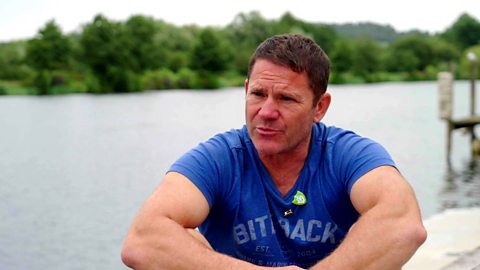
Protect & Restore Nature With Hamza Yassin
I'm on a mission to experience the wonders of nature right here in the UK. And who better to give me a tour of his beloved Scottish home than the legend that is Hamza Yassin. Top TV presenter and strictly winner Hamza has a day job filming wonderful wildlife. I'm heading to meet him near his home in the Scottish countryside to learn what it takes to become a wildlife camera operator and what efforts are being made to protect and restore nature near him.
Hey, what's up Joe?How are you doing?Could not be better. It's beautiful out here. Want to see some wildlife?I want to learn how to use this. Can you show me the ropes?Yeah, but first we have to lower our voice. Do you want to know why?Why?If you come this way slightly and have a look just down there. See that?Yes.That's a fallow deer.Stop it! It just looks like a rock.I know and that it's camouflage. Tell you what do you want to jump on.Yeah I do, I do.Obviously camera lens, Tripod. OK. There's your zoom right there.Right. We got it.Yep. And now if you zoom back in, slowly, that's it. You see.Yeah. Now you've got her perfectly in frame but it's out of focus, so your focus is just right at the top here.There you go. Bingo.There you go you, got a job.I’m actually pretty happy with that.That's good. You've done well my man, you’ve done very well.Scotland used to be covered in forest. And over time here in the UK we have deforested most of it.Yeah.Now we're beginning to replant the trees back again, rewilding it. The problem is we have a lot of red deer.Yes.The red deer love to nibble on new shoots.I see.Local conservationists are having to take steps to protect forests from the hungry red deer population. You see these little black dots everywhere?Oh yes I do yeah.These black dots are where they're going to be replanting new forest.Oh I see.As well as helping combat climate change, forests will help provide a home for a huge array of plants and animals.And. Wow.Before they replant it, they have to fence it off. And that's because of the deer.Yes. They don't want the deer coming in eating the beautiful shoots.They'll ruin everything.They'll ruin everything.That is a red deer stag.That is a red deer stag.There he is.I'm pretty pleased with that shot. But now we're about to see why tall fences are very important to protect the new forest. So time to pass the camera over to a true pro. He's going to hop the fence. Ready?Watch this. Look how easy he is going to hop the fence. Ready?Oh, wow.So easy. That is so good. So easy.So easy. What a legend.What a legend.Right my friend, what have you got for me next?Get warm a little bit and then maybe go to the seaside.Sounds good to me. Fantastic.Right come on then. It's time to jump in a van and head to the beach. But I'm not on holiday. Soon it's back to work as Hamza's camera assistant.How do you carry a tripod again?You see now it’s over both shoulders better, right.Come on then.I can do this all day long.Whoa! Told ya. They're a bit slippery.Were here.What do you think?It's absolutely incredible. I've never seen so many seals at once in one place.That's phenomenal.This is the beauty of the west coast.Yeah.Here in the west coast of Scotland, seals can be seen all year round. And local conservationists are trying to educate visitors to avoid disturbing seal populations. So under Hamza's expert supervision, we're filming from a safe distance. Good job he’s brought the zoom lens.See some really big females.And they're big at the moment because they've got babies.I see.So they've got babies inside of them and they'll be giving birth mid-summer.Wow.You can see that one scratching away.Yes.There spotted aren't they?They are their fur is a really important part of their identification as such. We can see the individual seal because their fur is like a fingerprint.These seals are so beautiful and a real inspiration as to why we should all help to protect and restore nature.
Teacher notes
Humans have a big impact on the natural world: activities such as deforestation destroys habitats and harms ecosystems but there are ways we can protect and restore nature too. After all we are a part of nature, and we need it to survive and to thrive.
Supports learning about living things and their habitats and citizenship.
These teacher notes outline activities for you to try with your class and get pupils thinking about environmental challenges.
Classroom ideas
Talk about protecting and restoring nature.
Help pupils join the conversation by discussing and creating your own glossary of key terms together:
Deforestation - clearing a wide area of trees habitat the natural home of a plant, animal or organism.
Reforestation - replanting and restoring an area of trees.
Rewilding - involves letting nature take care of itself and letting natural processes shape how habitats develop.
Moments in nature
Discuss with pupils what they think ‘nature’ means and whether they think they are a part of it or not. Ask pupils to share any special moments they have had with, or in, nature and share stories, from listening to the dawn chorus to spotting a fox or listening to the wind in the trees. Discuss with pupils how it made them feel.
Remind pupils about needing to be quiet when watching wildlife and sit quietly outside in the school grounds to see what can be spotted, using a camera or a sound recorder – or both, to gather evidence. Pupils could then write or talk about their own ‘top tips for watching wildlife’.
Daily diary
Have a rota of ‘wildlife watchers’ to take turns doing a five-minute observation of a chosen place -this might be of somewhere that can be seen through a classroom window – and report their findings back to class or in a diary.
Habitat investigation
Carry out some fieldwork in the school grounds to gather, identify and record the names of some different plants and animals. Help pupils use different techniques such as sketching, photography and use of technology apps to help with the identification. Map the results on a plan of the school grounds and identify any distinct types of habitats that you find.
What could you do to improve your school grounds for wildlife? Could you plant any trees? Perhaps there is space to plant a small Willow shelter? Planting willow wands is one way to enjoy quick growth and provide some shade as well as early food for bees and other insects in spring. You may need to protect the delicate young stems from hungry rabbits though! Help pupils to research what can be done to protect any planting you do until it is strong enough to stand a chance of survival.
Supporting forests
The United Nations has designated 2021–30 the Decade on Ecosystem Restoration, and many countries are making big plans to restore forests. Older pupils could examine Ordnance Survey maps to look for signs of remnants of ancient forest in your local area. Clues to ancient forests on maps might include non- uniform outlines, on difficult to access slopes and with place names that suggest their history. Investigate with pupils any rewilding or reforestation projects nearby that you could visit as a field trip.
Curriculum links
England:
Science, Geography, Technology, Citizenship
Northern Ireland:
The World Around Us, Personal Development and Mutual Understanding
Scotland:
Sciences, Social Studies, Health and Well Being
Wales:
Science and Technology, Humanities, Health and Well Being
Where next?
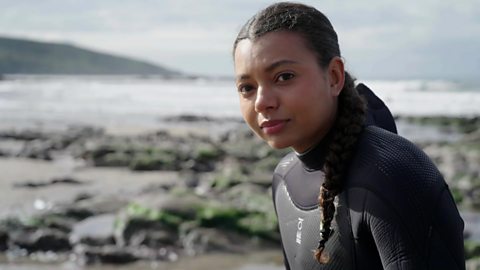
The Revive Our Oceans Challenge
Environmental expert Inka Cresswell takes on a journey under the sea.
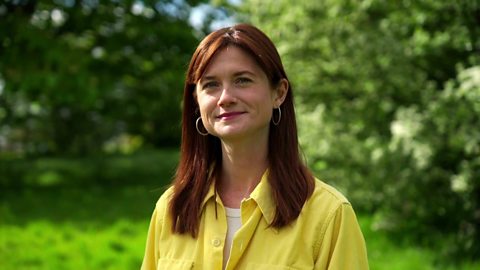
The Clean Air Challenge
Actress Bonnie Wright goes on a rickshaw ride around town and give us info on clean air.
The Waste Free Challenge
Sam Bentley meets Shini Muthukrishnan from Blue Peter. They look at sustainable packaging made from seaweed.

The Climate Challenge
TV presenter and naturalist Steve Backshall educating us on changes we can all make to protect our environment.