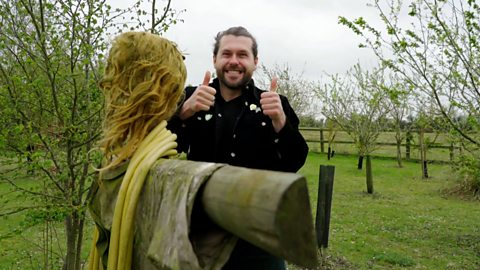
Fix Our Climate With Steve Backshall
Hello mate. How are you? Good to see you. We're on the river. Why don't we go for a splash?
Sounds ominous.
Yes, I'm up for it. Shall we?
Let's do it. Go for a splash.
Steve's an expert paddleboarder. And I'm joining him for his morning paddle on the Thames.
OK. You feeling confident enough to try standing up?
Shall I give it a go?
I think you should.
OK, slowly does it Mr. I'm going for it.
He's up. Yes. He's up, ladies and gentlemen.
Come on baby. Here we go.
A massive round of applause.
Thank you very much.
While I build my confidence on the board, I want to find out how Steve has witnessed climate change first hand.
We as human beings have done things that have changed the entire climate of our planet.
Obviously you've traveled all over the world. How have you seen climate change affect the world?
Particularly in places like the Arctic and the Antarctic, you can go into valleys where there used to be huge glaciers that have been there for thousands of years, and they are completely gone.
I've seen places that were pristine rainforest when I first did expeditions there in the 1990’s, that now are just barren deserts.
Cutting down forests creates enormous amounts of carbon gases, but also completely changes the environment.
You can see the way that our climate has changed already but the biggest change is yet to come.
And here in this country we're already starting to get more extreme weather events.
This part of the river Thames has experienced several floods, and it's forecast that across the UK we'll be facing more regular flooding events.
We've had the hottest days that our planet has ever recorded all within the last couple of years.
There is no doubt that climate change is not something that will happen in the future. It's something that's happening right now.
Right now.
So what do you think might be causing some of these changes?
These changes are what are called anthropogenic. That means caused by us as human beings.
And it's all sorts of things. You know it's our agriculture, deforestation, but the number one most important thing is our use of fossil fuels.
Essentially fossil fuels are things like natural gases and coal and burning those we are releasing into the atmosphere carbon gases.
And that's the thing that's fundamentally changing our climate.
Suppose now is the time we really ought to make a change.
It is. We've hit a critical period, and now it's a race against time.
Teacher notes
We know that human activity is the major cause of rapid climate change but changing behaviours and enacting solutions can help us to fix our climate.
Supports learning about biomes, energy and natural resources, weather and climate.
These teacher notes outline activities for you to try with your class and get pupils thinking about environmental challenges.
Classroom ideas
Talk about fixing the climate
Help pupils join the conversation by discussing and creating your own glossary of key terms together:
Anthropogenic - changes in nature caused by humans.
Carbon capture - ways to prevent excess carbon dioxide (CO₂) from entering the atmosphere e.g. when burning fossil fuels.
Carbon removal - taking out some of the CO₂ already in the atmosphere using human technology or natural sources such as peatland and forest.
Fossil fuels - finite energy from e.g. coal, oil and gas.
Renewable energy - limitless sources of energy e.g. solar and wind.
Reality check
We know we need to move from fossil fuels to renewable energy sources and or nuclear to reduce our carbon emissions. Ask pupils if they think our UK emissions of CO₂ have fallen or risen over the past 30 years. The good news is that even accounting for emissions produced ‘offshore’ they have fallen by about a third. Explain to pupils that the price of solar and wind technology will become cheaper the more we use it. We are on the right path.
What are renewables?
Discuss with pupils what different kinds of renewable energy technologies look like and use models to help explain how solar and / or wind powered technology works. Do some fieldwork in the local area spotting and recording evidence of renewable energy in use such as solar powered panels on roofs, or wind turbines in action.
Best place for…
Help pupils to investigate and map the best place in the school grounds to place a wind turbine, or solar powered panels. Pupils could write and present a plan to school governors for a type of renewable technology to be installed. If the school already has some renewables, investigate with pupils how you can monitor their output and the impact of different weather conditions.
UK wind
Older pupils could research examples of wind farms around the UK and explain why Scotland is a particularly good place to develop this (Scotland is the windiest country in Europe.) Pupils could create a map and infographic showing UK wind farms and their energy output. Discuss how the evidence shows change for the better in progress.
Carbon capture
The world will almost certainly need some carbon capture and removal as we phase out the use of fossil fuels. Carbon capture and storage facilities aim to prevent CO₂produced by industrial processes and power stations from being released into the atmosphere.
One example in the UK of carbon capture technology aims to recycle 40,000 tonnes of waste CO₂ each year. The UK has pledged to capture and store 20-30 million tonnes of CO₂ a year by 2030. Challenge pupils to calculate how many similar sites would be needed to achieve this yearly target.
Carbon removal
Seagrass meadows, mangroves, forest, peatlands and swamps are all types of natural environment that can absorb carbon from the atmosphere and store it. Ask pupils which of these environments we could find in and around the UK. Are there any examples locally that pupils could visit? Discuss with pupils how we can protect and enhance these natural carbon stores.
Good news
Create a ‘Good News’ class newsletter with pupils. Fill it with positive examples of ways to reduce carbon emissions using what has been learnt about renewable technologies, carbon capture and carbon removal. Help pupils to research additional ideas and give practical examples wherever possible.
Curriculum links
England
Geography, science, English and mathematics.
Northern Ireland
Language and literacy, Mathematics and Numeracy, The World Around Us.
Scotland
Literacy, Numeracy, Technologies, Sciences, Social Studies: People Place and Environment.
Wales
Science and Technology, and Humanities.
Where next?
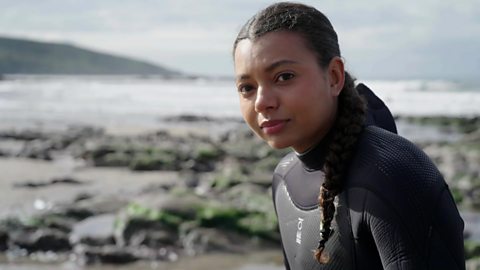
The Revive Our Oceans Challenge
Environmental expert Inka Cresswell takes on a journey under the sea.
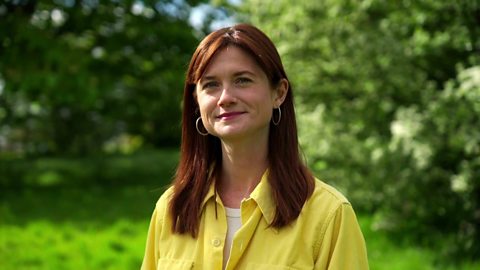
The Clean Air Challenge
Actress Bonnie Wright goes on a rickshaw ride around town and give us info on clean air.
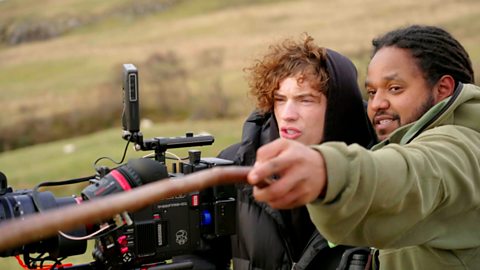
The Nature Challenge
Wildlife cameraman Hamza Yassin meets Blue Peter's Joel Mawhinney and they film local wildlife on the west coast of the UK.
The Waste Free Challenge
Sam Bentley meets Shini Muthukrishnan from Blue Peter. They look at sustainable packaging made from seaweed.