Clean Our Air With Bonnie Wright
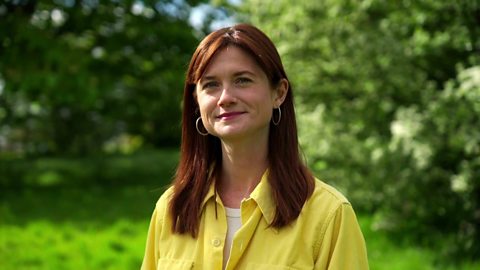
Plants, animals, and humans. To live we all need the same thing, the air around us and the oxygen it carries. But when our air is polluted we damage one of our most valuable resources. One person who feels strongly about it is Harry Potter star and environmental activist Bonnie Wright. I'm catching up with her in central London.
Oh. Nice wheels. Let's go. Let's go. We're hopping aboard a rickshaw to sample the air in a busy city center.
So thanks for joining me on a little bicycle ride. I thought we'd just cycle around and think about air pollution. Obviously when we're in a city like London.
Yeah, what can pollute our air?
So we have cars around us. We have, you know, big industry that, you know, say buildings or factories and things like that. But luckily there are also solutions that we can look to that can help us make our air more healthy to breathe.
So air pollution bad. But what we can do good. What can we do?
What can we do? Lots of things. On an individual level like at home day to day. Maybe limit your use of driving and instead opt for public transport, or cycling or walking or wheeling to school or work.
And that is exactly what one group of BP fans are doing every day. These guys from a school near Manchester are trying to reduce the number of car journeys and have formed what they call a walking bus.
The walking school bus is good because it doesn't cause as much pollution and it helps you and the environment.
I like walking to school because it's good for the environment. And say it's been a it's a Monday, it’s good to catch up with what your friend's been doing.
Walking to school every day helps the environment and it keeps you fit and healthy and it gets your brain into gear so you're ready for the day ahead.
Sometimes you don't always feel good about it, but we walk in every weather.
Now Bonnie, what else can we do to help our air?
Well, we're very lucky. We can learn a lot from nature, and nature can do a lot for us. So we're going to go and head over to a park and learn an amazing hack on helping us clean our air.
Oh, I love that, a nature hack.
Yeah. That hack is the super air cleaning power of trees. Bonnie is taking me to see a project called the Tiny Forest where local school kids are helping plant trees to create a miniature woodland.
So these trees look a little bit like twigs. They are quite small but they will mature into beautiful larger trees. Even just this area in the first five years will actually attract about 500 different species of animals and other plant life creating a really biodiverse little tiny forest.
So even within our own cities we can create these incredible thriving green spaces that can help filter our air. Tiny pores in leaves help trees absorb pollution and carbon dioxide from the air storing it in their trunks. In return they release oxygen helping clean the air and combat climate change.
This tiny forest isn't going to be able to do everything is it?
No, sadly not. That would be great if it could solve all of our problems. But what we can do here I think we can learn how do we sort of take these lessons of planting here and integrate this into our daily lives. That could be if you have space to plant something outside, or indoor plants are an incredible way as well to filter the air we breathe.
Well that's two trees in the ground. Just another 598 left to plant.
Hello. You look really hard at work. What are you doing here?
We’re planting trees.
So cool. And why is it so important that you're planting trees?
Trees help us breathe oxygen.
That's right. How do you feel when you're planting the trees?
Knowing you're making a difference.
Exciting.
Now these trees look teeny tiny. But what are they going to look like when they're all grown up?
Big, big.
Whoa! Yeah they're going to look massive aren't they? And they will help our local community and our air.
I can't wait until this place becomes a fully fledged forest.
And there it is. The tiny forest is on its way.
Yeah it looks amazing and in about 2 to 3 years the trees will be start getting a bit taller than me.
Thank you so much Bonnie for helping out today.
Teacher notes
When our air is polluted, we damage one of our most valuable resources but there is much we can do to clean our air, such as reducing our use of fossil fuels, using cleaner energy sources, and leaving the car at home. We can also plant more trees to help absorb carbon and other pollutants from the atmosphere.
Supports learning about the air pollution, travel and transport, and forests.
These teacher notes outline activities for you to try with your class and get pupils thinking about environmental challenges.
Classroom ideas
Talk about clean air
Help pupils join the conversation by discussing and creating your own glossary of key terms together:
Atmosphere - the mixture of gases around the world.
Biodiversity - the variety of life on Earth.
Industry - economic activity that often involves processing raw materials and making things in factoriespollution the presence in an environment of a substance or thing with harmful or poisonous effects.
How do we pollute our atmosphere?
Summarise with pupils some ways in which we pollute our air, to check their understanding. Air pollution is essentially caused by burning things: when we burn wood, crops, coal or oil we put tiny unwanted particles into the air, as well as contributing emissions to climate change. We need to find ways to produce energy without burning things, use a lot less polluting energy from fossil fuels and find ways to prevent polluting particles reaching the atmosphere. The good news is that in modern cities our air is much healthier than it was years ago. We are on the right track.
How do you get to school?
Survey with pupils how they get to school. Younger pupils could make pictograms, and older pupils could create graphs, to show modes of transport used. Use digital maps with pupils to investigate routes and distances travelled from their homes as well as the availability of public transport and safe walking routes. Discuss how polluting different forms of transport are, and challenge pupils to identify ways to reduce pollution from their own journeys. Pupils could use their findings to make recommendations for safe walking routes to school.
The walking bus
If you don’t already have one, why not start a walking bus that runs once a month, once a week or every day? Pupils could use their research to create a newsletter for parents and carers with a map of proposed safe routes and some reasons why it’s a good thing to walk to school. Reasons might include having fresh air, exercise, and time to talk with your friends.
Plant a tiny forest
In their first five years, a tiny forest of trees might attract 500 different species of animals and other plant life. They can also absorb carbon dioxide and pollutants as well as producing oxygen. Ask pupils to create annotated posters of a chosen species of tree e.g. an Oak, and give reasons why we need them, such as: increase biodiversity, absorb carbon dioxide and pollution, give shade, shelter and food, beautiful to look at etc. Pupils could include an annotated sketch of a leaf as seen through a magnifying glass. Using a map of the school grounds, pupils could then carry out fieldwork to identify where new trees might be planted and create an action plan to do this.
Curriculum Links
England:
English, Mathematics, Science, Geography, Art and design
Northern Ireland:
Language and Literacy, Mathematics and Numeracy, The World Around Us, The Arts, Personal Development and Mutual Understanding
Scotland:
Literacy and English, Numeracy and mathematics, Expressive Arts, Sciences, Social Studies, Health and Well Being
Wales:
Languages, Literacy and Communication, Mathematics and Numeracy, Science and Technology, Humanities, Health and Well Being
Where next?
The Revive Our Oceans Challenge
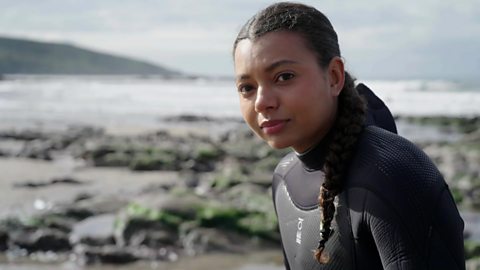
Environmental expert Inka Cresswell takes on a journey under the sea.
The Nature Challenge
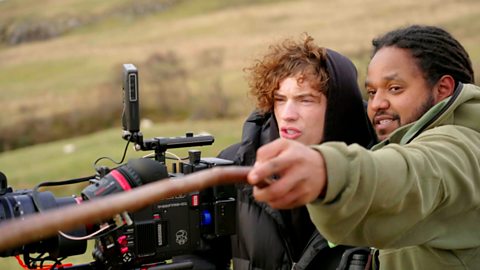
Wildlife cameraman Hamza Yassin meets Blue Peter's Joel Mawhinney and they film local wildlife on the west coast of the UK.
The Climate Challenge
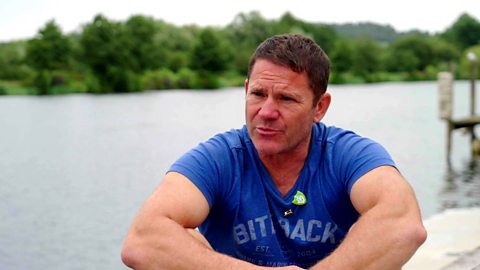
TV presenter and naturalist Steve Backshall educating us on changes we can all make to protect our environment.
The Clean Air Challenge
Actress Bonnie Wright goes on a rickshaw ride around town and give us info on clean air.
The Waste Free Challenge
Sam Bentley meets Shini Muthukrishnan from Blue Peter. They look at sustainable packaging made from seaweed.