A Waste Free World With Sam Bentley
Hey guys, I've got some really good news that I'm super excited to share with you. I'm going to be on Blue Peter. I'm going to be showing Blue Peter presenter Shini round this amazing project.Hey, Sam, wow would you look at this? What a fancy background. Is this how you film your videos?
Sam Bentley is a super smiley Eco warrior who's all about sustainable living. He makes sure that his 1.5 million followers are up to date with the good news relating to our planet.
So Sam your videos are so positive. Why do you make your videos the way that you do?You know the world has some big problems but we also have solutions to these problems. So it's not all doom and gloom. One of the big issues close to my heart is plastic pollution. Plastic is such an amazing material because it's durable. It can be used for so much but it also stays in our environment for so long. From 10 to 1000 years. How crazy is that? Every minute a garbage truck worth of plastic is put into the ocean.
Gosh. But actually the ocean may hold a solution to plastic pollution.Ooh, okay. I like that.
To find out how the ocean can help Sam has brought me to London to a company with a very clever plan to tackle plastic waste. So loads of people around the world are coming up with so many creative ideas and looking to nature to how we can give up plastic, and this company have come up with such a cool idea.
Do you want to see it?Yeah.So it's this. You can wrap your food in it, you can use it for packaging and you can eat it as well.Is that Seaweed Sam?Yes it is.
Okay no offense. Love the planet but I am not wrapping my sandwiches up in that.No it's actually really cool. Scientists have found a way to use this Seaweed to create loads of alternative packaging options that usually use plastic. So we have this which looks like plastic right? But this is actually made from seaweed. And also sauces like ketchup, mayonnaise, anything like that, that can be wrapped up in seaweed as well.Okay I'm officially impressed. They’ve even used seaweed to create this casing which can encase food, drink, oils. But even more impressive than that is it's entirely edible too.
The whole thing.The whole thing. You can eat it like a cherry tomato. You can eat it just like a fruit.Oh it looks like jelly.Oh. That’s really weird. There's lime, mint and then the packaging part is like pretty tasteless actually. Doesn't taste fishy, doesn't taste like seafood.No and it's all gone. There's no, there's no waste.
No waste. This is how we build a waste free world by innovations like this. And it's not just seaweed. Elsewhere people are looking for other natural solutions to the plastic problem. What about surfboard parts made from mushroom roots or toothbrushes made from bamboo? Here at Nopla they create their packaging by a process that extracts a gloopy substance from Seaweed. This then gets spread thinly and solidifies into a clear, plastic like material, which is entirely compostable.Stop it. That's incredible.
Sam thank you so much for opening my eyes to such a unique axnd cool idea that helps us actually create a waste free world.
You're welcome I’ve had such a fun day.
Teacher notes
Plastic is an amazing material because it's durable and used for many things, but its waste is found in every part of our world from Mount Everest to the deep sea, and it can take a long time to break down. We need to address plastic pollution. Luckily there are things we can do and some amazing technological innovations.
Supports learning about plastic pollution, materials, and oceans and rivers .
These teacher notes outline activities for you to try with your class and get pupils thinking about environmental challenges.
Classroom ideas
Let’s talk about plastic pollution
Help pupils join the conversation by discussing and creating your own glossary of key terms together:
Chemicals – a substance or mix of substances that has been prepared, often artificially.
Innovation - new ideas that often offer a breakthrough and new direction.
Ocean Gyres - a large system of rotating ocean currents.
Plastic - a wide range of synthetic materials that can be moulded into a variety of shapes.
Sustain - support or keep something going.
The Great Pacific Garbage Patch
A million tonnes of plastic reach the oceans from our rivers every year. Ocean currents carry it into vast gyres, one of which has been labelled the Great Pacific Garbage Patch (GPGP): located halfway between Hawaii and California, this collection of floating garbage is mostly plastic, and it covers an area around 1.6 million square kilometres. Pupils could use digital mapping to locate and label this gyre and map its extent.
Although the GPGD looks shocking, it is reassuring to know that only about 0.3 % of all plastic waste reaches the oceans, the rest ends up recycled or in landfill. That means that we are containing most of the waste and it seems achievable to do more. Ask pupils to check out the Great Ocean Clean up, started by Boyen Slat when he was only 18 and report back on the project and what it is achieving. Discuss with pupils how we can all dispose of plastic more carefully to avoid it being washed into rivers and then, into the ocean.
Essentially plastic
Plastic is such a useful material. It is sterile, waterproof, and cheap. It is used to contain medicines and vaccines and is used for life-saving equipment in hospitals. It makes vehicles lighter and keeps food fresh. Look around the classroom and the school and create a list of plastic uses, and ask pupils to sort these into essential, and not essential uses of plastic.
Our personal plastic waste
Ask pupils to guess how much plastic waste they create in a year. The average Brit creates about 77 kilograms of plastic waste a year, according to Hannah Ritchie who believes we could be the first generation to build a truly sustainable planet. Ask pupils how they could reduce their own plastic waste footprint by reducing consumption.
Sustainable seaweed
Packaging made from seaweed that is also edible! The story is an amazing example of human innovation. Ask pupils to work in small groups and imagine they have just discovered this product and to think how they would pitch it to a financial backer. Each group could also take it in turns to be the ‘backers’ asking difficult questions.
Hope into action
Before showing the film, ask pupils to say on a scale of 1 – 10 how bad a problem they think plastic pollution is, and, on a scale of 1 – 10, how hopeful they feel about finding solutions. Repeat the poll after engaging with the film and some of these ideas. Do pupils feel more hopeful and inspired? Discuss with pupils what approaches make us feel we can take on big problems more easily.
Curriculum links
England:
England: English, Science, Geography
Northern Ireland:
Language and Literacy, The World Around Us
Scotland:
Literacy and English, Sciences, Social Studies
Wales:
Languages, Literacy and Communication, Science and Technology, Humanities, Digital Literacy
Where next?
The Revive Our Oceans Challenge
Environmental expert Inka Cresswell takes on a journey under the sea.
The Clean Air Challenge
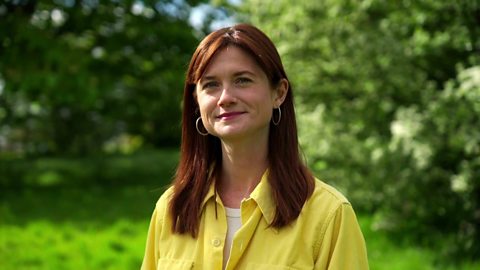
Actress Bonnie Wright goes on a rickshaw ride around town and give us info on clean air.
The Nature Challenge
Wildlife cameraman Hamza Yassin meets Blue Peter's Joel Mawhinney and they film local wildlife on the west coast of the UK.

The Climate Challenge
TV presenter and naturalist Steve Backshall educating us on changes we can all make to protect our environment.