David:Between the 1500s and the 1900s Britain experienced successive waves of migration, both in and out of the country.But why did these mass movements of people take place. What was the experience of the migrants, and how did their comings and their goings affect this country and its people?
David:In the 16 and 1700’s it became fashionable among the rich to include in their portraits pictures of black servants.
DAVID:Portraits like these at Ham House in Surrey, included newly discovered, expensive and therefore exotic fruits, birds and people, which had all found their way to England from Africa and the Americas, through the new trade routes.
James Walvin:If you were an aristocrat early 18th century, one way of showing your wealth would be to have a black servant around. It could be a real person, it could be an invented person but would be a symbol really of your status, your wealth. It’s the world of the Atlantic slave trade, of Africans being moved by the boatload.
DAVID:Portugal and Spain began trading enslaved Africans across the Atlantic in 1502, and the very first English ship to trade in slaves sailed in 1562.
James Walvin:By the time George III is on the throne, Britain has this extraordinary empire that stretches from India to the very edges of the American frontiers. We’ve gobbled up the Caribbean, we’ve gobbled up great chunks of India, and we’re on the point of securing Canada.
James Walvin:This is the great first British empire and we beat the French and that’s the key thing, we become the great European imperial power. The greatest since the Spaniards of two centuries before. It’s the rise of British Maritime power, but it’s also the rise of British commercial power and at the heart of that is the slave trade.
James Walvin:It generates business, left right and centre. Small businesses that make their living providing the slave ships with sailing equipment. The numbers of people employed processing the commodities that come back. Small gun makers in Liverpool, joiners, master craftsmen and all the ports that keep the slave ships going. They keep the royal navy going that looks after the slave ships.This is a huge economic business. It’s hard to know where it stops and where it starts. It’s part of the fabric of British life.The numbers of Africans shipped across the Atlantic are staggering. 12 million loaded on to the slave ships. 11 million landing in the Americas. 8 percent about go to north America. 40 odd percent go to the Caribbean, 40 odd percent to Brazil.
James Walvin:So the numbers that end up in Europe, in Britain, France, Holland, they are very tiny, tiny proportion of the total number. What happens is that the planters return, come back home, they bring their servants with them, the servants who are slaves. Sailors who have been in transit, military figures who’d lived in the Jamaica, Barbados, Antigua, they bring a slave back with them to look after them on their voyage, to look after them when they come back to their homes.
James Walvin:And it spreads like that really, they are a very small group of black immigrants who come almost like the flotsam and jetsam of the slave trade really, they end up cast ashore in Britain. How many we don’t really know.
David:And what sort of roles do these black migrants, what sort of roles do they fall into?
James Walvin:Domestic service is the largest occupational group. A lot of black sailors in and out of the ports. Some of them stay, some of them move on again.
David:They come into a society that’s undergoing enormous change, how does that impact on the black people that come to Britain?
James Walvin:The late 18th century is full of radical descent. The kind of ideas that really come to the fore after the American revolution of 1776 but then especially after the French revolution of 1789; Liberty, Quality, Fraternity, all men are equal.
The age of revolution is a solvent really for the system, it’s not merely the political system of British politics but it’s a solvent of the whole slave empire.
David:As a result, black people started to have a political impact on British society. People like Robert Wedderburn who was mixed race, having been born in Jamaica to a black enslaved mother and a white slave owning father.
David:After migrating to London he became critical of the church’s role in the slave system. He came to believe that the liberation of enslaved people of the West Indies and the English working class were inseparable causes and campaigned for land redistribution on their behalf.
James Walvin:London, Sheffield, Manchester, Norwich. There are hives of radical activity. Wedderburn is right at the heart of this kind of radical firmament. He realises that it’s no good just arguing for the vote for white men, what needs changing is the right of all men to be men, to be ordinary men.
James Walvin:On top of that, he sees via the Peterloo Massacre say in Manchester, he sees a domestic system in Britain that is oppressive, oppressive of working people, anyone who wants to express themselves is likely to be hit over the head with a sabre by the local militia. And it’s all over peace, the violence of slavery in Jamaica, the violence of the militia in Manchester, it all adds up in Wedderburn’s mind to an oppressive state system in Britain.
James Walvin:The problem for the authorities is that they don’t quite know how to deal with him except to slap him in jail, which they do a few times. He’s a man who’s dangerous, not merely for speaking with a workingman’s voice but he speaks for a voice of black equality and that actually opens up the bigger problem of the ending of slavery.
David:So black people living in Britain at this time, like their white neighbours, did a variety of jobs – and like the rest of the British population, many were part of the working poor.
David:In the same years there were black migrants living in Britain who were able to live independent lives, to find their own voices, and in the case of Robert Wedderburn, to have their voice heard.
Video summary
In this short film, historian David Olusoga looks at the lives of Black people in Britain in the 1600s and 1700s.
He looks at portraits in Ham House in Surrey, which feature images of young Black men and women as part of family groups of aristocrats.
Olusoga talks to Professor James Walvin, who suggests that often these figures were invented and were part of the exoticism associated with international trade and enslavement.
Walvin describes Black people in the UK as the ‘flotsam and jetsam’ of the slave trade, individuals who found themselves in the UK.
Most were in domestic service. Some were sailors in transit in and out of the ports. By the late 18th century the ideas of the French Revolution were spreading and some Black people were starting to have a political impact on British society.
These included Robert Wedderburn, who argued passionately for the emancipation of Black slaves and poor whites.
This short film is from the BBC series, Migration.
Teacher Notes
Key Stage 3:
This short film enables students to focus on how the enslavement of Africans and the British Empire affected the lives of some Black people living in Britain.
The paintings in Ham House could be compared with other paintings showing Black servants:
- How were they used to show wealth and power?
- Were these servants enslaved?
Slavery was legal in the colonies but not in England:
- Were Black servants treated in the same way as white servants, or were they treated as slaves?
Your class could try to find out about the 18th century Black presence in their own locality, using the help of their local museum or archive.
Key Stage 4:
Students could compare paintings showing African and Indian servants and discuss the relationships with their employers.
These could be compared with other representations of urban life showing Black people living ordinary lives as a part of wider society.
At the end of the film David Olusoga stresses that Black people could live independent lives.
Slavery did not exist legally in Britain but most were treated as slaves or, as recent research suggests, did most Blackpeople live alongside white people with similar freedoms, depending on their status?
The section on Wedderburn could lead students to research other working class activists such as William Davidson and William Cuffay, or abolitionists such as Olaudah Equiano and Ottobah Cugoano.
They could also find out what is known of the 18th century Black presence in their local area, a good starting point being their local museum or archive.
This short film is suitable for teaching history at KS3 and KS4/GCSE in England, Wales and Northern Ireland and Fourth Level and National 4 and 5 in Scotland.
The story of black migrants in Tudor England. video
David Olusoga investigates the lives of the hundreds of black people living in England in the 1500s.
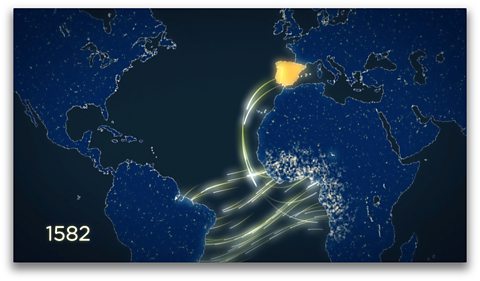
The story of the Palatines who migrated to Britain in the 1700s. video
The story of the Palatine migrants in the 18th century, who were housed in what’s believed to be the world’s first refugee camp.
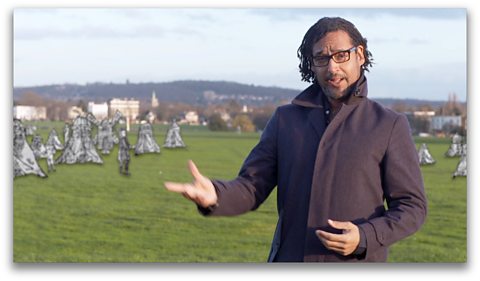
The story of British indentured workers emigrating to America. video
A look at the British indentured labourers sent to work in the new colonies of the United States between 1610 and 1776.
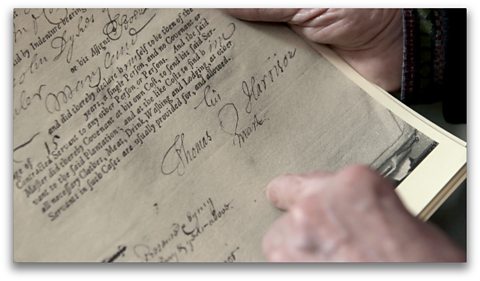
How British migrants made fortunes working for the East India Company. video
The story of wealth accumulated by British migrants working with the East India Company, which they used to climb the social ladder.
The Irish migrants who moved to Liverpool during the Industrial Revolution. video
Why thousands of Irish migrants came to Liverpool during the Industrial Revolution.
Jewish migration to Manchester in the late 1800s. video
A look at the impact of Jewish migration in the late 1800s on Britain and on immigration law.