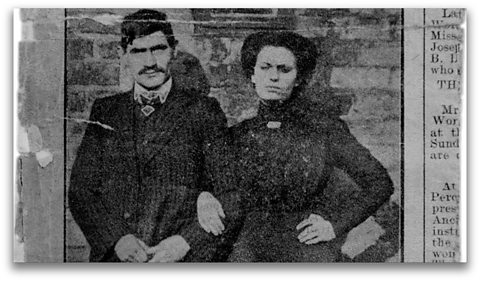
David:Between the 1500s and the 1900s Britain experienced successive waves of migration, both in and out of the country.But why did these mass movements of people take place. What was the experience of the migrants, and how did their comings and their goings affect this country and its people?
David V/OI’m in the grounds of a former stately home in Berkshire. Building a grand house like this in the British countryside to go along with your house in London was once the standard practice for anyone intent on climbing up the British class system. To some extent, it still is.
David:By the 1700s Britain’s rural economy was slowly giving way to an industrial one. Industrial manufacture and trade, these were the new ways to get rich.
David:This house, Swallowfield, near Reading, is now luxury flats, but in the early 1800s it was bought by a British migrant, a man who’d made his money in India.
Margot Finn:This is a picture of the middle class family with aspirations to be more than middle class. The Russells are originally a merchant’s family in Dover in Kent, and Sir Henry Russell, the first baronet is, through patronage, able to go to university and go to Lincoln’s Inn and become a barrister.So this is the second Sir Henry, and as a little child, as a four year old, dressed in the skirts of his mother, Lady Russell.
David:So what allows the Russell family to make this transition from being a middle class family to a family with great pretensions of aristocratic wealth?
Margot:Well in one word I would say India.
David:European powers started trading with India from the early 1500’s, with Portugal taking the initial lead. At first, all British trade was dominated by the London based East India Company, which was granted the monopoly on trade with India in 1600. Over the following 200 years the company became increasingly prominent in the European trading routes with India.Margot
David:In order to become an employee of the East India Company you have to be recommended by a director, a major shareholder, so it’s who you know that gets you into the East India Company.You might not have met your cousin at all recently but you will pull on his connections with the East India Company to get your way in. So these families work as big networks, they use anyone they know.
David:And we see this over and over again historically and in our society today?
Margot:We see it in politics, we see it in parliament, we see in the educational sector. This is a pervasive pattern in British history. And the East India Company illustrates it in 1700s and 1800s
David: They then bring the money back to Britain?
Margot:Yes. The purpose of Indian settlement for East India employees is never to stay there permanently. It’s always to come back home and to bring their money back home with them.
David:So what do the Russells do when they finally start coming back to Britain?
Margot:The Indian wealth always has a bit of a tinge, a bit of shady tinge. In the 18th century families such as the Russells are referred to as Nabobs, and Nabobs are very much looked down upon. These are people that are too rich by half. The intention absolutely is to become part of the governing class of Britain, part of the landed governing class.
David:So they want to make it look as if they are landed aristocracy, and not that they are people who made a lot of money very quickly in India.
Margot:Precisely. And they do that very strategically. They use the building, they use the architecture, they use their political position in the locality and nationally. So Henry Russell becomes a Justice of the Peace, a local power broker in the county. He’s one of the people who can imprison you. He is one of the people who helps govern the poor law in the area.This is Charles. He becomes not only a Tory MP for Reading. He also invests substantial amounts of his and his brother’s Indian money in the building of the Great Western Railway. So he becomes an industrial broker as well as a political power broker in Parliament. You’ve got to have a lot of disposable income.
Margot:You end up bribing quite a lot of people to get into Parliament in this time period. This is before the first Reform Act. You also need money to treat people, to encourage them to vote for you, and it’s Indian wealth that allows Charles then to become an MP for Reading.
Margot:Charles of course being in Parliament he’s going to vote a particular way to protect his political interests, and of course it’s Parliament that approves as well railway lines and railways companies. He’s a part of that system and he rises to be chairman of the Great Western Railway. There are a lot of Berkshire men who are old East India Company employees and they come back, gain landed wealth, gain political wealth and have enormous social wealth with this.
Margot:These are places of sociability but sociality is tied to political power in this time period. Wellington of course is who is a local, was also someone the Russells knew in India. The family make their initial fortune militarily and politically in India. Many political families not only in this time period but indeed today owed much of their wealth and power to the East India Company and its origins. One of those for example is our current prime minster, David Cameron.
David:The Russell's are a perfect example of how, during the industrial and colonial era, the families who came together to form the power elite of the East India Company, the NABOBS, with their networks of influence reaching out across time and over the generations, were able to use their wealth to buy power, and not just political power, the power to influence and affect their whole society.
Video summary
European powers started trading with India from the early 1500’s.
At first, all British trade was dominated by the London based East India Company, which was granted the monopoly on trade with India in 1600.
Over the following 200 years the company became increasingly prominent in the European trading routes with India.
Historian David Olusoga, meets Professor Margot Finn, an expert on the period, and profiles the Russell family who purchased Swallowfield House near Reading, which is today a block of luxury flats.
The house symbolises how these so called Nabobs, British migrants in the employ of the East India Company, returned from India as extremely wealthy men, which allowed them to establish themselves at the higher end of the British class system.
This short film is from the BBC series, Migration.
Teacher Notes
Key Stage 3:
The story of the Russell family illustrates links between East India Company wealth and industrialisation.
One generation gets rich in India and the next invests in the railways.
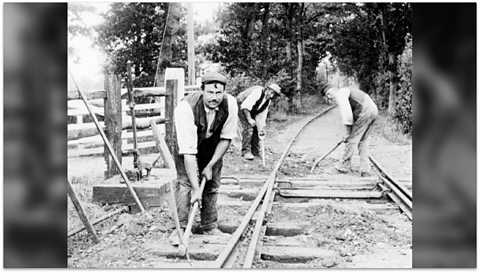
This and the short film on Irish migrants show the Industrial Revolution from two perspectives: those whose labour built the railways and those whose money paid for them.
In each case we know the migration story and their living conditions in England. Students could create a display, presentation or script explaining the importance of the railways, the roles played by Russell and an Irish ‘navvy, and their contrasting lives.
“To some extent it still is”, says David Olusoga about the practice of showing off wealth to climb the class system.
Students could look at 18th and 19th century examples and compare them with current ‘celebrities’ who operate in a similar way.
Key Stage 4:
A key idea here is how the Empire - and in this case the East India Company - enriched Britain and enabled inequalities that persist to this day.
The story of the nabobs shows how temporary emigration to India made it possible for middle class people to become extremely wealthy and then use their wealth down the generations to gain and keep power.
Margot Finn explains how this happened in the case of the Russell's, step by step.
Students could create a flow chart illustrating that process, an insight into how power and influence works.
They could investigate similar local examples.
They could look at powerful families or institutions that became wealthy through the East India Company, slave plantations or the Triangular Trade. Or they could simply answer the question: ‘Why and how did the Russells do so well?”
This short film is suitable for teaching history at KS3 and KS4/GCSE in England, Wales and Northern Ireland and Fourth Level and National 4 and 5 in Scotland.
The story of black migrants in Tudor England. video
David Olusoga investigates the lives of the hundreds of black people living in England in the 1500s.
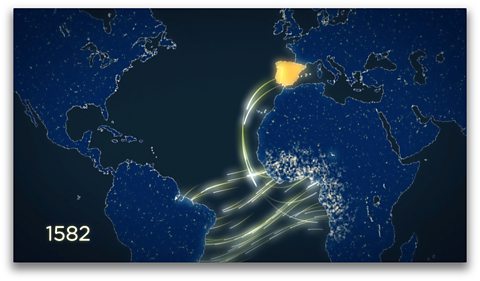
The story of the Palatines who migrated to Britain in the 1700s. video
The story of the Palatine migrants in the 18th century, who were housed in what’s believed to be the world’s first refugee camp.
Black people in Britain during the Atlantic slave trade era. video
An exploration of the lives of Black migrants in Britain during the Atlantic slave trade.
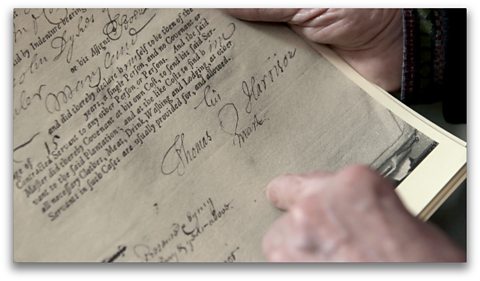
The story of British indentured workers emigrating to America. video
A look at the British indentured labourers sent to work in the new colonies of the United States between 1610 and 1776.
The Irish migrants who moved to Liverpool during the Industrial Revolution. video
Why thousands of Irish migrants came to Liverpool during the Industrial Revolution.
Jewish migration to Manchester in the late 1800s. video
A look at the impact of Jewish migration in the late 1800s on Britain and on immigration law.