David:Between the 1500s and the 1900s Britain experienced successive waves of migration, both in and out of the country.But why did these mass movements of people take place. What was the experience of the migrants and how did their comings and their goings affect this country and its people?
David:In 1709, this area, which was then on the outskirts of London, became what was probably Britain’s first refugee camp. Here at Blackheath, 13,000 German migrants made their camp.
David:They spoke different languages, they belonged to different churches, and crowds of curious Londoners came up here to take a look.
Brodie Waddell:To put that in perspective, that’s something like 150-200,000 people arriving over the course of a summer in London from one particular place.David:Successive waves of European migrants, had found their way to Britain, among them 50,000 French Protestants known as the Huguenots.After the Huguenots came a smaller group of mainly German migrants who became known as the Palatines and were from several different regions, speaking different dialects, and belonging to different religious sects, from the Protestant Lutherans, to the Catholics.Religious persecution, bad harvests and the hope of securing free land in America had brought the Palatines to England.
Brodie Waddell:Most of them were people who worked on the land. A lot of them were working in vineyards, which was quite a common occupation in that part of Germany at the time.But they are also a good many skilled migrants. But for people looking through the camps what they would have seen mostly is poor peasants wearing fairly ragged clothes.
David:The British owners of the Carolina company had advertised throughout Germany, sending out pamphlets, which portrayed the newly discovered American colony as the promised land, in an effort to attract labour.
Brodie:There’s some evidence that the government’s representatives in Holland at the time were encouraging these Palatines to get on to boats and come over to London.The governments had an ideology that stressed the importance of population, of growing the population as a source of wealth. The government had allies that helped them amplify their message. Daniel Defoe is probably the most famous of them. He wrote novels and ran a newspaper, but he was also a pamphleteer.
Brodie:At some point in the summer of 1709, Defoe publishes this, “A brief history of the poor Palatine Refugees, lately arrived in England”. So one of the things he wanted to do was bring up this idea of the Palatines as a source of potential revenue.The problem of course is that it’s very expensive to send people across the Atlantic at this time. The Queen and the government aren’t interested in funding them to any great degree.
David:Parishes in England, by this time, a Protestant nation, initially raised twenty thousand pounds to support the Palatines, as they believed they were Protestants, like themselves, fleeing Catholic persecution.
Brodie:Catholic France was really on a rampage in Europe, they were taking over territories, Protestant territories. They were seen as a tyranny and as a religion that helped tyranny.
So I think that’s part of the reason why this notion of Protestantism was incredibly important to both the elites in government but also to ordinary people.
Brodie:There’s a very real sense that these poor Palatines, they may be different, they may be from another country, they may be poor but above all they are seen as Protestant.
David:What do they start discovering about them?
Brodie:The Government trying to take a census of these people, they quickly learn that about a third of them are actually Catholic. And this really puts paid to the notion that they are simply Protestant refugees fleeing religious persecution.Some of them indeed had been affected and suffered various oppressions because of their religion but most were probably worried more about their economic conditions than about the sort of particular religious persecution that was going on.
Brodie:The problem of course was, if you were in London in 1709 you, like the Germans, had experienced high food prices, there had been a bad harvest in England as well, though not quite as severe.War against Spain was pushing up taxes and causing disruption to trade. So there were a good many people who were in a very poor state to begin with.
David:The English Poor Law held each parish responsible for its own poor. Local taxes were collected so that widows, the elderly, orphans and those unable to work could subsist.
Brodie:Over the course of the late 17th, early 18th centuries, the number of people who were reliant on the Poor Law increased dramatically. Anyone from outside of the Parish who was seeking charity, can be classed as a ‘Vagrant’ and that was a technical legal term they used at the time. Someone who could be prosecuted, whipped and sent back home.So the refugees were seen potentially as vagrants and that’s one of the reasons why, for people at the time it became very threatening, because a bunch of poor people arriving, you’re responsible for them.
David:3,000 Palatines were shipped to Ireland. 3,000 sailed to New York. Just 600 made it to North Carolina and of the 6,000 remaining, some made their way back to where they had come from, and a few stayed to make a life in Britain.
Video summary
Historian David Olusoga tells the story of the Palatines, one of a number of groups of European migrants who came to Britainin the 18th century to escape poverty, religious persecution and seek a better life.
In 1709, in an area in Blackheath in south London, 13,000 German migrants called the Palatines formed what became regarded as Britain’s first refugee camp.
They spoke different languages and belonged to different churches and became a curiosity for thousands of Londoners of the period.
Most hoped to travel on to Carolina in the New World, after promises of work and prosperity, but in the end only a few made the trip to North America, and many returned to Germany.
Olusoga meets Dr. Brodie Waddell from Birkbeck at the University of London, who is an expert on this period.
This short film is from the BBC series, Migration.
Teacher Notes
Key Stage 3:
This short film tells a very clear, accessible story that could be used when looking at Early Modern social history and the Poor Laws; or at Britain’s relationship with Europe after the ‘Glorious Revolution’; or at attitudes to religion.
It is a quick way in to understanding many things about England - politically, economically and socially - at that time.
It is a human story that has strong contemporary echoes today.
Students could debate the authorities’ actions at each stage of the story.
Key Stage 4:
This story can be compared with other European Protestant migrants: Huguenots and Walloons.
- Why were the Palatines treated differently?
- Was religion a major factor, or poverty and economic usefulness?
This story can prompt discussion of issues still current today:
- Were they refugees or economic migrants?
- Why did the authorities initially want them, but later change their attitude?
If the film is stopped halfway through, students could be asked what the response of the authorities was likely to be and why, before discovering what it was.
Students could research what happened to those who went to America, and to Ireland.
Links can be made with later migrants - Irish and East European Jewish - who also hoped to go on to America but ended up staying in Britain.
This short film is suitable for teaching history at KS3 and KS4/GCSE in England, Wales and Northern Ireland and Fourth Level and National 4 and 5 in Scotland.
The story of black migrants in Tudor England. video
David Olusoga investigates the lives of the hundreds of black people living in England in the 1500s.
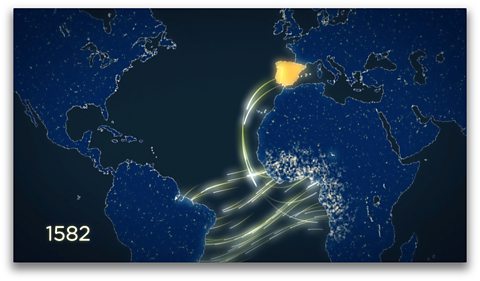
Black people in Britain during the Atlantic slave trade era. video
An exploration of the lives of Black migrants in Britain during the Atlantic slave trade.
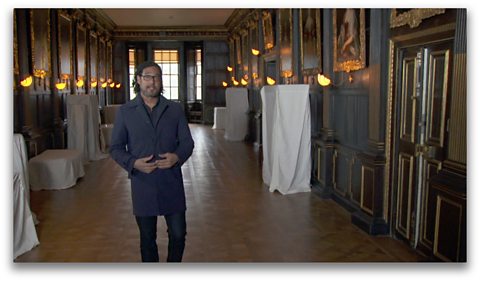
The story of British indentured workers emigrating to America. video
A look at the British indentured labourers sent to work in the new colonies of the United States between 1610 and 1776.
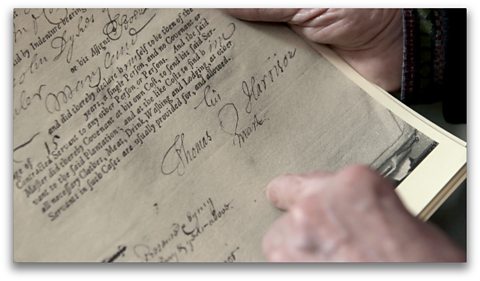
How British migrants made fortunes working for the East India Company. video
The story of wealth accumulated by British migrants working with the East India Company, which they used to climb the social ladder.
The Irish migrants who moved to Liverpool during the Industrial Revolution. video
Why thousands of Irish migrants came to Liverpool during the Industrial Revolution.
Jewish migration to Manchester in the late 1800s. video
A look at the impact of Jewish migration in the late 1800s on Britain and on immigration law.