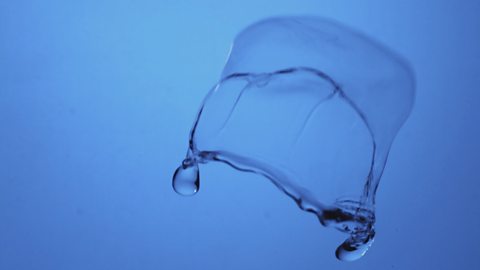
How you can cool a drink using the sun
TO CAMERA: Here’s a way to keep your drinks cool on the beach without using coolers or fridges. So, what you’ve got to do is, soak the towel completely. If you’ve got time you can walk to the sea, but I’m only here for a couple of days. Right, with the towel wet, you wrap that around your drink. Like so. Lie it on the sand, and let the weather do the work.
NARRATION: As the sun beats down on the towel some of the water heats up enough that it turns into water vapour. As it evaporates it takes that heat with it leaving any less-hot water molecules behind. So, the towel gets progressively colder, cooling down my drink.
TO CAMERA: OK, I think it should have worked by now. And you know what? It worked! That could be a life-saver in certain circumstances.
Download/print a transcript of the video
Richard Hammond uses a beach, a towel, water and a drink to demonstrate how evaporation can be used to cool liquid.
He provides a simple explanation of the concept of heat exchange.
Teacher Notes
This short film demonstrates how evaporation works. This experiment could be repeated during on-site fieldwork or within a classroom environment.
Curriculum Notes
This topic appears in geography and physics at KS3 and KS4 in England, Wales and Northern Ireland and National 5 in Scotland. At GCSE it appears in AQA, OCR A, EDEXCEL, EDUQAS, WJEC and CCEA, in SQA at National 5.
More from Richard Hammond's Wild Weather
How does a thermal form? video
Richard Hammond demonstrates how thermals are formed through heat from the sun.
How does hail form? video
Richard Hammond explores the weather conditions that form hail.
How to see thunder. video
Richard Hammond visits Lightning Testing and Consultancy in Oxfordshire to take part in laboratory experiments that demonstrate the effect of thunder within controlled conditions.
How to use wind to forecast the weather. video
Richard Hammond demonstrates how we can forecast the weather simply by watching the way the wind effects the clouds.
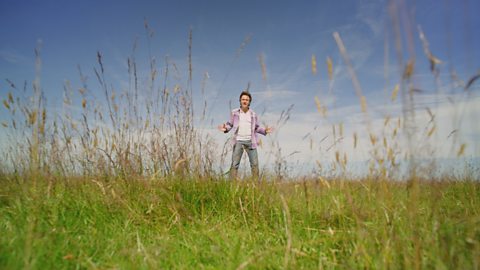
Inside a tornado. video
Richard Hammond explores the properties of a tornado that has been created in laboratory conditions.
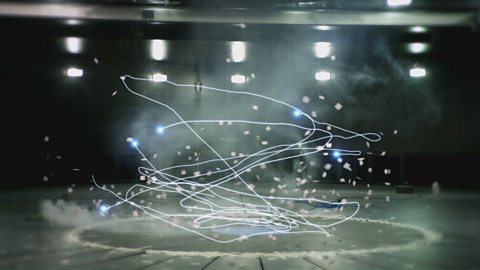
What is the difference between rain and drizzle? video
Richard Hammond demonstrates a visual technique to distinguish between drizzle and rain.
What is wind? video
Richard Hammond demonstrates how wind is created due to differences in air pressure.
Why does water fall as rain? video
Richard Hammond demonstrates the effect of water on other physical objects.