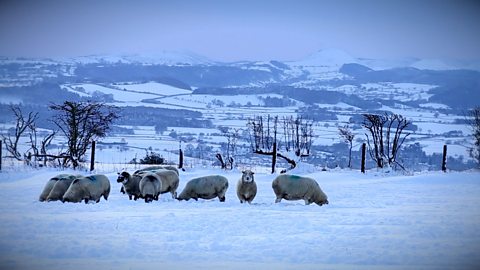
This animated video (most suitable for EYFS and KS1) explores the four seasons - spring, summer, autumn, winter - and how the seasons change.
Hello. I'm Earth and I'm your home.
Did you know that in the United Kingdom, we have four seasons every year, each with its own type of weather?
Each season is about three months long. Let's take a look.
Spring is the season of new growth. The weather is usually mild with some rain. Farmers prepare the land to grow crops. Birds build their nests. Animals come out of hibernation and buds grow on trees.
Summer is usually the driest and warmest season of the year. Plants grow, flowers bloom and lots of people go on holiday.
In autumn, the weather starts to get colder. Green leaves turn yellow and brown and fall off the trees. Farmers bring in the harvest and some animals go into hibernation, ready for winter when it gets cold and dark with frost, ice and sometimes snow.
Nothing much grows in winter and farmers allow the land to rest ready for spring, when everything begins to grow again.
Which season is your favourite?
Video summary
In this short animated film, we journey through the four seasons found in the United Kingdom: spring, summer, autumn and winter.
It looks at how the seasons change and how this impacts animal and plant life, and investigates how agriculture and food production link to the seasons.
Teacher Notes
Download/print the Teacher Notes for this episode (pdf).
Teacher Notes prepared in partnership with the Geographical Association.
Central or big idea
- The United Kingdoms has four different seasons. The video explores how the seasons change and how this impacts animal and plant life, and investigates how agriculture and food production link to the seasons.
Think, work and apply like a geographer
- Change
- Interconnected
- Investigate
- Debate
Questions to explore
- How many seasons does the UK have?
- What are the characteristics of each season?
- Are any seasons similar?
- What are the main jobs for farmers during each season?
- How does the weather changes across the seasons?
- How do seasons effect what we can see, hear and do?
- How would life change if the seasons changed?
- Which season is your favourite, and why?
Key learning outcomes
- Know that the UK has four different seasons with different characteristics.
- Know how seasons affect what we can see, hear and do in the UK.
- Know how to explain and justify an opinion.
- Know that plants, including crops, and animals are impacted by the passing of seasons.
Suitable for teaching geography at KS1 and KS2 in England and Wales, Early and 1st and 2nd level in Scotland and Foundation and KS1 in Northern Ireland.
Key geographical vocabulary and definitions
- Seasons
- Weather
- Climate
- Spring
- Summer
- Autumn
- Winter
Suggested learning opportunities
- Sketch the different seasons and annotate the key colours and features of each season, as well as what happens during each season.
- Make observations and/or collect artefacts from outside that link to the current season and how this might be different in another season.
- Explain how their lives change according to the seasons. Compare with how the lives of other people might change with the seasons - farmers for example.
- Create a short video to persuade the headteacher which of the seasons is the best.
Ideas for going further and links
- Pupils think about climate change and how our lives might alter if the seasons changed. They could also consider how this might impact on agriculture and food supply.
KS1 Science: Seasons
KS1/KS2 Primary Geography: Weather, climate and climate change
KS2 Geography: Weather, climate and seasons
Weather, climate and climate change. video
Exploring the difference between weather and climate, climate zones around the world and climate change.
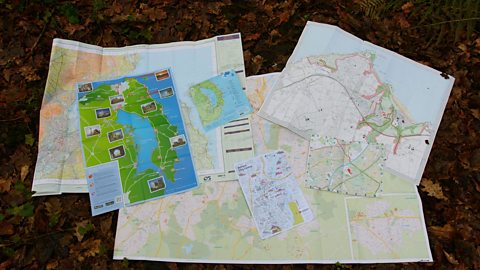
Maps. video
Maps, mapping and navigation - including map keys, symbols, compass points and co-ordinates.
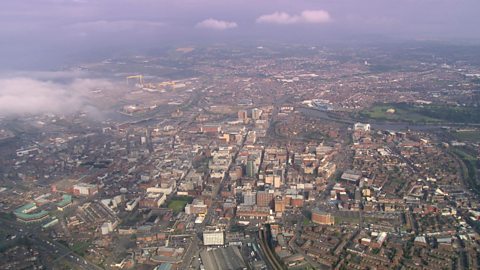
Cities, towns and villages. video
Exploring settlements to identify the key geographical features of villages, towns and cities, including their similarities and differences.
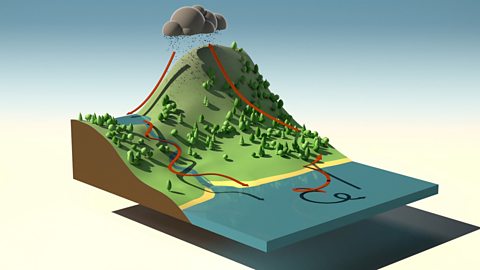
Rivers. video
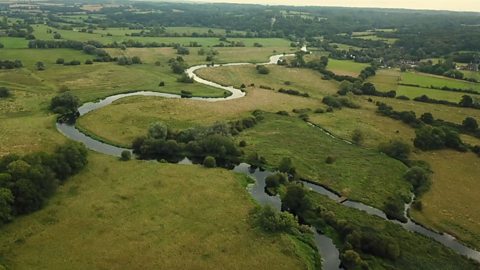
Exploring the journey of water to the sea, including source, stream, river, meander, river mouth and estuary.
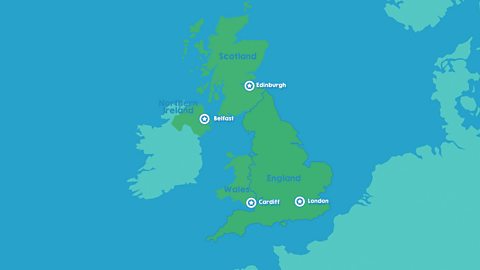
The United Kingdom. video
Identifying the four countries of the UK - England, Scotland, Wales, Northern Ireland - and their capital cities: London, Edinburgh, Cardiff, Belfast.
The world. video
Exploring the regions of the Earth: the continents, oceans, Equator, Northern and Southern Hemispheres and the North and South Poles.
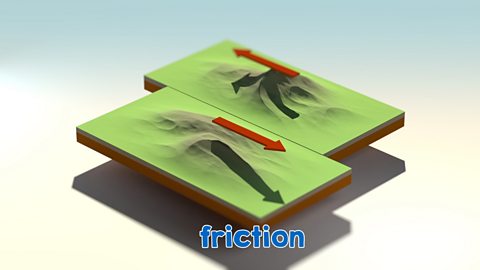
Earthquakes. video
An animation for KS2 pupils on tectonic plate movement and steps to lessen the impact of earthquakes.
The water cycle. video
An short animation for KS2 pupils explaining the water cycle, including evaporation, condensation and precipitation.