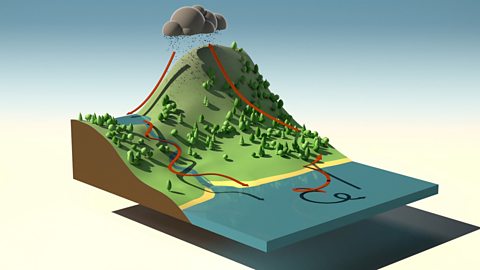
Exploring the difference between weather and climate and introducing the concept of 'climate change'.
Do you know the difference between weather and climate? Well, the weather tells us what it’s like outside each day. Like, if it’s raining … or if the sun is shining. And if it’s hot or cold.
But climate is worked out by looking at weather patterns in one area over a long period of time, usually around 30 years. It tells us what the weather there is likely to be at different times of the year. There are several different climate zones around the world. These are large areas that have similar climates.
In the United Kingdom we have a temperate climate and four distinct seasons. We get cool winters and warm summers … well warmish! Other climate zones are very different to ours.
A Polar climate is very, very cold and dry, but with lots of ice and snow, as it’s too cold for it to melt. A Mediterranean climate has warm, dry summers and mild, wet winters. A hot dry climate is what it sounds like – very, very hot and dry because it hardly ever rains.
A tropical climate is also hot all year round – but also very wet – although some do have a dry season. But scientists say the earth is warming and our climates are changing. This is affecting food and water supplies, as well as habitats such as oceans and forests, which are all needed by humans, plants and animals.
That’s why we need to look after our planet, so it can look after us!
Video summary
This short film introduces the concept of climate to KS1 pupils. It explains the difference between weather and climate and shows the different climate zones around the world.
The film should help give pupils an understanding of the distribution of climate zones across the world.
It could also provide a starting point for discussion about how climate change might affect these zones in the future and the impact this would have on humans, animals and plants.
Teacher Notes
Download/print the Teacher Notes for this episode (pdf).
Teacher Notes prepared in partnership with the Geographical Association.
This short film is a useful tool to introduce the difference between climate and weather, with brief descriptions of some of the climate zones that can be found across the world. Climate zones are regions with similar long-term patterns of weather - usually measured over at least 30 years.
A key reason that we have different climate zones is that the Earth is tilted on its axis as it orbits the Sun. Incoming energy from the Sun is more concentrated at the Equator than it is towards the Poles, due to the curve of the Earth’s surface. You can demonstrate this using a powerful torchlight and a globe. Draw around the beam of light as it hits the globe and notice how much smaller an area it covers at the Equator than it does towards polar regions.
Average global temperatures show that generally, hot climates are found towards the Equator and cold climates towards the Poles. This temperature difference causes global circulation patterns that influence rainfall. Other factors influence temperature too, such as altitude, the shape and size of the land and how near or far a place is to the ocean. Mount Kilimanjaro is close to the Equator but its summit has a cold climate because of its altitude.
Latitude helps identify where some climates are to be found. Hot, wet climates are found within the Tropics: it is hot and very wet all the year round close to the Equator. Cold, dry, polar climates are found around the Poles - but also at the top of some mountains.
Central or big idea
- The Earth’s weather and climate varies across its surface.
Think, work and apply like a geographer
- Compare
- Diversity
- Interconnect
- Sustainability
Questions to explore
- What is the difference between weather and climate?
- Is the weather and climate the same across the whole planet?
- Which climate do we experience in the UK and what is it like?
- How does the climate vary across the planet?
- Where in the world would you expect to find tropical climates? How about the other climatezones?
- Why are there no permanent residents in Antarctica?
- How is our climate changing and what impact does this have?
Key learning outcomes
- Know that there is a difference between weather and climate.
- Know how to distinguish different climate zones.
- Know that the climate is changing and that this affects life on Earth
This short film is suitable for teaching KS1 and KS2 in England, Progression Step 2 in Wales, Early and 1st and 2nd level in Scotland and Foundation and KS1 in Northern Ireland.
Key geographical vocabulary and definitions
- Climate
- Weather
- Climate zone
- Habitat
Suggested learning opportunities
- Make notes on the different characteristics of each climate zone under the headings: temperate, polar, Mediterranean, hot/dry (desert) and tropical.
- Discuss how each type of climate might affect what happens there and how people might adapt to the conditions.
- Create a short argument for which of the four climates would be the easiest or most challenging to live in.
- Mind map what might happen within each climate zone if the temperature increases. Think in terms of animals, plants and crops, water supply and life style.
Ideas for going further and links
- Investigate and map different climate zones, for example their average rainfall and temperature, relative size, distribution and howthese are (and will) change.
- Explore what actions we could take to limit our contribution to climate change.
KS1/KS2 Primary Geography: The seasons
KS2 Geography: Weather, climate and seasons
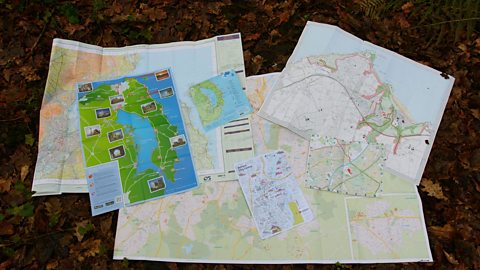
Maps. video
Maps, mapping and navigation - including map keys, symbols, compass points and co-ordinates.
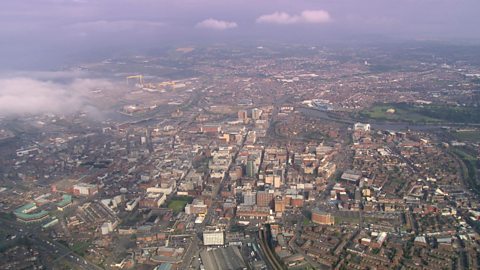
Cities, towns and villages. video
Exploring settlements to identify the key geographical features of villages, towns and cities, including their similarities and differences.
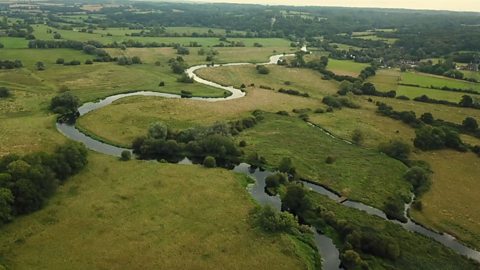
Rivers. video
Exploring the journey of water to the sea, including source, stream, river, meander, river mouth and estuary.
The United Kingdom. video
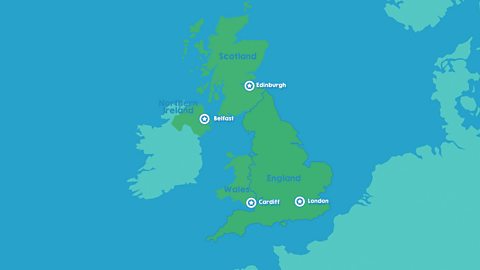
Identifying the four countries of the UK - England, Scotland, Wales, Northern Ireland - and their capital cities: London, Edinburgh, Cardiff, Belfast.
The world. video
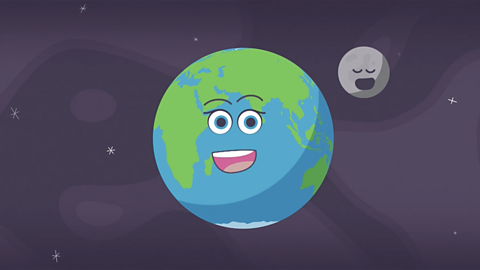
Exploring the regions of the Earth: the continents, oceans, Equator, Northern and Southern Hemispheres and the North and South Poles.
The seasons. video
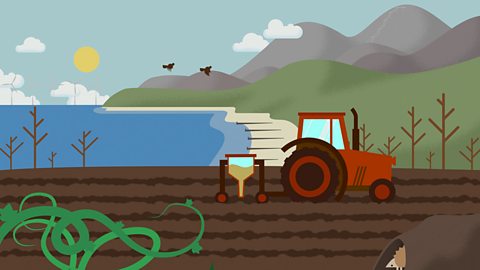
Spring, summer, autumn, winter... Identifying the four seasons of the United Kingdom's temperate climate.
Earthquakes. video
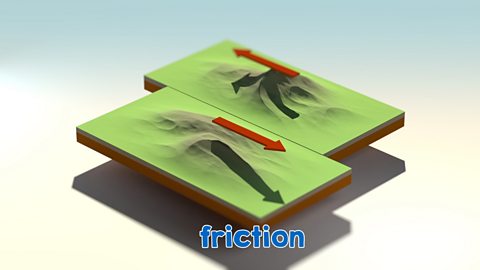
An animation for KS2 pupils on tectonic plate movement and steps to lessen the impact of earthquakes.
The water cycle. video
An short animation for KS2 pupils explaining the water cycle, including evaporation, condensation and precipitation.