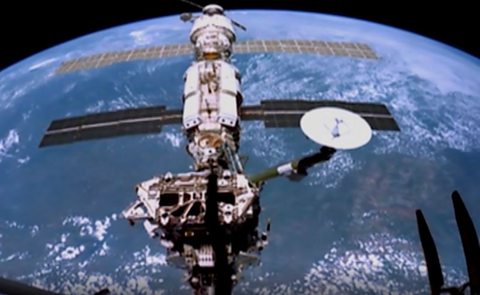
TIMHi, I'm Tim Peake. I'm an astronaut based here at the European Space Agency, in Germany. And from December 2015 to June 2016, I spent six months orbiting Earth on the International Space Station.
TIMLooking down on the Earth from the ISS gives you a completely new perspective on the planet. Something you get a sense of in this clip from Professor Brian Cox, which takes in, not just our own planet, but also looks at where it sits alongside the other planets in our solar system.
BRIAN'This is the ball of rock we live on. It carries us through cycles of night and day, as it turns on it's axis every 24 hours. A year is the time it takes to orbit the sun. And we have seasons because the Earth's axis is tilted by 23 degrees. To see how that works we need to speed time up, so a year passes in just ten seconds.
BRIAN'At this pace we can see how the southern and then northern hemispheres are angled towards the warmth of the sun. Taking us through yearly cycles of summer and winter.
BRIAN'All the rhythms of our lives are governed by how the Earth travels through space. But it's not just the Earth. The whole solar system is full of rhythms. Each planet orbits the sun at its own distinctive tempo.
BRIAN'Mercury's the fastest. Closest to the sun, it reaches speeds of 200,000km an hour, as it completes its orbit in just 88 days.
BRIAN'Venus rotates so slowly, that it takes longer to spin on its axis, than it does to go around the sun. So that on Venus, a day is longer than a year.
BRIAN'Further out, the planets orbit more and more slowly. Jupiter, the largest planet takes 12 Earth years to complete each orbit. And at the very furthest reaches of the solar system, 4.5 billion km from the sun, Neptune travels so slowly that it hasn't completed a single orbit, since it was discovered in 1846.
BRIAN'The solar system is driven by these rhythms, so regular that the whole thing could be run by clockwork. It seems extraordinary that such a well-ordered system could have come into being spontaneously. But it is in fact a great example of the beauty and symmetry that lies at the heart of the universe.'
Tim Peake introduces Prof. Brian Cox who explains why there are days and years on Earth.
The seasons are linked to the 23° tilt of the Earth’s axis.
There is a time-lapse animation of the Earth throughout the year showing the northern hemisphere pointing towards the sun during its summer and pointing away from the sun during its winter.
There are a collection of surprising facts about planets orbiting the sun.
Mercury is the closest and fastest reaching a speed of 200,000 kmph.
On Venus a day is longer than a year due to its extremely slow rotation.
Neptune has such a long year that it hasn’t yet completed an orbit since it was discovered in 1846.
Teacher Notes
Key Stage 3
Could be used to introduce the idea of days, years and seasons.
Students could research and explain, produce posters or perform a class presentation on what causes the seasons on Earth and their effect on weather and people.
Students could research and explain, produce posters or perform a class presentation on the length of days and years of all the planets in the solar system.
They could spot and analyse patterns in the length of a planet’s year and its distance from the Sun.
Key Stage 4/GCSE
Could be used to recap the idea of days, years and seasons.
Students could be challenged to explain why different planets orbit at different speeds and take different amounts of time.
Students could calculate the length of a year on each planet if they are given the planets’ speed and distance from the Sun – or visa versa.
Students could investigate the relationship between distance from the Sun and orbital speed or length of a year (Keppler’s Third Law) by plotting an appropriate graph.
Curriculum Notes
This clip will be relevant for teaching Physics/Science at KS3, Key Stage 4/GCSE in England Wales and Northern Ireland. Also at Third Level, National 4/National 5 and Higher in Scotland, and Cambridge IGCSE Physics.
More from the series Curriculum Collections: Physics
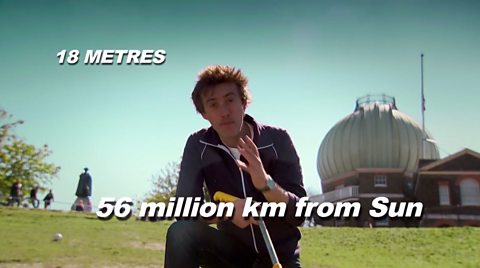
A scale model of the solar system. video
Dallas Campbell shows an orrery – a mechanical model of the solar system.
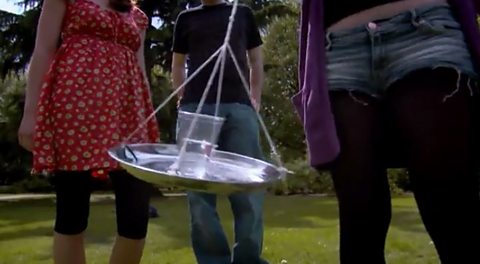
Centripetal force - explained. video
Tim Peake introduces Yan Wong who explains centripetal force using a cup of water on a tray hanging from a string.
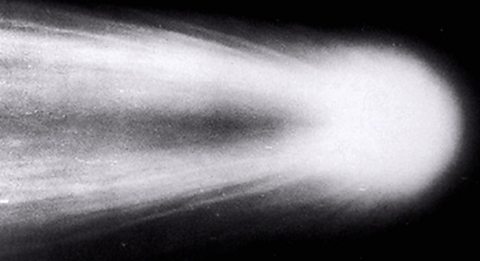
How Halley’s Comet inspired Newton’s Law of Gravity. video
Simon Shaper explains how Newton’s Law of Gravitation originated from observations of Halley’s Comet in 1680.
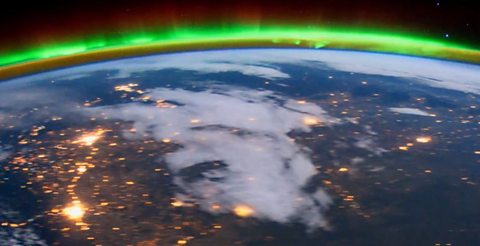
The Origin of the Northern and Southern Lights. video
Helen Czerski explains the origin of the Northern and Southern Lights.
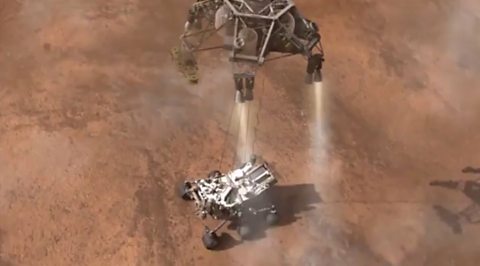
Landing a human on Mars. video
Tim Peake introduces the Physics behind sending a human mission to Mars.
Launching satellites into orbit. video
Tim Peake introduces Maggie Aderin-Pocock who explains how satellites are launched into orbit around the Earth.