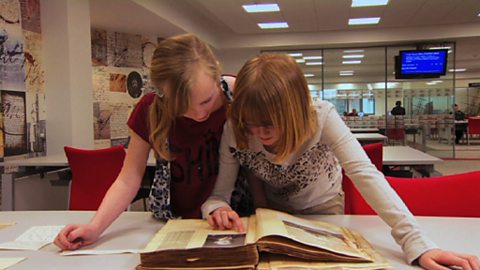
JOE CROWLEY:'If you want to go history hunting, you need to dig deep. 'The best way to uncover the facts is to use the same skills and methods 'that real professional historians use.'
JOE CROWLEY:Today we're going to be looking at archives. These are places where historical records are collected and stored. They can be a real mine of information, but you have to know what to look for and how to investigate them properly if you're going to get what you need from them.
JOE CROWLEY:'You can find archives in most towns and cities across the country. 'There are national archives too, 'most of which will be based in London.
JOE CROWLEY:'They're full of material that's useful to historians 'trying to find out about events and people in the past.
JOE CROWLEY:'In them, you'll find all sorts of evidence of events 'that you'll be investigating.
JOE CROWLEY:'Things like newspapers…'
UNKNOWN MALE #1:Boy hero of the naval battle.
JOE CROWLEY:'Photographs…'
UNKNOWN FEMALE #1:Yes.
JOE CROWLEY:'Letters…'
UNKNOWN MALE #1:That must be it.
JOE CROWLEY:'and notebooks.'
HISTORIAN #1:Lots and lots of maths and diagrams.
JOE CROWLEY:'Now if the person or events are particularly famous, 'the archives may already have a separate section, 'especially for them.
JOE CROWLEY:'Otherwise you may have to go looking for information in catalogues, 'or on things, like microfiche readers.'
JOE CROWLEY:One important thing you need to remember about archives, is that they're full of material that's impossible to replace.
JOE CROWLEY:That means you have to be really careful about how you treat the documents and artefacts that you'll be looking at.
JOE CROWLEY:'It just depends on what the material is. 'If you're looking at some fragile objects, you'll need to wear gloves, 'because if people touch them, 'even the things that you might not think would be a problem, 'say like sweat on your hands, that could damage them.'
HISTORIAN #2:First can I get you to put on the white gloves, because this particular document you're going to see is really very fragile. Also, we don't want any greasy finger marks on it or anything like that.
JOE CROWLEY:'Many of the documents will be contemporary accounts 'of things that happened. 'That means they were written at the time.
JOE CROWLEY:'We have to really think about what we're dealing with, 'especially when they state opinions.'
UNKNOWN MALE #2:The Times are not really for women's rights I think because probably most of the people that write The Times are men.
JOE CROWLEY:'Often people don't have a full picture of events 'They can only see things from their point of view. 'They may be wrong, or they may be biased, 'so we have to think about 'why the people involved may be saying certain things, 'and what that tells us about the person.'
HISTORIAN #2:Because it's a police report, it's written in the style that a policeman would write reports, so…
UNKNOWN FEMALE #1:Instead of a style that a newspaper might want to find the angle because the newspaper's finding the angle which it thinks people will like, and the police are trying to find the angle which is right.
JOE CROWLEY:It can be a real privilege seeing and handling original documents, produced by the people from history that we're investigating.
JOE CROWLEY:It can give us a fascinating insight into the past and remind us that these aren't just names on a page. These were real people.
Many towns and cities contain a wealth of local archive material, often in museums or town halls.
Britain also has a wealth of nationally and internationally significant archives in museums, libraries and purpose built archives.
Presented by Joe Crowley, this clip gives a taste of what kind of material is found in archives; how to access it and how to interpret it.
This clip is from the series History Hunt Episode 2.
Teacher Notes
View the clip together, then ask the class: "What kinds of information did we see?" List pupils' responses.
Ask: "Do you think there any archives in our area?" Challenge pupils to search online (or use local phone directories), to compile a list of local archives.
A nearby library can help with this task. Pairs or groups of children could be tasked with contacting some of these archives, with specific requests about sources of information on local topics, such as the history of your school.
Curriculum Notes
This clip is suitable for teaching History at KS2 in England, Wales and Northern Ireland and at National 2 Level in Scotland.
More from History Hunt:
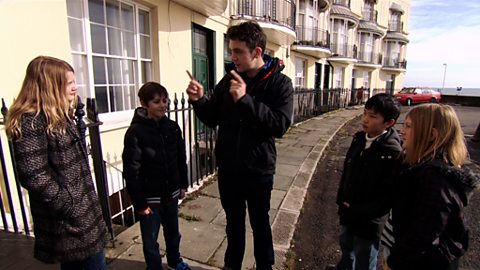
An investigation into the life and work of Muriel Matters. video
A team of young historians investigate Muriel Matters, who fought for equality and broke the law to become the first woman 'to speak' in the House of Commons.
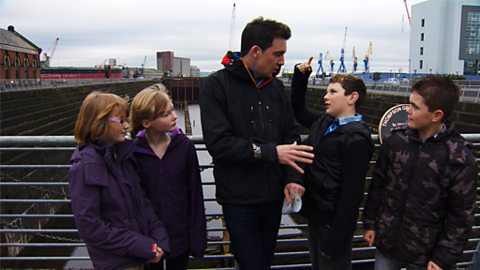
An investigation into the life and work of Thomas Andrews video
A team of young historians investigate Thomas Andrews, the man who designed the Titanic. They consider his role as designer and whether he was at fault for the loss of life.
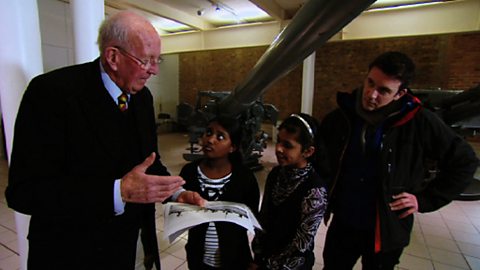
How to interview people. video
A practical guide to interviewing as a way of learning about historical figures or themes, the clip also gives tips on how to get the best from interviewees and what type of questions to ask.
How to research archive pictures. video
A practical guide from Joe Crowley in which she passes on some practical tips on how to find and use photographic archives
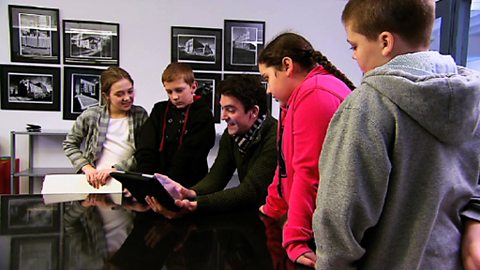
How to research film archives. video
Presented by Joe Crowley, this is a guide to researching film archives or newsreels as a way of investigating historical figures or themes.
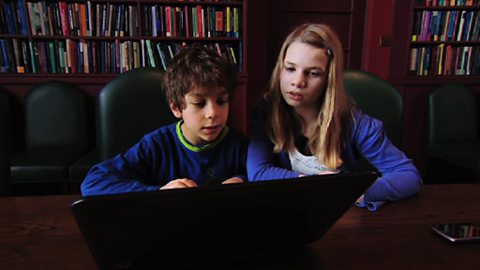
How to research newspapers. video
A practical guide to using newspaper archives to find out about more about particular subjects and historical figures.