JOE CROWLEY:I'm Joe Crowley and this is History Hunt where children like you investigate exciting stuff from the past.
JOE CROWLEY:'Big Stuff.' Incredible isn't it?
STUDENT ONE:Yeah it's massive.
JOE CROWLEY:'Surprising stuff. 'Clever stuff.
JOE CROWLEY:'The clues are everywhere 'if you know where to look 'and finding them is fun.'
JOE CROWLEY:'On this episode of History Hunt, 'our team of four curious kids go right to the heart of Government 'to find out about one brave person 'who fought for womento be given the right to vote.'
JOE CROWLEY:Today, I'm in Hastings. A historic town on the south coast of England.
JOE CROWLEY:And this is The Crescent. One of the most beautiful streets in the town and once home to a woman called Muriel Matters but just who was she?
JOE CROWLEY:'This is Alice, Alex, Eve and Henry. 'They're today's history hunters.
JOE CROWLEY:'Together we're going to search for clues 'that will help us work out who Muriel Matters was and what she did.
JOE CROWLEY:'Muriel, who was also known by her married name of Porter, 'was born in Australia and lived in this street for 20 years.'
JOE CROWLEY:So who's going to read out what it says there?
EVE:First woman to 'speak' in the House of Commons.
JOE CROWLEY:Why has it got thoseinverted commas round. Any ideas?
JOE CROWLEY:Maybe it's not quite how it seems? So how could we find out more? Where could we go to look?
EVE:To the Archive?
JOE CROWLEY:I reckon we should start, Hastings Archives and see what we can find. Everyone ready? Right, let's go.
JOE CROWLEY:'Like all archives, Hastings has a collection of historical documents.
JOE CROWLEY:'I ask Eve and Henry though, to look for clues online.
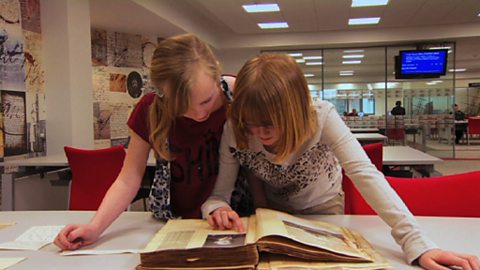
JOE CROWLEY:'Alex and Alice meanwhile look at actual physical documents 'held by the archives.
JOE CROWLEY:'In the local newspaper, they find a report on a Suffragette meeting 'held in Hastings in 1908.
JOE CROWLEY:'At that time, women weren't allowed to vote in elections 'and the Suffragettes believed this was wrong.
JOE CROWLEY:'Muriel was in charge of the meeting. 'She was being criticized by men 'who said women didn't deserve the vote 'because they didn't do jobs that were as important 'as those done by the men.'
BOTH: Grace Darling and Florence Nightingale had done as good work as any soldier.
ALEX:Back thenadays, ladies weren't allowed to do much stuff, but she stuck up for herself.
JOE CROWLEY:'In an online newspaper search Eve and Henry discover 'Muriel soon moved on from holding meetings 'to a more extreme way of protesting.
JOE CROWLEY:'A report in The Times shows she chained herself to a grille 'in the house of commons and had to be removed by force.
JOE CROWLEY:'The Times' writer wasn't impressed.'
EVE:"The interruption by women is regarded by members as a childish exhibition."
HENRY:The Times are not really for women's rights.
EVE:Yeah I don't think they're thinking–
HENRY:I think because
EVE:probably most of the people who write The Times are men.
JOE CROWLEY:'A follow-up article reveals Muriel had actually been sent to prison.
JOE CROWLEY:'Alice and Alex meanwhile discover 'Muriel had tried to get into the House of Commons in the normal way. 'In 1924 she stood for election as a member of parliament.'
ALEX:-Remember back at the plaque it said she was the first woman to speak in the house of commons.
ALICE:Oh yeah.
ALEX:If she spoke in there, maybe she won it?
JOE CROWLEY:-'There isn't a paper copy of the election result. 'So Alice and Alex have to look on something called microfiche - 'a type of film for storing documents - 'for the copy of The Hastings Observer, 'which contains the details they're looking for.
ALICE:"Conservatives, 9000 majority." Percy's got more votes than she has.
JOE CROWLEY:'Time to compare notes.' Guys, what do you know she got up to?
ALICE:She must have been like a hard girl because when she was at one of the meetings she got shouted like abuse saying, "Oh what so now women can be policemen, soldiers and sailors?" and so she was like sticking up for what she believes in.
JOE CROWLEY:What is she after at these meetings?
ALICE:Votes for women.
JOE CROWLEY:What else is going on?
HENRY:She chained herself to the grilles in the House of Commons.
JOE CROWLEY:Right, in parliament.
HENRY:Yeah.
JOE CROWLEY:So Eve, how did they get her out?
EVE:They actually had to cut them out and the two officers who were taking them away also brought the grille with them.
JOE CROWLEY:'The team also tell me about the fact that she stood for parliament 'but failed to win the election.
JOE CROWLEY:'So how was it then that she was the first woman to speak 'in the House of Commons?'
JOE CROWLEY:How do we find out more though, about this? She wants political rights for women.
EVE:Go to parliament–
JOE CROWLEY:She tries to be an MP. What was that?
EVE:Go to parliament?
JOE CROWLEY:Right. That would make sense wouldn't it? That's at the heart of all this.
EVE:Yeah.
HENRY:Yeah.
JOE CROWLEY:Parliament's the place to look next?
EVE:Yeah.
EVE:Yep.
HENRY:Yeah.We're going to London.
JOE CROWLEY:If we want to find out.
ALICE:
We're going to London.
EVE:Calm down.
JOE CROWLEY:'So it's off to London to find out more about Muriel Matters. 'We visit Parliament, which is where members of parliament, called MPs, 'from all over the country, meet to hold debates and make new laws.'
JOE CROWLEY:Here we are, the very grand, Westminster Hall, here in the palaces of Westminster.
JOE CROWLEY:So, I want you guys to speak to your local MP.
JOE CROWLEY:I want you to interview her and find out a little bit more about Muriel Matters and why she was so important, OK?
JOE CROWLEY:You guys, I've arranged for you to meet an archivist in the parliamentary archives to help find some really good little interesting bits of history, right?
JOE CROWLEY:'As Eve and Henry settle down to work in the parliamentary archives 'Alice and Alex are able to grill Amber Rudd, their local MP.'
AMBER RUDD:Here I've got a picture of Muriel Matters talking to this big crowd of people in Hastings. She must have been very brave to make her point in front of so many people.
ALICE:Do you agree with her tying herself to the grille?
AMBER RUDD:I do agree with it even though, as a member of parliament, I generally disagree with people doing illegal things but I do look back and think that it must have been so frustrating for women who wanted to vote to be told they couldn't
AMBER RUDD:that I think that sort of dramatic action was exactly what was needed and it's only because the Suffragettes did so much and they risked so much that women then got the vote and women like me are now able to be members of parliament.
ALICE:If it was still in the Victorian age, would you be a part of the Suffragettes?
AMBER RUDD:Yes I would be, I would definitely be a Suffragette. Would you?
ALICE:Yes.
AMBER RUDD:Excellent.
JOE CROWLEY:'In the archives, Eve and Henry are shown something very rare. 'A banner that Muriel actually took 'on her protest to the house of commons.'
MARI TAKAYNAGI:This is a banner that was unfurled from the ladies' gallery by Muriel Matters and Helen Fox, the suffragettes who were there that day.
HENRY:Yeah, you can really see it's really old can't you?
EVE:Yes.
MARI TAKAYNAGI:Can you read it all?
EVE:Women's freedom league calls upon the government to remove the sex disability which deprives qualified women of their just right of voting in the parliamentary elections
HENRY:That's really nice, to have something that Muriel has done. All of the stuff we've seen, it's just records of what has happened.
HENRY:There hasn't actually been something from when it did happen.
JOE CROWLEY:'The archivist also shows the team 'the cover of a magazine published at the time.'
HENRY:When the grille is in place the ladies behind it are not technically within the house but so soon as the grille is removed, they are in the house.
HENRY:Thus, the two Suffragettes in question were actually placed in the house by the attendants of the house.
JOE CROWLEY:'Alice and Alex then go to 'one of the most important places in the country - 'the Victoria tower in the palace of Westminster 'which is where original acts of parliament, 'going back hundreds of years, are kept.
JOE CROWLEY:'They meet up with a lawyer and campaigner for women's rights 'to find out about how women finally got the vote.'
JULIAN NORMAN:-The problem that they had was that the people who voted were all men. So parliament had no real reason to cater to women and grant them the vote.
JULIAN NORMAN:So without that breaking of the law parliament could have continued to ignore them.
ALEX:-When and why did women get the vote?
JULIAN NORMAN:-Women were first given the vote in 1918 and that was just at the end of the First World War.
JULIAN NORMAN:The men had all been off fighting and the women had to do a lot of the jobs that the men had done and so at that point, people started to say actually yes, you know, women should be given the vote.
JOE CROWLEY:-Now we've got all of this information. We understand about votes for women, we understand about the Suffragettes and the stunts that took place. So what do you actually think of it all?
HENRY:I think she was a really brave woman to do everything she did.
ALICE:Some people must have thought that she was a bit weird but she wasn't. She stood for what she wanted.
EVE:She used to live in Australia, she could have gone back there so out of more than a thousand towns, she chose Hastings.
JOE CROWLEY:Do you like now, you're local history? Does it make you want to learn a bit more about the people in your area?
ALL:Yes.
JOE CROWLEY:'We still have the mystery of what the blue plaque means when it says she was the "First woman to 'speak' in the House of Commons." 'One of the documents from the archives explains this.'
JOE CROWLEY:You guys discovered this didn't you, technically, because this grille was removed, she was actually part of parliament and therefore she, kind of on a technicality–
BOTH: spoke in parliament.
JOE CROWLEY:Yeah. So finally then, do we think she was right to break the law in the way she did.
ALL: Yes.
JOE CROWLEY:And actually, if all this hadn't happened, your future Alice and your future Eve would be different from these two and today hopefully, it's much more similar. Yeah?
JOE CROWLEY:Guys I'm pleased you've learned so much. Done an excellent job. I would say that is first class history hunting.
JOE CROWLEY:One of the most fascinating areas of history is looking at the individuals who were prepared to fight and improve rights for certain groups of people.
JOE CROWLEY:Now some believe you should obey the law no matter what. Others were prepared to go to prison for their beliefs. Muriel Matters was one such person.
JOE CROWLEY:Now her name started out as just some writing on a blue plaque for our History Hunters but from coming all the way here to the Houses of Parliament they now know she was willing to sacrifice a lot, even her own freedom to win votes for women and that's her story.
JOE CROWLEY:'Muriel Matters was born in Australia and came to Britain in 1905, age 25. 'She came to perform on the London stage 'but soon joined one of the biggest political protest movements 'in history, the Suffragettes.'
JULIAN NORMAN:-The Suffragettes wanted the vote for women and they came from the suffragist movement.
JULIAN NORMAN:The Suffragists had been going since 1870 or so and they'd been asking very nicely if they could have the vote but the Suffragettes said, "Well we've been asking nicely for ages and we haven't got anywhere so it's about time we started taking some direct action."
JOE CROWLEY:'In 1908, Muriel and a fellow Suffragette, 'chained themselves to a grille in the ladies viewing gallery 'at the House of Commons 'and lowered a banner into the debating chamber.
JOE CROWLEY:'The only way to take her away was to remove the grille. 'Some people believe that because the grille had gone, 'technically, she was in the House of Commons 'and therefore her shouts of "Votes for women" 'meant that she was the first woman to speak in the House.
JOE CROWLEY:'Muriel was ejected from parliament 'and then joined another demonstration outside. 'She was arrested and sent to prison.
JOE CROWLEY:'Eventually the campaign was successful. 'The Representation of the People Act, became law in February 1918.'
JULIAN NORMAN:-There was a bit of a catch - the age for men was 21 but the age for women, you had to be 30 to vote and you had to be a property owner. It was 1928 that women finally got the vote on the same terms as men.
JOE CROWLEY:'Muriel herself stood for parliament 'in Hastings in 1924 but lost. 'She later settled in the town and lived there until her death in 1969.'
Joe Crowley helps a team of four pupils to uncover the story of Muriel Matters, a campaigner for women to be given the right to vote.
The history hunt begins in Hastings where there is a plaque to Muriel Matters – the first woman 'to speak' in Parliament.
The children head for the town's archives where they discover that Muriel was a noted campaigner for women's rights to sit in Parliament as an MP and that she was a suffragette.
They find out that she was the architect of a number of 'stunts' designed to raise awareness of the issue.
The film ends with the children solving the mystery of why Muriel Matters was the first woman 'to speak' in the House of Commons.
During her invasion of the floor of the Commons, she breached a boundary between public access areas and the chamber to give her impassioned speech and so became, not in a conventional way, the first woman to be heard in the Commons.
This clip is from the series History Hunt Episode 2.
Teacher Notes
After viewing the clip, students could work together to draw a timeline charting the history of women's rights in the UK.
The students could use a range of sources to establish landmark events, such as the dates of voting reform, the election of the first women MPs and the passing of laws equalising pay and working conditions.
When the timeline is complete, ask: “Which is the most important date on our timeline?”
The students could discuss their responses and vote on a final choice.
Muriel Matters is commemorated in Hastings by a blue plaque. Students could look for other commemorative signs of historical figures in their local area such as street names or local buildings named after people. Can they discover anything about the lives of the people?
Curriculum Notes
This clip is suitable for teaching History at KS2 in England, Wales and Northern Ireland and at National 2 Level in Scotland.
More from History Hunt:
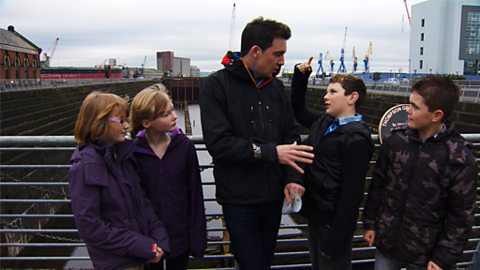
An investigation into the life and work of Thomas Andrews video
A team of young historians investigate Thomas Andrews, the man who designed the Titanic. They consider his role as designer and whether he was at fault for the loss of life.
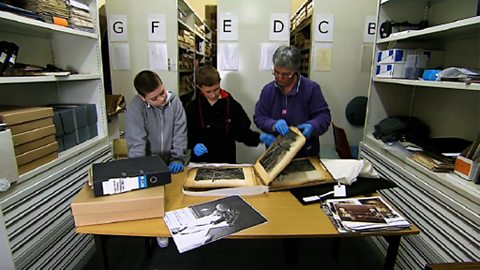
How to use archives. video
A practical guide to finding historical material in archives, this clip gives a taste of what kind of material is found in archives; how to access it and how to interpret it.
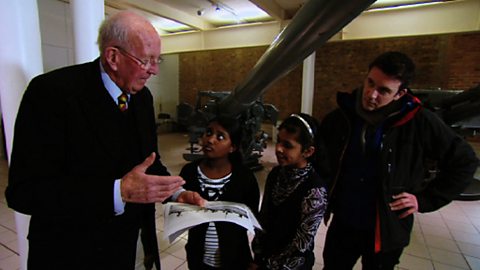
How to interview people. video
A practical guide to interviewing as a way of learning about historical figures or themes, the clip also gives tips on how to get the best from interviewees and what type of questions to ask.
How to research archive pictures. video
A practical guide from Joe Crowley in which she passes on some practical tips on how to find and use photographic archives
How to research film archives. video
Presented by Joe Crowley, this is a guide to researching film archives or newsreels as a way of investigating historical figures or themes.
How to research newspapers. video
A practical guide to using newspaper archives to find out about more about particular subjects and historical figures.