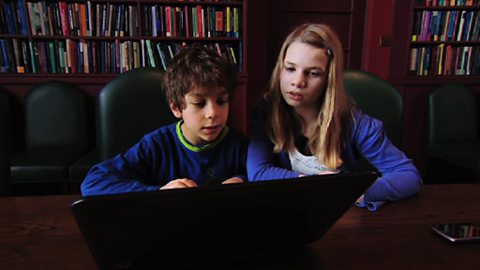
JOE CROWLEY:'If you want to go history hunting, you need to dig deep. 'The best way to uncover the facts, 'is to use the same skills and methods 'that real professional historians use.'
JOE CROWLEY:Today we're going to be focussing on newspapers.
JOE CROWLEY:Today's papers are full of stories and pictures of people or events that are in the news right now. And that's the way newspapers have always been.
JOE CROWLEY:So it means when we're investigating the past, we can learn an awful lot from looking at them.
JOE CROWLEY:'There are many different ways to track down newspapers 'which could be of use to us.
JOE CROWLEY:'Perhaps the easiest is by searching online. 'Conveniently some sites allow you to search a number of newspapers 'at the same time.
JOE CROWLEY:'It's no different from doing a normal internet search, 'although you may have to register with the site first.
JOE CROWLEY:'Just type in the subject you are looking for, 'and the site's search engine will call up stories 'that are potentially relevant. 'Sometimes you can go direct to a newspaper itself.
JOE CROWLEY:'Some papers have been around for many, many years. 'They may have their own searchable website, 'that will allow you to look for specific facts, figures, people, 'places and events.'
CHILD #1:"Prisoners released from Holloway They were some of the women who took part in the demonstration last month. The released prisoners were cheered when they came out."
JOE CROWLEY:When you find stories in the papers, you may notice that different newspapers treat them in different ways.
JOE CROWLEY:Some might criticise people, where others praise them for doing exactly the same thing, and that's the same nowadays.
JOE CROWLEY:Newspaper journalists have always had their own slant on stories, so you have to think about what their angle is and why they might be saying what they're saying.
JOE CROWLEY:'For example a newspaper that supports a government 'may well speak very harshly 'about people who are protesting against it.'
CHILD #2:"The interruption by women is regarded by members as a childish exhibition."
JOE CROWLEY:'There are other ways of looking at newspapers too. 'Archives are places or online websites 'where information is collected and stored.
JOE CROWLEY:'Local archives often keep copies of their own local papers. 'These can go back many years 'Sometimes they are available on something called microfiche.
JOE CROWLEY:'The archive will have special microfiche readers, 'and you can look at pages on a screen.
JOE CROWLEY:'Other times you'll be looking through original newspapers. 'Now using them can be much harder than looking online, 'because sometimes you can't search by name.
JOE CROWLEY:'You'll just have to look at the copies of actual newspapers 'themselves around the dates where you believe are relevant. 'That can take a lot of time, 'but it can be really exciting when you find the information you need.'
CHILD #3:Thomas Andrews, Thomas Andrews yes! Mr Thomas Andrews, managing director of Messrs Harland and Wolff, a victim of the Titanic disaster, April 1912.
JOE CROWLEY:National and local newspapers can be a great way of finding out what people thought about something at the time it happened but you have to be careful.
JOE CROWLEY:They can be biased and they can even be wrong because sometimes they were printed before the full facts were known.
JOE CROWLEY:But as long as you realise that, looking at old newspapers can be very rewarding and can also be great fun.
Newspapers are sometimes described as 'a first draft of history'.
Presented by Joe Crowley, this is designed to help primary school children to use newspaper archive sources to find out more about historical figures or subjects.
It explores a variety of archives, from local to national newspapers, looking at the different forms of papers from original copies to micro-fiche.
The clip contains some useful advice on how to use the information contained in newspaper archives.
This clip is from the series History Hunt Episode 2.
Teacher Notes
Pupils could use the online archive of their local newspaper, after viewing the clip.
Ask: "How has our school featured in the local paper over the years?"
The children could track down news items and photographs relating to the school.
You could also task pairs or groups of pupils to find out about specific local topics (such as sports events or the history of prominent public buildings).
You may be able to arrange a visit to a local newspaper archive (libraries often keep one), to view material that does not appear online.
This can give children the chance to experience researching in formats such as microfiche.
They may even find themselves looking through files of old-fashioned newspaper cuttings.
Pupils could compile their own set of local newspaper cuttings about their school or neighbourhood, over the coming year.
Curriculum Notes
This clip is suitable for teaching History at KS2 in England, Wales and Northern Ireland and at National 2 Level in Scotland.
More from History Hunt:
An investigation into the life and work of Muriel Matters. video
A team of young historians investigate Muriel Matters, who fought for equality and broke the law to become the first woman 'to speak' in the House of Commons.
An investigation into the life and work of Thomas Andrews video
A team of young historians investigate Thomas Andrews, the man who designed the Titanic. They consider his role as designer and whether he was at fault for the loss of life.
How to use archives. video
A practical guide to finding historical material in archives, this clip gives a taste of what kind of material is found in archives; how to access it and how to interpret it.
How to interview people. video
A practical guide to interviewing as a way of learning about historical figures or themes, the clip also gives tips on how to get the best from interviewees and what type of questions to ask.
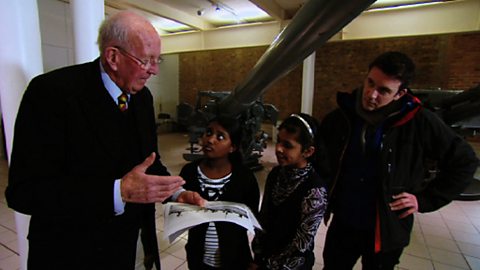
How to research archive pictures. video
A practical guide from Joe Crowley in which she passes on some practical tips on how to find and use photographic archives
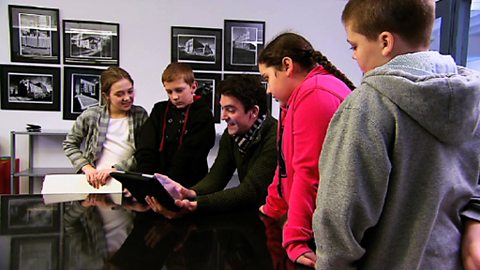
How to research film archives. video
Presented by Joe Crowley, this is a guide to researching film archives or newsreels as a way of investigating historical figures or themes.