RADIO CHATTER
DR YAN WONG:Bloodhound is hoping to be the fastest car in the world, by using both a jet engine and a rocket. So I'm here at New Invention Junior School in the West Midlands to investigate how a rocket can give Bloodhound the power it needs to go so fast. Right. Hiya.
DR YAN WONG:So you know that Bloodhound has a rocket on the back of it, yeah? Do you know how rockets actually work?
SCHOOL BOY #1:Fire's out one end and–
SCHOOL BOY #2:Energy comes out the other.
DR YAN WONG:Yeah, so people think often that it's fire, okay? But in this case, well, we don’t have any fire do we?
ALL:No.
DR YAN WONG:So you don’t need fire for rockets to work. The way they work is that if stuff is thrown in one direction, then the stuff that's throwing it, in this case the bottles, goes in the other direction, yeah? And the reason why fire works is because when you get fire and lots of explosions it makes lots of gas.
DR YAN WONG:'Here we're using an easily available rocket kit which turns an everyday fizzy drinks bottle into a rocket. To get the rocket to work properly, we have to get the right amount of water in the bottle. Not as easy as it sounds. Try experimenting yourself with different volumes of water. Attach one end of the rubber tubing to the bottle, and the other end to a track pump, and you're ready to launch.'
DR YAN WONG:Now, this is really safe, but they can go quite high and quite fast, so we've got to do this outside and make sure that the rockets are angled away from everyone. Okay, are you ready to pump?
ALL: Yeah.
DR YAN WONG:Right, let's go. I'll get out the way.
DR YAN WONG:'Oh dear, Huston we have a problem.'
DR YAN WONG:So let's try filling some of those… Whee!
LAUGHING
DR YAN WONG:'Pumping air into the bottle 'causes the pressure inside the rocket to build up and that's what pushes the water out of the back of the bottle and propels it into the sky.'
CHEERING
DR YAN WONG:Was yours the one that didn’t work-- Whee. Whoa.
DR YAN WONG:So it's quite impressive when you throw a load of water out the back isn't it?
DR YAN WONG:'Bloodhound rocket engineers are experts in their field and are continually testing the rocket in order to produce the perfect model. Luckily they're having a bit more success than this group. Only joking guys.'
SCHOOL BOY #1:It's not going!
SCHOOL BOY #2:That's it.
DR YAN WONG:Whee! Whee!
LAUGHING
DR YAN WONG:It's gone right over the roof.
DR YAN WONG:'Oops, we seem to have hit one of the teacher's cars.'
DR YAN WONG:They're looking at it going Whee! Look at–
ALL:Whoa!
SCHOOL BOY #1:That was good!
DR YAN WONG:So this was actually the best one, wasn't it?
SCHOOL GIRL:Yeah.
DR YAN WONG:You see how high that went? It's amazing. And I think the other ones, well they were going reasonably well, but they were just steering in all sorts of random directions, weren't they? That's why you're covered in mud.
SCHOOL GIRL:Yeah.
DR YAN WONG:And so, that's one of the real problems that Bloodhound's gonna have as well is, if things are going fast, keeping them going in a straight direction is actually quite difficult. And this one's obviously got it exactly right. Maybe because it's a bit more streamlined than the others. Whereas the other ones, well, you saw what happened to them. The other thing you can do actually if you're trying this at home is you can put something heavier on the top like a tennis ball or something and Sellotape that on and sometimes that helps keep it in a straight line as well. So try it at home.
Children from Links Primary School in London investigate water rockets.
Dr Yan Wong explains the theory behind rocket power, and the children use plastic bottles filled with water and air pumps to see who can get theirs the furthest.
The most streamlined rocket shape is the most effective.
This short film is from the series The Bloodhound Adventure.
Teacher Notes
This clip has detailed instructions and guidelines that could be used prior to initiating an investigation into simple water rocket design and construction.
It explains how rockets work and suggests modifications that could help the pupils when predicting their own results in further tests.
A focus on the importance of fair testing and safety could be made, with the latter part of the clip being used to draw together evidence and support findings.
Curriculum Notes
This clip will be relevant for teaching Science or Design and Technology at Key Stage 2 in England, Wales and Northern Ireland, and Level 2 in Scotland.

More from The Bloodhound Adventure
Experimenting with balloon-powered cars. video
Primary school pupils investigate which model car design is faster; one propelled by an elastic band around the axel, or a balloon-powered car which doesn't directly power the wheels.
Experimenting with reaction times video
Children from New Invention Junior School in the West Midlands investigate their reaction times and how these are affected by distractions.
What's Bloodhound like to drive? video
Primary school children investigate what driving a car at over 1000 mph would be like, by trying out at RAF flight simulator and taking a flight with Bloodhound's driver Andy Green.
Harnessing air resistance with parachutes. video
Children from Links Primary School in London investigate harnessing air resistance in order to safely drop an egg, experimenting with different parachute designs.
How air resistance slows down vehicles. video
Bloodhound Investigators find out how air resistance can be used to slow down vehicles. They also discover the importance of traction, drag and aerodynamics.
Investigating air and water resistance. video
Primary school children investigate which shapes travel fastest through water, to understand what is the best design for the Bloodhound Supersonic car.
Investigating friction. video
Dr Yan Wong and children from Links Primary School in London investigate friction by trying to separate two interleaved books.
Is the Bloodhound SSC a car, a boat or a plane? video
Bloodhound Investigators find out if Bloodhound SSC is a car, a boat or a plane. They compare and contrast features of each with input from members of the Bloodhound team.
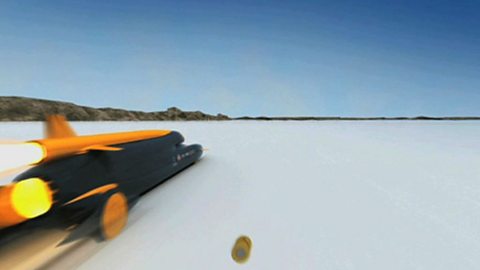
What impact does air resistance and density have on travelling fast? video
Primary school children try skydiving, flying a microlight and racing in a swimming pool to understand how air resistance and density will affect the Bloodhound Supersonic car.
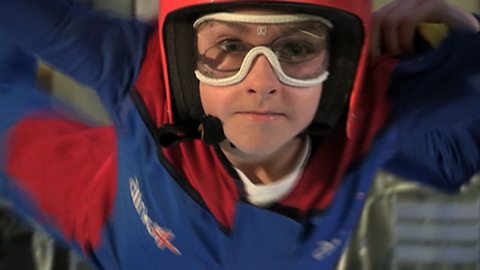
Why doesn't Bloodhound have tyres? video
Primary school investigate why cars normally have tyres - even though Bloodhound SSC does not. They visit a race track to find out about grip and traction, and ride bikes to find out about comfort.
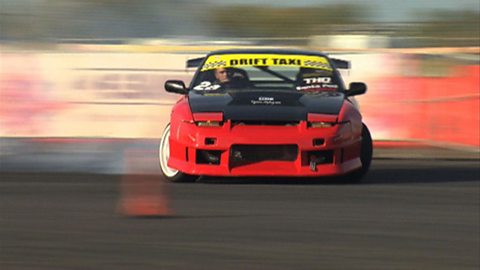
What makes a supersonic car move? video
Primary school children find out about the engines that will propel the Bloodhound Supersonic car to 1000 mph, a jet engine and a rocket engine.