KIM HOWELLS: Terry Setch first came to Cardiff in the 1960s.
The subject matter for his paintings at first seems pretty uninspiring - all of the rubbish that washes up on the shoreline of Cardiff Bay.
But out of this detritus, he's created a series of powerful works that highlight our disposable society, and which have a strange beauty all of their own.
For over 40 years now, Terry Setch has explored the shoreline near Penarth like an artistic beachcomber.
TERRY SETCH: Once I saw that coastline, I had to get down on to that beach and start walking and head up towards Lavernock.
And that was an exciting thing - I was fixed and it almost became a sublime place.
The two islands that change, disappear in the mist, and then they appear again.
Walking towards Sully, and lo and behold, there's a car. It's on the beach. You look up, you can see where it's coming from.
And I thought, well, joy riders, tipping them over and crashing down.
The conjuncture of these two opposite things which people have very strong opinions about - one is nice, one is nasty.
One is violent, and yet the other one's violent, but it's violent in a different way - nature.
KIM HOWELLS: One of the themes that you've been exploring is the whole question of pollution and what it does to us and what it does to our landscape and why we do it.
When did you become interested in this?
TERRY SETCH: Oil came into it, in a very big way.
I think the Torrey Canyon went down in '68, something like that.
KIM HOWELLS: In the Scilly Isles?
TERRY SETCH: Yes. And there was this pollution on beaches.
This oil business - and I think it's been growing and growing and growing.
It seems fundamentally one of the things which is constantly making all manner of greed and pollution.
So I made a very large painting which was called Once Upon A Time There Was Oil, which is the picture the Tate bought.
KIM HOWELLS: Tate Britain?
TERRY SETCH: Yes. It may not be the most significant painting, it's one of the largest paintings in the collection.
They've got one of the most significant titles, if you like, because in fact, it's a thing that's gone on for decades and decades and it's still going on.
Video summary
A study of artist Terry Setch, who uses items washed up on the beach as a medium for his work. He talks to Kim Howells about his inspiration in this KS3 video.
This clip is from the BBC Two series, Framing Wales.
Teacher Notes
Pupils could discuss the issues that arise in the interview with Terry Setch and that feature in his work - pollution, litter, environmental impact, the disposable nature of society etc.
They could then discuss if they have ever been beachcombing and what they have found.
Pupils could bring in pieces of small cleaned rubbish or recycling they have safely sourced from their homes. Then in groups they could create, on a large piece of thick card or hardboard, their responses to pollution or rubbish, using thick paint, PVA and distorted items brought in.
They could, if they wish, include words - handwritten or printed with the aid of a computer - to produce a pamphlet on the subject of pollution and litter to encourage fellow students to care for their environment.
This video is relevant for teaching KS3 Art and Design in England, Wales and Northern Ireland and third level in Scotland.
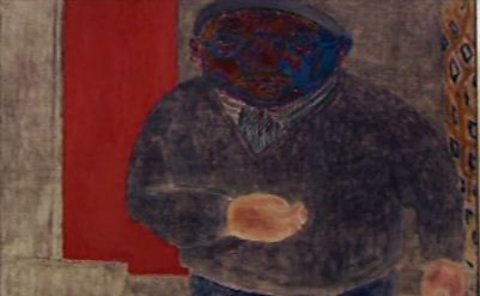
Heinz Koppel. video
A video showing the work of German artist Heinz Koppel, who settled in Merthyr Tydfil in 1944.
Ernest Zobole. video
The work of Ernest Zobole, a member of the Rhondda Group of artists whose colour palette was similar to European avant-garde artists.
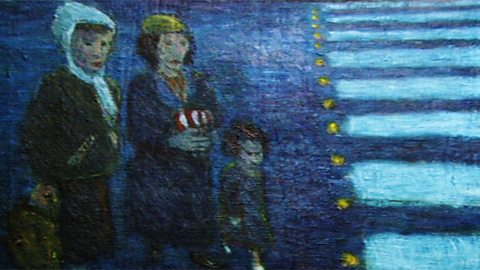
Evan Walters and The Jug. video
Presenter Kim Howells discusses Evan Walters' double-image painting Stout Man with a Jug, painted in the 1930s, with conservation officer Emma Benz Fisher.
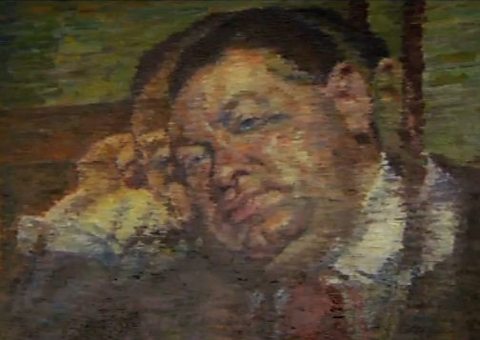
John Elwyn. video
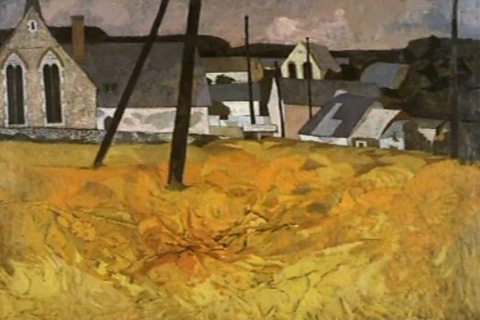
Landscape painter John Elwyn specialised in rural landscapes of south west Wales, despite living in England for a large part of his life.
Augustus and Gwen John. video
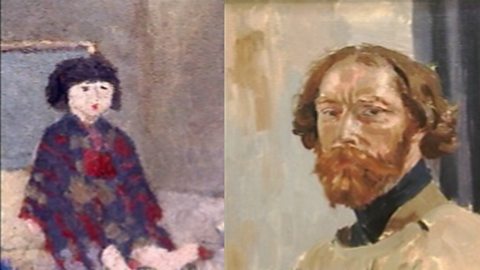
Tenby-born Augustus John and his sister Gwen had styles that were vastly different - developing their own take on the influence of European art movements.
Kevin Sinnott. video
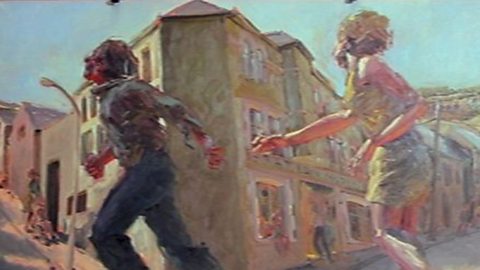
Kevin Sinnott tells Kim Howells that his art reflects the community, life and passions of characters in the valleys and talks about his best known painting, Running Away with the Hairdresser.