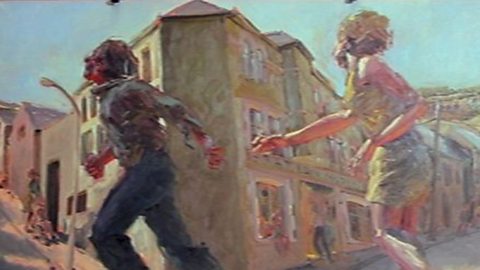
KIM HOWELLS: Soon after he had graduated from art school, Augustus John's work was selling well.
A style more flamboyant than that of his sister was proving popular among potential patrons.
KAREN MCKINNON: The Tutor is so different to Gwen John's, immediately. It couldn't be more different.
The thing about Augustus is he painted in so many different ways.
He changed his style, he changed his colour palette, he sometimes did portraiture, he sometimes did many figures, or they'd Reference mythology…
KIM HOWELLS: So why do you think two young people from Tenby ended up painting in such different ways?
KAREN MCKINNON: I mean, maybe going back to personality and the way they lived their lives as well.
He was a very flamboyant character, you know.
He did hang out with lots of people and party much more. Maybe this is reflected in his painting as well.
KIM HOWELLS: They were both in their formative period, learning to become artists around the time of the First World War.
There were artistic influences flying everywhere across Europe at the time - very revolutionary things going on.
Would they have been like any other pair of artists, and have been influenced by all of those styles?
Or is there something about them, because they came from Wales, which made them different to their contemporaries?
KAREN MCKINNON: Like all artists at that time, they would have been influenced by all of those styles flying around.
They both treat that very, very differently.
And whereas Gwen John pares that down, perhaps we can say Augustus John was much more experimental and changes his style.
I don't think that would be because they're from Wales.
I think that would be something influencing all artists.
Video summary
Presenter Kim Howells and Glynn Vivian gallery curator Karen McKinnon compare the paintings of Tenby-born Augustus John and his sister Gwen in this KS3 video. Despite being brother and sister, their styles were vastly different - despite their influences being very similar.
This clip is from the BBC Two series, Framing Wales.
Teacher Notes
Pupils could look carefully at the work of both artists and then make sketches of themselves or a peer in pencil or charcoal.
They could then create a larger self portrait in either the style of Gwen John or Augustus John paying careful attention to their facial proportions.
Students could work in twos or threes to find out about other art movements that were taking place in Europe at that time and present a summary of their research to the class, giving opportunity for questions.
This video is relevant for teaching KS3 Art and Design in England, Wales and Northern Ireland and third level in Scotland.
Heinz Koppel. video
A video showing the work of German artist Heinz Koppel, who settled in Merthyr Tydfil in 1944.
Terry Setch. video
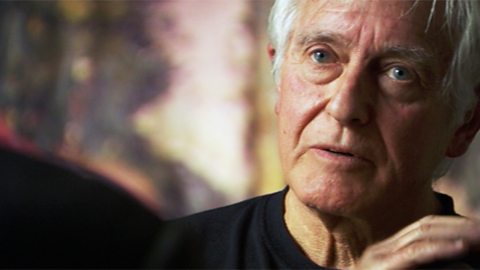
Terry Setch talks to Kim Howells about using items washed up on the beach as a medium for his work.
Ernest Zobole. video
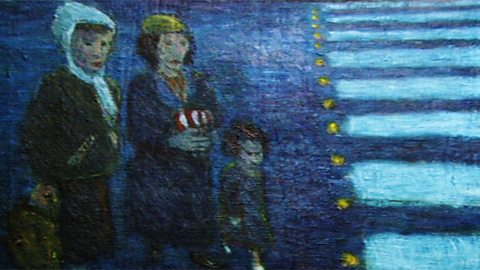
The work of Ernest Zobole, a member of the Rhondda Group of artists whose colour palette was similar to European avant-garde artists.
Evan Walters and The Jug. video
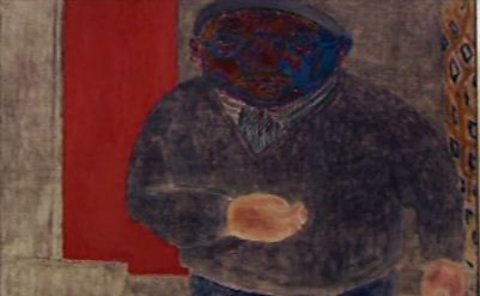
Presenter Kim Howells discusses Evan Walters' double-image painting Stout Man with a Jug, painted in the 1930s, with conservation officer Emma Benz Fisher.
John Elwyn. video
Landscape painter John Elwyn specialised in rural landscapes of south west Wales, despite living in England for a large part of his life.
Kevin Sinnott. video
Kevin Sinnott tells Kim Howells that his art reflects the community, life and passions of characters in the valleys and talks about his best known painting, Running Away with the Hairdresser.