KIM HOWELLS: Kevin, you're one of the few painters who, for me, actually paints what Wales is about.
It looks like Wales, it feels like Wales and I get the vibrancy of this landscape in your paintings.
KEVIN SINNOTT: I do like to think of them as being about the community and about life and about the warmth and about the characters that you see in the valleys of Wales and the passion, rather than a miner going to work.
Of course there weren't any miners going to work by the time I got back here anyway.
I'd rather paint a young girl flying a kite.
It's a process that is initially quite abstract, more akin to abstract expressionism than it is to more traditional, realistic, figurative painting, initially.
This is where the dynamism of the compositions comes from. It comes from being immersed in the art.
KIM HOWELLS: One of the most popular paintings that's come out of Wales, or anywhere, over the last 30 years is your painting Running Away With The Hairdresser.
Where did the idea for that come from?
KEVIN SINNOTT: I did this painting of this one single guy, just his torso, running away.
His arms are pumping against a background of terraced houses. A very simple idea.
It's aspirational, in a way. This guy is running away. Where to? University, perhaps, better things.
And I did another figure, and so it became a guy running away with a girl, or vice versa.
He could be leaving his wife to go and live around the corner.
He's not necessarily running away from his background, he's simply running away.
The title, I don't know where it came from. She didn't have a comb in her hand. He didn't have a hair dryer.
My brother-in-law actually left his wife for a hairdresser.
It took place in Wales. They weren't on my mind. They definitely weren't on my mind.
I just thought "running away with the hairdresser", it's about running away.
It's about…it's what I did, I suppose.
Video summary
Kevin Sinnott tells Kim Howells he likes to think of his paintings as being about the warmth and passion of the characters in the south Wales valleys in this KS3 video. They also discuss his best-known painting Running Away with the Hairdresser.
This clip is from the BBC Two series, Framing Wales.
Teacher Notes
In groups, study a painting by Kevin Sinnott - you could stick an A5 colour photocopy of a painting in the middle of an A2 sheet of paper and give students a list of questions to discuss and then jot the answers down around the outside. Questions could focus on what colours the artist used, the subject matter, what's going on in the painting, how it makes them feel.
Ask pupils to pose for each other to make sketches of people in their leisure time - playing, chatting etc. They could then create larger paintings in school using vibrant colours and bolder brushstrokes to show people playing and having fun.
Pupils could write a short imaginative story which relates to the subject of their painting.
This video is relevant for teaching KS3 Art and Design in England, Wales and Northern Ireland and third level in Scotland.
Heinz Koppel. video
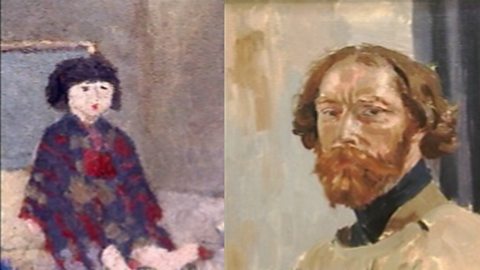
A video showing the work of German artist Heinz Koppel, who settled in Merthyr Tydfil in 1944.
Terry Setch. video
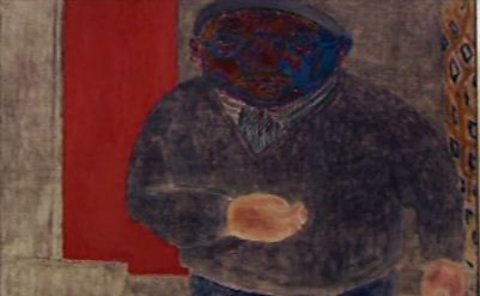
Terry Setch talks to Kim Howells about using items washed up on the beach as a medium for his work.
Ernest Zobole. video
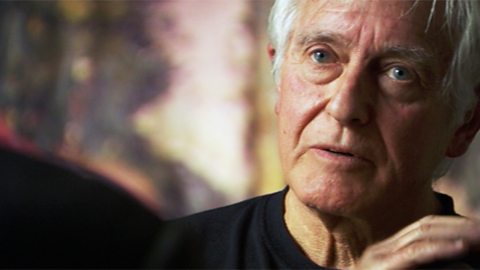
The work of Ernest Zobole, a member of the Rhondda Group of artists whose colour palette was similar to European avant-garde artists.
Evan Walters and The Jug. video
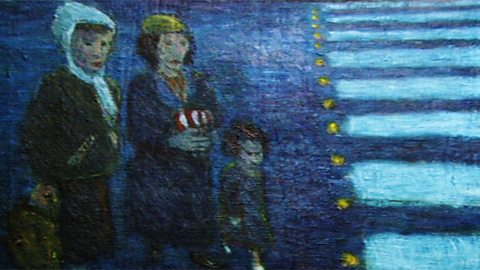
Presenter Kim Howells discusses Evan Walters' double-image painting Stout Man with a Jug, painted in the 1930s, with conservation officer Emma Benz Fisher.
John Elwyn. video
Landscape painter John Elwyn specialised in rural landscapes of south west Wales, despite living in England for a large part of his life.
Augustus and Gwen John. video
Tenby-born Augustus John and his sister Gwen had styles that were vastly different - developing their own take on the influence of European art movements.