

Local Navigation
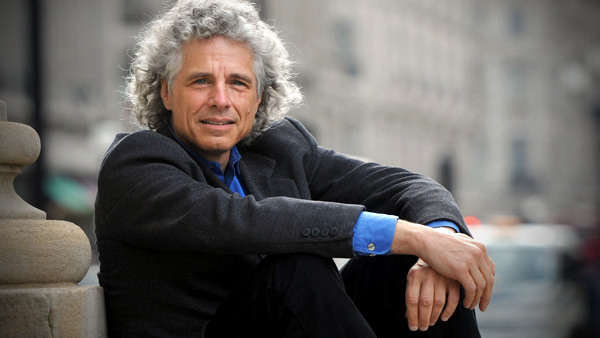 Steven PinkerCognitive Psychologist| From The Life Scientific
 most recentJohn SulstonBiologist | From The Life Scientific
 Nicky ClaytonProfessor of Comparative Cognition | From The Life Scientific
 Matthew TaylorChief Executive of the RSA | From Brain Culture: Neuroscience and Society
 Geoff BunnPsychologist| From A History of the Brain
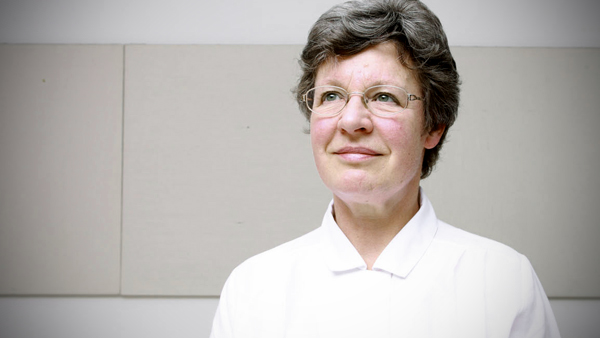 Jocelyn Bell BurnellPhysicist and Astronomer| From The Life Scientific
 Paul NurseGenetics and cell biology| From The Life Scientific
 Jim Al-KhaliliTheoretical Physicist| From The Life Scientific
Cognitive Psychologist
Professor of Psychology at Harvard University, Steven Pinker is one of science's superstars, variously known as science's agent provocateur and an evolutionary rock-star. Together with his wife Rebecca Goldstein he has been described as part of America's 'brainiest couple'.
"I've decided not to have children, and if my genes don't like it they can go jump in the lake."

"Man will become better when you show him what he is like." (Chekhov)
"My religious education was not terribly religious, it was reformed Judaism... it was an opportunity to argue about Hiroshima, Vietnam, Atheism."

"Probably my own interest in psychology started with a broader concern with human nature."
 Melvyn Bragg and guests including Steven Pinker discuss the vexing issue of human nature. Is there really such a thing as human nature? And, if there is, can it be changed? Does the truth about human nature mean we should stop striving for progress, or should it give us cause for optimism? How important is the human race in the wider scheme of things? (2002)
 In the very first series of Reith Lectures the philosopher, mathematician, and social reformer Bertrand Russell explores the role of impulses in human nature. He charts the way these impulses have manifested themselves throughout history, from very primitive communities through to more 'civilised' societies. (1948)
Matthew Taylor tells the story of the last eight years in the life of George Price - a scientist who studied the evolution of altruism and who suffered for his faith. (2011)

"I certainly don't believe that there is anything like a soul or spirit. I think it's physically nothing but molecules... The notion of an immortal soul is a terribly dangerous notion."
Ernie Rea and guests discuss what cognitive neuroscience is revealing about belief in God. What does research into our brain indicate about religious and spiritual experiences? (2009)
 Matthew Taylor discovers what the latest scientific research can tell us about the human need for religion. (2010)
 As science increasingly begins to explain our behaviour it is also challenging our assumptions about moral and social values. For millennia our moral reasoning has been guided by first principles - theology and philosophy. Should we embrace rather than fear the knowledge science brings as it helps unravel some of morality's muddles that have so far defeated our greatest thinkers? (2011)
"MIT unquestionably had the world's best multi-disciplinary programme in language."

"Having Chomsky as a colleague... it was a hothouse for research on language."
Matt Frei talks to Noam Chomsky. Over 40 years, he's explored ideas of war, conspiracy, conservation and communication. Americana asks him how his ideas have changed over time and how Americans may continue to transform in the future.(2010)
Watch an an unedited version of Jeremy Paxman's interview with Professor in Linguistics at the Massachusetts Institute of Technology (MIT), philosopher, cognitive scientist and political activist, Noam Chomsky from Newsnight. (2011)
 Melvyn Bragg and guests Usha Goswami, Annette Karmiloff-Smith and Denis Mareschal discuss what new research reveals about the infant brain.. (2010)
"After having botched a couple of operations implanting electrodes into the brains of rats and generally not being a terribly dextrous person... the success of your science depends on a degree of manual meticulousness that I knew I did not possess."
 Professor Ramachandran, Director of the Centre for Brain and Cognition at the University of California, argues that neuroscience, perhaps more than any other discipline, is capable of transforming man's understanding of himself and his place in the cosmos. (2003)
 Melvyn Bragg and guests examine the relationship between the mind and the brain as they discuss recent developments in Neuroscience. (2008)
Peter Evans investigates recent advances in brain scanning technology which can reveal some of our innermost thoughts, predict our intentions and even know when we are telling the truth. These techniques are being used by commercial companies for marketing and lie detection. (2007)

"The child has something in his brain that allows him to listen to a bunch of sentences for a couple of years, and then be a fluent speaker."
Carmen Pryce investigates the inner world of the young child. As adults we struggle to master a new language - but children seem to manage effortlessly... (1995)
Ian Peacock finds out why the evolution of language and the use of metaphor kick started human creativity, paving the way for cave art and modern civilisation. (2005)
 Professor Jean Aitchison examines the predictable way in which the language web develops. Language has a biologically organised schedule with children everywhere following a similar pattern. (1996)
Listen: Fame... and controversy
"All of the debate and controversy is over X, Y and Z rather than on the actual substance."

"He [Steven Pinker] would say that human language is a suite of adaptations that have evolved in the last 6 million years since we split from chimpanzees, I would say that human language is mostly made up of things that evolved long before that." (Tecumseh Fitch)
 Melvyn Bragg and guests discuss the history of our ideas about the formation of language. The guests include Dr Jonathan Miller and Steven Pinker. (1999)
 As a new documentary is released about Project Nim, Quentin Cooper revisits the classic experiment to bring a chimpanzee up like a human child. (2011)
In this lecture entitled 'A Burning Fire', Professor Blakemore moves between scientific experiments with chimpanzees using sign language to the legendary tales of children growing up without a language. Through these examples he tries to explain why humans have advanced their communications into the complicated language we have today. (1976)
Communication on Twitter - or indeed anywhere - would be impossible without FOXP2. Research on a family suffering from a language impairment called dysphasia found that the 16 family members with dysphasia all had a mutation in their FOXP2 gene. The FOXP2 gene is at work in other animals too... (2011)

"I tend to emphasise what's different about Homo-Sapiens."
Steve Jones examines the history of the new science, the methods used and asks if it can explain the human drive to language, religion and culture. (2009)
Human uniqueness takes many forms: we can communicate complex ideas; we have developed technologies, such as medicine and transport; and we change our environment to suit our biology. But how does human culture affect our biology - our genes? (2011)
Andrew Luck-Baker describes efforts to sequence Neanderthal DNA in the hope of learning more about the process of human evolution. (2007)

"I think the contribution of genes to the formation of individual differences in intelligence and personality is substantial." - "It isn't necessarily the parents' fault."
 Adam Rutherford asks how much of our lives' experiences, such as diet and pollution, is passed onto our children, as well as our genes. These changes are called epigenetic. (2010)
 Mariella Frostrup hosts a debate about parenting with families, experts and policy-makers. (2010)
 Andrew Luck-Baker asks why humans, unlike other primates, have such a long childhood. Chimp infants can look after themselves when they are weaned, but young humans have to rely on their parents for years. What advantages does a long childhood bring to us as a species?. (2009)
Listen: Keeping the politics out
"The political, moral and emotional clouds that have hovered over the scientific study of human-beings."

"A phobia of genetics that it's time to get over." due to perceived connections with "19th century pseudo-science on differences between ethnic groups and races which we now know to be nonsense."
 Professor Steve Jones reflects on the legacy of the father of eugenics, Francis Galton, and warns against the danger of overstatement by geneticists. (2011)
Climate change, medicine, the food we eat, the way we give birth, the way we die. Science governs every aspect of our lives. But can we trust politicians to make the right decisions for us about those vital issues? (2007)
 Many scientists in British universities now have close links with industry. Spin-off companies are a feature of academic life. Is the urge to make profit subverting the search for knowledge? (2010)
Listen: Better angels, inner demons
"Violence has been in decline for long stretches of history... "

"We may even be living in the most peaceable moment in human history...we know that the world has become a more peaceful place."
Steven Pinker charts the decline of violence from Biblical times to the present, and argues that, though it may seem illogical and even obscene, given Iraq and Darfur, we are living in the most peaceful time in our species' existence. (2007)
 Will the 20th century be remembered; as a century of progress or as one of the most murderous in history? (1998)
 Philip Dodd talks to Steven Pinker about our increasingly peaceful society and his new book The Better Angels of Our Nature: The Decline of Violence in History and Its Causes. (2011)

"A big predictor of violence is a sense of narcissistic entitlement."
Does it follow automatically that if someone murders many innocent people in cold blood, as Anders Breivik did, they must be insane? Listen to this interview from the Today programme. (2011)
Quentin Cooper investigates the psychology that turns a peaceful protest into a rioting mob. (2011)
 Professor Steve Jones asks if people can be "born bad" - as was said of the infamous Jukes family in the US. Can criminal behaviour be inherited through the genes?
Select a scientist to explore more about their life, work and inspiration. Choose a subject to discover even more from the Radio 4 Archive & beyond. You can download programmes to listen to later or stack them up to listen to in Your Playlist below.

BBC © 2014The BBC is not responsible for the content of external sites. Read more.
This page is best viewed in an up-to-date web browser with style sheets (CSS) enabled. While you will be able to view the content of this page in your current browser, you will not be able to get the full visual experience. Please consider upgrading your browser software or enabling style sheets (CSS) if you are able to do so.

