

Local Navigation
 most recentJohn SulstonBiologist | From The Life Scientific
 Nicky ClaytonProfessor of Comparative Cognition | From The Life Scientific
 Matthew TaylorChief Executive of the RSA | From Brain Culture: Neuroscience and Society
 Geoff BunnPsychologist| From A History of the Brain
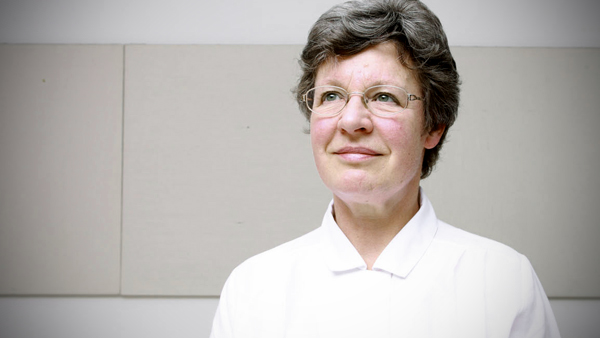 Jocelyn Bell BurnellPhysicist and Astronomer| From The Life Scientific
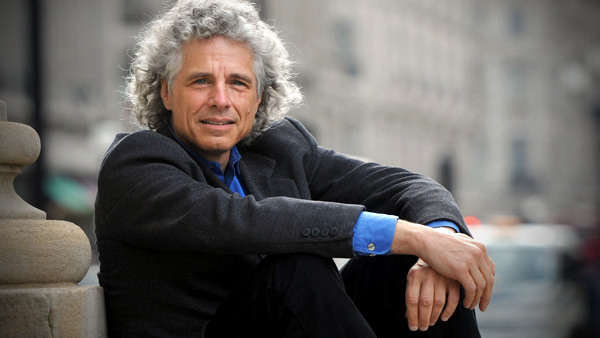 Steven PinkerCognitive Psychologist| From The Life Scientific
 Paul NurseGenetics and cell biology| From The Life Scientific
 Jim Al-KhaliliTheoretical Physicist| From The Life Scientific
Sir John Sulston is a British biologist and joint winner of a Nobel Prize in 2002. He is Chair of the Institute for Science, Ethics and Innovation at the University of Manchester and was head of the British end of the Human Genome project, responsible for sequencing one-third of the human genome. He is passionately opposed to the protection and exploitation of scientific research for commercial interests.
"There's only one human genome... Why compete over it. It's crazy!"
"I'm the reader, others do the understanding and that's why it's so important to release the data, so they can."
"I really rather hankered after doing something else with my life... classic mid-life crisis, and there was a thing on offer from fisheries in Lowestoft... Sydney [Brenner] basically refused to give me a reference - he said it was ridiculous!"
"The instruction manual for life... an extraordinary insight into who we are, the importance of which we are only now beginning to appreciate."
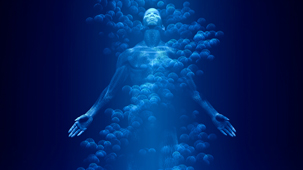
"In June 2000 Tony Blair and Bill Clinton announced to the world that scientists had sequenced the entire human genome."
 Evolutionary biologist Professor Richard Dawkins decodes the discoveries and mysteries surrounding the genome. (2010)
Read the original White House press release announcing the completion of the Human Genome Project from June 25 2000. (2000)
BBC medical correspondent Fergus Walsh talks through how you sequence a genome. (2009)

"Some say it's an abstract portrait, but I say it's the most realistic portrait in the National Portrait Gallery. It carries the instructions that led to John and shows his ancestry back to the beginning of the universe." (Marc Quinn)
Just before 9/11 Marc Quinn did a portrait of Sir John Sulston based on a sample of his DNA (2011)
Andrew Marr's guests include Adam Rutherford, geneticist and journalist on decoding the genome and being human. (2011)
The geneticist Steve Jones asks how much the mapping of the human genome really tells us about who we are. (2010)
Nobel laureate Professor Sir Martin Evans describes the moment scientists worked out how the DNA code was read. (2010)

A watershed moment in biology occurred in 1953 with the discovery of the structure of DNA by James Watson and Francis Crick. Crick rushed into the Eagle pub in Cambridge at the time shouting "We have discovered the secret of life"'.
In April 1953, the journal Nature reported what was probably the most important scientific discovery of the 20th century - the double helix structure of DNA - the molecule of life. (2003)
Nobel laureate Professor Venki Ramakrishnan describes how the structure of DNA was discovered. (2010)
The discovery of Francis Crick's lost correspondence, revealing the fractious exchanges between the rival parties hunting the structure of DNA. (2010)
James Watson and Francis Crick first published their discoveries about the structure of DNA in April 1953. Their findings were to revolutionise our understanding of life itself. (2010)
"You like to see things through to the end... nothing if not tenacious... "

"I like collecting stamps that people are going to use."
Using physics to explain how the world works (1983)
 The idea of the show is to bring together the most interesting people we can find and ask them to submit one item each to fill the Museum's empty plinths. (2011)
Material World - Radio 4's weekly science show - turns your ideas into real-life experiments. Check out the results of last year's winning entries. (2010)

"I make maps that other people can use for their own work... I don't think I'm a very intellectual person... I like to do the joining up."
A consortium of scientists have just completed a pilot study which aims to map the variation in the genetic code of 2,500 people from across the world. (2010)
 In this programme, Tracey Logan explains how analysis of DNA can be used to trace back ancestral lineages. She considers what the results of such studies might tell us about ancient Britons and how this is reflected in the multi-cultural British Isles of the 21st century. She asks should we be prepared to draw further lines of difference between the four nations or will we be forced to accept a shared ancient heritage? (2011)
Will we soon be sequencing our own genomes in our own homes? Quentin Cooper investigates. (2010)
 Kakapo, Cleopatra and Pavarotti are cryptic names for genes; the clue to what they do lies in their names. Sue Broom cracks the code in this subtle game of scientific one upmanship. (2010)
"It's a small cylindrical object, a millimetre long when it's fully grown, transparent and it grows very fast."
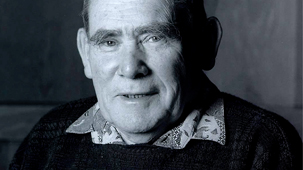
"My boss Sydney Brenner... rescued this worm from obscurity and turned it into one of the most important experimental animals in biology."
Web of Stories - Lewis Wolpert describes Sydney Brenner and his work with nematode worms.
When it comes to fighting the ageing process, nematode worms are the clear winners - able to change their metabolism to live five times their normal lifespan. (2010)
Researchers say they have created the first ever animal with artificial information in its genetic code. (2011)

"This was very much biological messing about... what I wanted was a happy worm. The very first time I saw a cell divide and then I saw its daughters divide I was ecstatic because I then knew that if I could see one round of cells dividing I could see everything."
The rise of the central nervous system [CNS] in animal evolution has puzzled scientists for centuries. (2007)
Researchers at the European Molecular Biology Laboratory have mapped the nervous system of worms to try and understand how the human cerebral cortex evolved. (2010)
 Melvyn Bragg and his guests discuss the nervous system. Most animals have a nervous system, a network of nerve tissues which allows parts of the body to communicate with each other. In humans the most significant parts of this network are the brain, spinal column and retinas (2011)
 All living matter on our planet, from the nematode to the elephant, from the bacterium to the blue whale, is derived from a single common ancestor. (2004)
"It was indeed a race, there was a serious race and it was about ownership."

"It was not about keeping the data secret, those were mantras that were created, particularly in the UK, because with this massive amount of money they weren't able to scientifically compete with the new tools and the new approach that we had." (Craig Venter) "The thing is just hugely exaggerated... but to be honest... actually none of this matters." (John Sulston)
An edition from 2005 featuring controversial scientist Craig Venter, who talks about his plans to build a bacterial genome from scratch in the hope of producing new forms of alternative energy fuels. (2005)
 The creation of an artificial cell by scientist and entrepreneur Craig Venter shows what synthetic biology is capable of. But others want to go much further - recreating life from scratch, or redesigning it at the most fundamental level. (2010)
Dr Craig Venter, one of the men who first successfully mapped the human genome, tells Darwin about his own experiences as a collector and hands-on biologist. (2009)

"People don't invest in a company... in order to give the data away. The business model was to hold the data and rent it out."
Gene Patents - including two linked to breast cancer - have been ruled unlawful in the United States. (2010)
International patent lawyer Yvonne Cripps asks whether we can patent people's body parts, or does this violate our basic human rights? (2010)
In a landmark ruling this week, a New York court judge has declared that several patents for a genetic cancer test are not valid. The finding comes after years of argument over the rights and wrongs of patenting disease genes, with objectors arguing that patents limit free inquiry, supporters insisting that fair rewards promote continued research. (2010)

"They would argue that they needed to sell their product, this business model, in order to get the funding to continue their research?" (Jim Al-Khalili) "And now of course we have all the pharmaceutical companies say exactly the same thing about drug development." (John Sulston)
"The pressures on drug companies are increasing: from shareholders, from rivals, from government regulators, and from lawsuits. It takes millions of dollars and many years to develop a new treatment. What should they do when discouraging results pop up about a promising drug? (2009)
 Peter Day talks to GlaxoSmithKline CEO Andrew Witty about the ways he is changing the company's quest for drug discovery and discusses the way ahead for big pharma. (2010)
The pharmaceutical giant Pfizer is closing most of its giant research facility at Sandwich in Kent, the place where Viagra was developed, putting two thousand science jobs at risk. Peter Day asks what the surprising decision means for an important UK industry. (2011)
"There's only one thing that matters and that's the issue of data-release."

"You don't patent the idea of a mousetrap you patent on the particular way of trapping the mouse... the kit, the material... not the ideas."
This programme looks at how our courts attempt to resolve disputes over trademarks, inventions, music and literature; in fact over everything from life-saving drugs to sweater designs. Do our copyright, patent and other laws create the right balance between the protection of entrepreneurship and the potential benefit to the public of less regulated distribution of our creative output? (2011)
This week, the European Court of Justice ruled to block the patenting of such stem cell therapies using embryonic stem cells. While receiving support from many religious and rights activists groups, the ruling could prevent work already done form being turned into treatments for patients. But Professor Roger Pedersen from the Laboratory for Regenerative Medicine at the University of Cambridge has doubts about the long term impacts of the decision. (2011)
Intellectual property sounds an innocuous enough idea, but patents and copyright have recently been stirring up a lot of strife. Peter Day finds out why copyright in particular is such a contentious issue in the Internet age. (2011)
As part of our ongoing series on Women in Business, we'll be finding out all about patents, crucial if you've got a product you don't want everyone else to copy. (2011)

"You have to choose the appropriate way of raising money for the task at hand... "
 Many scientists in British universities now have close links with industry. Spin-off companies are a feature of academic life. Critics argue that the commercial imperative distorts research priorities and undermines the established values of the university system. Geoff Watts asks are they right. Is the urge to make profit subverting the search for knowledge? (2010)
 Trevor Cox lifts the lid on the funding game as he spends a week with some hopeful researchers out to win their share of several million pounds of public money in a unique funding event called The Ideas Factory - or, as he dubs it, The Dragons' Lab. (2009)
Is science open to new ideas, or does the peer review process only fund and publish work that supports the status quo and the vested interests of the reviewers? Geoff meets Don Braben, a visiting lecturer at UCL and former science impresario, who thinks that a percentage of the nation's science budget should go to supporting 'blue skies' research that is not focused on any recognised goal. He sees scientific freedom as a basic human need. (2009)
For more than 300 years, scientists have been able to criticise one another's research without fear of legal retribution. But in recent years, this has changed and the ability to examine the quality and validity of claims around medical evidence in particular, is under threat. (2010)
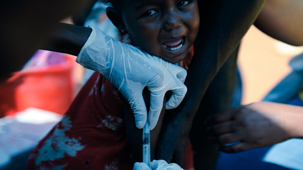
"The thing is when a company does have these patents... they don't have any way of using them usefully for least developed countries because there's no money to pay for any medicines. So they may just as well put them in some sort of more public domain area. In these sorts of ways we can temperise the existing system."
Unitaid, which works to improve access to medicines in developing countries and set it up, argued long and hard that the pool was necessary. (2011)
In 1999, in the wake of Medecins san Frontieres (MSF) being awarded the Nobel Peace Prize, MSF launched the Campaign for Access to Essential Medicines. Its purpose has been to push for access to, and the development of life-saving and life prolonging medicines, diagnostic tests and vaccines for patients in MSF programmes and beyond.
We discuss the vaccine price cut by major drug companies in developing countries. (2011)
Select a scientist to explore more about their life, work and inspiration. Choose a subject to discover even more from the Radio 4 Archive & beyond. You can download programmes to listen to later or stack them up to listen to in Your Playlist below.

BBC © 2014The BBC is not responsible for the content of external sites. Read more.
This page is best viewed in an up-to-date web browser with style sheets (CSS) enabled. While you will be able to view the content of this page in your current browser, you will not be able to get the full visual experience. Please consider upgrading your browser software or enabling style sheets (CSS) if you are able to do so.

