

Local Navigation
 Matthew TaylorChief Executive of the RSA | From Brain Culture: Neuroscience and Society
 most recentJohn SulstonBiologist | From The Life Scientific
 Nicky ClaytonProfessor of Comparative Cognition | From The Life Scientific
 Geoff BunnPsychologist| From A History of the Brain
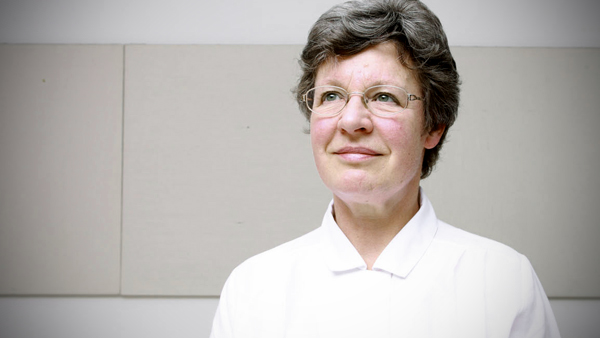 Jocelyn Bell BurnellPhysicist and Astronomer| From The Life Scientific
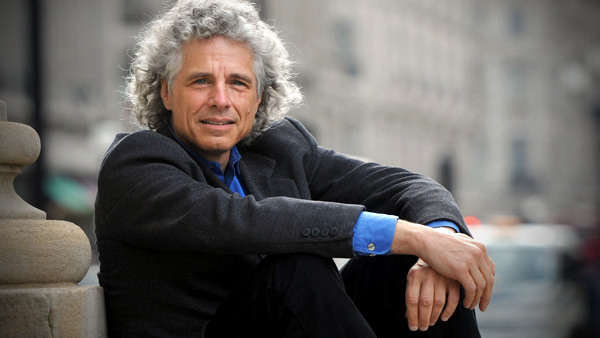 Steven PinkerCognitive Psychologist| From The Life Scientific
 Paul NurseGenetics and cell biology| From The Life Scientific
 Jim Al-KhaliliTheoretical Physicist| From The Life Scientific
Matthew Taylor became Chief Executive of the RSA in November 2006. Prior to this appointment, he was Chief Adviser on Political Strategy to the Prime Minister. Matthew was appointed to the Labour Party in 1994 to establish Labour's rebuttal operation. During the 1997 General Election he was Labour's Director of Policy. His activities before the Labour Party included being a county councillor, a parliamentary candidate, a university research fellow and the director of a unit monitoring policy in the health service. He was the Director of the Institute for Public Policy Research between 1999 and 2003, Britain's leading centre left think tank. Matthew has written for publications including The Times, Financial Times, Guardian, New Statesman and Prospect and is a regular contributor on Radio 4's Moral Maze.
"I came out of government really interested in two things which I felt I hadn't ever really got to grips with when I worked in number 10... behaviour change and well-being."

"We all grow up thinking what makes you happy is being rich, being famous and being powerful and generally... the research suggests that's misguided. Actually what makes you happy is friendship, having a pet is good, having a lifetime partner is good, having a garden is fantastic!"
"Knowing how our brains work, knowing our susceptibilities, knowing things that we typically get wrong will help us to be more in control of our lives and to be better citizens."
"What makes some adults and children behave badly in the first place?"

"Not morally bad, but a damaged brain...?"
Professor James Fallon tells Claudia Hammond his tale of self-discovery: a story with some dark and disturbing turns involving psychopaths and brain scans, family skeletons, some very personal genetic revelations and the power of parental love. (2011)
 Joshua Rozenberg examines new medical insights into the criminal mind. He joins scientists as they examine the brains of violent criminals and sees startling evidence of physical brain damage caused by neglect and abuse during infancy. Joshua asks whether offenders who suffer from this kind of brain dysfunction can be held responsible for their behaviour. (2009)
 Melvyn Bragg and guests examine the relationship between the mind and the brain as they discuss recent developments in Neuroscience. (2008)
Aggressive and impulsive behaviour in men could be linked to a deficiency of a particular type of neurotransmitter in the brain, a new study by Cardiff University scientists claims. (2011)
"These children's brains just don't seem to respond as normal... "
Neuroscientists have found that teenage boys with behavioural difficulties have different brain structures to those that are well-behaved. (2011)
Brain imaging studies of adults with psychopathy have identified structural and functional abnormalities in limbic and prefrontal regions that are involved in emotion recognition, decision-making, morality and empathy. Among children with conduct problems, a small subgroup presents callous-unemotional traits thought to be antecedents of psychopathy. (2008)
 Sigmund Freud's study of Little Hans was the first recorded case of child psychoanalysis, and, with its detailed recording of a how a child makes sense of the world, continues to provide rich pickings for all who are interested in child development. (2008)

"We should see the role of punishment moving progressively more and more in the direction of trying to reorganise the brain of an individual whose actions are not acceptable to society." (Colin Blakemore)
 Our penal system is broken, according to Ken Clarke. Its record in preventing re-offending is dreadful but our prisons are bursting at the seams. We've got one of the highest per capita prison populations in Europe, but have we lost sight of what prison is for? (2011)
Interior Traces is a series of live radio plays. They explore the effects of brain imaging on individual identity and society through the stories of two characters with different brain conditions. They contrast present understanding with an imagined future in which people can be told in advance that they may develop a tumour or even a violent criminal tendency. (2010)
 Danny Kruger, founder of Only Connect, a charitable arts company working with prisoners, ex- offenders and young people at risk of crime calls for a re-evaluation of the purpose of punishment, treating retribution and rehabilitation as two separate objectives whose current confusion serves neither the criminal, nor the victim nor the wider interests of justice. (2011)
Colin Blakemore questions why society attempts to regulate the behaviour of its members and tries to order them into normal and abnormal. (1976)
"It will force us, and the 'us' in this case of course means lawyers really, to re-examine the notion of a responsible mind... "

"If neuro-scientists and brain-scans can't yet tell us who to blame, can they at least help us to decide who to trust?"
Trying to spot when somebody is telling lies has probably preoccupied mankind since the earliest humans. Claudia talks to Dr Samantha Mann about an experiment where a simple drawing separated the liars from the truth tellers. (2010)
Why lie detectors used by councils to eliminate benefit fraud, might not be such good value for money after all. (2010)
Ask the public about the honesty of MPs and the typical knee-jerk response is that you cannot believe a word a politician says. But what if that politician is strapped to a polygraph? (2011)

"...if you had sufficient capacity for rationality? That's the real question for the law." (Stephen J Morse, of the University of Pensylvania Law School)
This article from Psychiatric Services examines the case of Peter Braunstein - whose defence was based on a PET scan showing he had decreased function in the frontal lobes of his brain.
Kent Kiehl says the reason people like Brian Dugan cannot access their emotions is that their physical brains are different. And he believes he has the brain scans to prove it.
Cognitive psychologists and neuroscientists have challenged forensic science as a whole to raise its game; and acknowledge that errors in fingerprinting and other forensic disciplines are inevitable because of the architecture of cognition and the way our brains process information. Claudia Hammond talks to Dr Itiel Dror, cognitive neuroscientist, whose groundbreaking studies first drew attention to the fact that individual forensic examiners can be swayed by context and affected by bias. (2010)
The programme visits the mental health court pilot in Brighton and takes a wider look at Mental Health Treatment orders and the problems faced by defendants with mental health problems in the criminal justice system. (2009)

"From the activations in the brain it looked as if her memories were true." (Professor Hans Marksowitch of Bielefeld University)
 What if science could actually read people's thoughts and intentions? That's the promise of the latest research from neuroscientists, who claim to be able to scan our brains for lies, broken promises and violent intentions. But how reliable is the science of 'mind-reading'? How might it change our ideas about free will, responsibility and rehabilitation? (2010)
Brain scans could be useful as lie detectors to show if a witness lies when identifying a suspect in a crime investigation, US researchers believe. (2010)
If someone was killed in front of you would you remember what happened? Many experts are challenging the view that eyewitnesses recounting what they saw is the best way of tapping their memory. Some think brain scans could be the way forward. (2008)
Claudia Hammond meets the creator of several classic experiments, who broke new ground with the filmed simulations of road accidents she showed to subjects in the 1970s. These studies revealed that witness reports of the same incident varied according to the wording used by the questioner, giving rise to the development of the 'cognitive interview' - witness-led it avoids questioner-bias. (2011)
"In humans... you can detect structural changes in the brain simply as a result of learning a new skill." (Chris Frith)

"It was scans of brains of violin players that helped scientists understand that the brain is plastic."
Learning a musical instrument at primary school can boost a child's confidence and learning in other areas, a report suggests. (2010)
Dr Alice Roberts finds out how her brain is wired to connect to others and how mirror neurones are involved in how we learn through imitation. (2011)
 Colin Blakemore is a neuroscientist who nearly became an artist. He specialised in vision and the development of the brain, and pioneered the idea that the brain has the ability to change even in adulthood contrary to the popular view at the time. (2011)

"The early years might not be all-important to the brain...how much do the early years matter? "
 After the fall of Nicolai Ceausescu in Romania, news of how babies and children were treated in Romanian orphanages horrified the world. Little was known then about the long-term effects of such extreme, early deprivation. Twenty one years on, and scientists who have been tracking the progress of these children in the English and Romanian Adoptees study, have made some astonishing discoveries. (2011)
The psychologist Walter Mischel made his name with his ground-breaking book, Personality and Assessment, in 1968. He followed up with a classic experiment which is still running today. (2011)
Claudia Hammond examines Cognitive Behavioural Therapy to find out if it is, as some people think, the easy option in helping them come to terms with mental illness. (2009)

"The act of gaming releases a chemical called dopamine, that we think makes the brain more receptive."
We have to thank the Swiss developmental psychologist, Jean Piaget for 'learning by play' applied to the classroom - a personal discovery which he believed to be far more effective than sitting in rows learning by rote. (2003)
 Could a deeper understanding of brain development help educationalists get better results- and if so how can teachers separate the brain fact from so much of the brain fiction which seems to be out there? (2010)
The internet has led children to expect instant results but has this made them impatient with the pace of today's learning? (2010)
"Understanding more clearly the way brain processes lead to behaviour has tilted the age-old philosophical argument about free will."

"Imagine someone riding an elephant through a town. The rider is our conscious brain, the elephant is our automatic brain and the town is the social context in which we operate."
 In a universe apparently governed by physical laws, is it possible for individuals to be responsible for their own actions? Or are our lives simply proceeding along preordained paths? (2011)
Hardly a day goes by without a headline suggesting an area in the brain will light up if we eat chocolate or meet someone we like. But are we reading too much into this kind of research? (2011)
In the final lecture of his series 'Minds, Brains and Science', John Searle, Professor of Philosophy at the University of California, examines the evidence for and against the existence of free will. (1984)

"It was the marketing of colas, not the taste, which operated on their automatic brains - and it's that which drove people's preferences."
Read the original paper published on sciencedirect.com describing how "brand knowledge for one of the drinks had a dramatic influence on expressed behavioral preferences and on the measured brain responses."
In the battle for our money and loyalty, companies wanting to sell us products have turned their attention to something right under our noses. (2010)
In 1957 marketeer James Vicary published a paper in which he claimed to have increased sales of fizzy drinks and popcorn in a cinema by repeatedly showing images for very short bursts in between the frames of the movie. However, by 1962 nobody had managed to repeat the results and Vicary eventually conceded that he had faked the demonstration. Interest in the brain's ability to receive and process information unconsciously has continued however, and it is only recently, with modern brain imaging techniques, that psychologists have been able to look into these dark corners of our minds. (2007)
Can heavy use of technology such as smartphones and laptops affect our brains? It is a question that has serious implications for businesses and workplaces across the world. (2010)
"I was working for Tony Blair when the first ever government paper on what was called 'Behaviour Change' was commissioned... "

"This new approach drew heavily on brain and behaviour science to try and develop a new policy toolkit."
 Politicians, it seems, are increasingly turning to disciplines like neuroscience and evolutionary anthropology to understand why we do things, so they can better tailor and design policies that will work in the real world. That all sounds very sensible, but how far should we take this new found enthusiasm for scientifically designed political policies? (2011)
Everyone may be talking about 'The Big Society'. Some, not very politely. But who knows what it really means? Some answers here from two enthusiasts: Matthew Taylor who used to work for Tony Blair in Downing Street, and the Conservative, Jesse Norman. (2011)
Professor Jonathan Moreno, Director of the Center for Biomedical Ethics at the University of Virginia, talks about his latest book Mind Wars - Brain Research and National Defense - which reveals how advances in brain research may change the way wars are fought in the future, and how developments in neuroscience could be employed to control soldiers, or maybe even the enemy. (2011)
The philosopher and neuroscientist Raymond Tallis mounts an all-out assault on those who see neuroscience and evolutionary theory as holding the key to understanding human consciousness and society. (2011)
 The Philosopher Karl Popper's ideas about science and politics robustly challenged the accepted ideas of the day. He strongly resisted the prevailing empiricist consensus that scientists' theories could be proved true. (2007)

"Social goals, like reducing obesity, can be pursued by developing techniques that engage not just our concious but our 'automatic' brain... that's what lies behind the idea of 'nudge'."
"Nudge" was the best-selling book that David Cameron famously ordered his shadow cabinet to read over their summer holidays. Cameron put the ideas of University of Chicago behavioural economist, Richard Thaler, at the heart of his government, and set up the world's first Behavioural Insights Team, or "Nudge Unit". (2011)
A huge study, started by the BBC, and following over 11,000 people has shown that playing brain training games only makes you better at...playing more brain training games. (2010)
 "NLP - Neuro-Linguistic Programming - is a psychological approach originally developed in 1970s California. Thousands claim NLP has changed their lives, but what exactly is it and is there any scientific evidence that it works? (2010)
 Unravelling the ethical dilemmas involved in these technologies Mark asks what happens when we open this Pandora's box and people use memory modification to erase feelings of something bad they have done or something bad that has been done to them; eliminating memories like you would eliminate a headache, with a pill. (2011)

"I think people do have a right to feel uncomfortable. If it's the case that the study of the mind, the study of fundamental human behaviour is being used to move them in particular directions..." (Robert Cialdini).
 Mike Thomson tracks down formerly secret reports from MI5 that describe how brainwashing techniques were being used inside British intelligence bases in North Africa during the Second World War. (2009)
As part of a clincal trial Michael Mosley takes the class A psychadelic drug psilocybin. (2011)
Every day we try to fit in. We may like to think we're individual but most of the time we don't actually want to stand out too much. It's this idea of conformity that the American social psychologist Solomon Asch studied in the 1950s. (2003)
The famous experiment carried out by Stanley Milgram in 1961 that showed how far people will go when obeying orders. (2011)
Select a scientist to explore more about their life, work and inspiration. Choose a subject to discover even more from the Radio 4 Archive & beyond. You can download programmes to listen to later or stack them up to listen to in Your Playlist below.

BBC © 2014The BBC is not responsible for the content of external sites. Read more.
This page is best viewed in an up-to-date web browser with style sheets (CSS) enabled. While you will be able to view the content of this page in your current browser, you will not be able to get the full visual experience. Please consider upgrading your browser software or enabling style sheets (CSS) if you are able to do so.

