

Local Navigation
 Nicky ClaytonProfessor of Comparative Cognition | From The Life Scientific
 most recentJohn SulstonBiologist | From The Life Scientific
 Matthew TaylorChief Executive of the RSA | From Brain Culture: Neuroscience and Society
 Geoff BunnPsychologist| From A History of the Brain
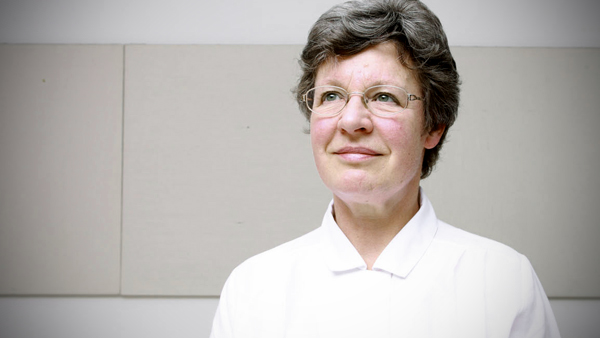 Jocelyn Bell BurnellPhysicist and Astronomer| From The Life Scientific
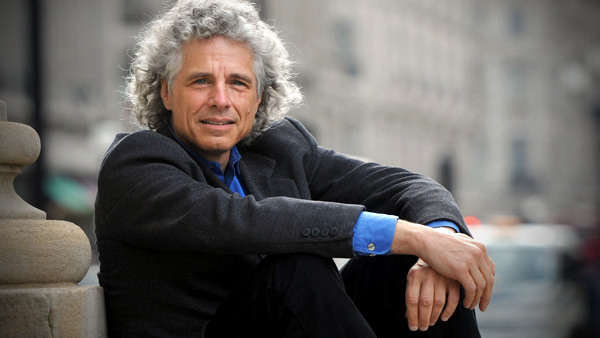 Steven PinkerCognitive Psychologist| From The Life Scientific
 Paul NurseGenetics and cell biology| From The Life Scientific
 Jim Al-KhaliliTheoretical Physicist| From The Life Scientific
Professor of Comparative Cognition
Professor of Comparative Cognition at the University of Cambridge and fellow of The Royal Society, Nicky Clayton says intelligence in birds like crows and jays developed quite separately from that of apes and humans. She says her work with birds can help illuminate young children's activities and how their brains develop. Nicky is also passionate about dance and is the scientist in residence at the Rambert Dance Company.
"It's but an evolutionary accident that we ended up as Planet of the Apes and not Planet of the Crows..."

"I would like people to think of me as the little bird lady, the dancing professor. I like to transcend the boundaries."
"It's all about beautiful movement. If you watch a flock of starlings it really is like this exquisite three-dimensional avian ballet... "
Listen: An obsession with birds
"You only have to look in the beedy eye, and see them watching you. It's really quite remarkable."

"I'm not sure that all birds are so clever, but some birds are extremely bright and members of the crow family which includes the magpies, jays and ravens are one such group. Another are the parrots."
The common rook turns out to have an innate tool-using ability that it doesn't generally bother to use. The scientists who have discovered this hidden talent argue it makes rooks more intelligent than chimpanzees. What might Aesop's thirsty crow tell us about the evolution of tool-making? (2009)
One group in particular - the corvids - has astonished scientists with extraordinary feats of memory, an ability to employ complex social reasoning and, perhaps most strikingly, a remarkable aptitude for crafting and using tools. (2009)
Mark Cocker indulges his obsession as he follows a colony of rooks over the course of a year. (2008)
This week you ask whether a crow was deliberately drugging itself on fumes from a household chimney. More bird behaviour as you ask where all the black headed seagulls go in summer and do pigeons surf over oncoming traffic? (2010)
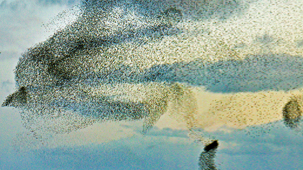
"...this exquisite three-dimensional avian ballet... "
Over the coming weeks, millions of starlings will take to the air performing a series of breathtaking aerial ballets each evening before dusk. Such murmurations, as they are called, are a testament to the amazing, complex behaviours that animals are capable of. (2010)
Wildlife sound recordist Chris Watson rigs up microphones in a reed bed near the River Severn and then waits for dusk and a wildlife spectacle to arrive. (2007)
 The raven is both agile and majestic in flight but shrouded in mystery, superstition and folk law. How was it that our biggest member of the crow family, a bird once protected as an important scavenger in ancient times, was then persecuted almost to extinction in the British Isles. (2010)
 The island of Islay is the most southerly island of the Southern Hebrides and as such has an important role to play in Scottish birdlife. Also known as the Queen of the Hebrides this small island is, in winter, host to thousands of winter migrant birds as they escape the harsh Arctic weather. (2011)

Some of the most remarkable sounds from nature are the songs and calls of birds.
 In the 18th century, musical manuals circulated showing songbird keepers how to teach their birds to sing human tunes. These treatises were known as the Bird Fancyer's Delight, sheets of music specially written to play to a pet bullfinch, linnet or canary in order that it would learn the tune and sing it back. The idea was to engineer primordial feathered recorders in the home, 100 years before the arrival of the phonograph and the advent of recorded sound. (2011)
 David Attenborough hosts a celebration of bird impersonator Percy Edwards, who enjoyed a 70-year career impersonating birds and beasts. (2009)
 Ludwig Koch was once as famous as David Attenborough, as pioneering as 'Blue Planet' and as important as the BBC Natural History Unit. They all owe their existence to this German refugee who first recorded the music of nature. Through his archive and new field recordings the poet Sean Street tells the story of Ludwig Koch. (2011)
Listen: Defining animal intelligence
"What I have to do is make sure that we design carefully controlled experiments and that we decide beforehand what the particular things we're going to measure are."

How do we define and measure intelligence?
 Since the first IQ tests were invented in 1905, the question of what makes Homo Sapiens stupid and what makes him clever has involved human kind in sterilisation, racism and misery. How do we define intelligence, how do we measure it; what are its origins and how do we uncover it? (1999)
Experiments with Eurasian jays have shown that the birds store food that they will want in the future - "planning" for their impending needs. (2011)
Rooks have a remarkable aptitude for using tools, scientists have found. Tests on captive birds revealed that they could craft and employ tools to solve a number of different problems. (2009)
Scientists re-enact tale of crow that managed to drink from half-full pitcher of water. (2009)

"Do they really have personalities?"
 Rod Liddle examines our differing responses to related animal species and tries to establish what those responses tell us not merely about the animals but about ourselves. (2009)
 Terry Nutkins explores Johnny Morris's life and work, and explains that what made him unique was 'Not Just Funny Animals Voices' but a colourful life and broadcasting career stretching back to 1946. (2011)
 John Gray considers why the human animal needs contact with something other than itself. (2011)

"I just have this gut feeling I suppose, an instinct - that sounds terribly unscientific!"
Animal behaviour expert Shaun Ellis spent 18 months living with a pack of wolves in the Rocky Mountains in America. He learnt to depend on them for survival and to behave like a low-ranking member of the pack, sleeping rough and eating raw meat. He spoke to Lucy Ash and described his lupine life in the wild. (2010)
 Sue Lawley's guest this week is Dr. Jane Goodall. She had no formal scientific qualifications when she first went to Africa to study the Gombe chimpanzees. But it was this lack of preconceptions which made her so successful as a naturalist. Watching chimps use sticks to extract termites from their mounds she realised that she was about to smash the assumption that only humans used tools. (2000)
Temple Grandin is an animal behaviour scientist who says her brain works like Google. She is autistic and feels her condition helps her to understand animal behaviour. Temple also explains to Carrie Gracie how her emotions work as an autistic woman, and how she'd much rather think about livestock or computers. (2010)
Kirsty Young's castaway this week is the poet Ruth Padel. She is a highly acclaimed writer who is fascinated with the natural world around her. She's said of her poetry: "wildness, and wild animals lie at the heart of what I feel about writing". And perhaps that's no surprise - she is the great-great-granddaughter of Charles Darwin. (2009)
"What the interesting questions would be and how you could go about testing those."

"An idea that I had jointly with my husband, Nathan Emery... " "We're very complimentary... she can hone me in a bit and I can make sure that she doesn't get tied into detail" (Nathan Emery)
 From the 1600s to the 1800s, scientific research in Britain was not yet a professional, publicly-funded career. So the wealth, status and freedom enjoyed by British aristocrats gave them the opportunity to play an important role in pushing science forwards - whether as patrons or practitioners. The Cavendish family produced a whole succession of such figures. (2010)
 Rana Mitter interviews husband and wife team Chris and Uta Frith. Both are eminent neuroscientists, leaders in their fields (2010)
It was in the Faraday Lecture Theatre, in June 1903, that French scientist Pierre Curie and his Polish wife Marie Sklodowska Curie demonstrated the remarkable properties of their newly discovered element, radium. (2008)
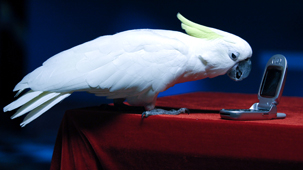
One experiment confirming a theory is not enough, it needs to be tested and peer-reviewed.
 Mark Whitaker investigates the tarnished image of a flawed process. Peer Review is supposed to be the keystone of quality control for research projects and academic studies, yet evidence of its many deficiencies has been building up for over 20 years. (2008)
"Stephen Webster examines the way scientists work and asks why we should believe them. He discusses scientific method. Science claims to tell us truths about our world, but even when all the scientific protocols are followed, is our belief in science justified? (2008)
Research scientist and engineer Mark Miodownik challenges the conventional wisdom that more scientists are essential if Britain is to prosper. (2008)
Listen: Intelligence and empathy
What conditions promote the development of intelligence in species, and are we the only species to be able to empathise with others?

"The trials and tribulations of a complex social life... It's about interacting with others, keeping track of who and what and why and what they're plotting..."
Cooked food is easier to chew and digest, freeing up time for other activities, and requiring patience, ingenuity and division of labour around the cooking fire. (2009)
Quentin Cooper champions chimp culture, how it has evolved and the view of ourselves in relationship to them. (2009)
Find out about animal learning and behaviour and watch clips on the BBC Nature website.
Why bees are cognitive giants who can navigate an area the size of the congestion charge and memorise landmarks on the way with a brain the size of a pin head. (2007)

"The whole business of recognising yourself in mirrors is quite a complicated one... there are only a select few species that pass this test. Elephants, great apes, dolphins and yes the magpie."
 A fresh look at human nature when compared with our nearest cousins in the animal kingdom. The eminent Dutch primatologist Frans de Waal describes new research into chimpanzees and other primates that suggests consolation and empathy are not purely human virtues. (2010)
 Professor Richard Dawkins explains why he believes Bill Hamilton to have been one of the greatest evolutionary theorists of the 20th century. Dr Mary Bliss offers expert advice. (2010)
Clever New Caledonian crows can use mirrors to find food, according to scientists. Watch clips and find out more about other animals that demonstrate self-recognition at the BBC Nature website. (2011)
The Amboseli Elephant Research Project in Kenya is the longest running elephant study in the world. The animal behaviourist Phyllis Lee says the 40-year project has greatly increased our understanding of the complexity of elephants' minds. (2011)

"These kinds of tasks can be adapted to test humans - both young children and adults."
Some environmental scientists claim that if the evolution of mankind was mapped out over the course of a week, we would have lived apart from nature for only the last three seconds of Sunday night. But what is nature? And what does it mean to be out of it? (2007)
Darwinian theory has provided a powerful explanation for animal behaviour, but can it be used to explain how humans act? Evolutionary psychologists contend that it can and have brought their critique to bear on many fields including economics, law, anthropology and sociology. Laurie speaks to Lesley Newson about her theory that evolution can explain how societies become modern. (2009)
Professor Steve Jones takes a sceptical look at the evidence for and against the new science of evolutionary psychology. (2009)
 Following the birth of a baby moose in Whipsnade zoo - a rare event - Alain de Botton muses on the value of exotic animals in helping to give us perspective on our own lives. (2011)
Using tests originally designed to demonstrate the development of language, pre-language and basic arithmetic in human children, the researchers were able to show that the average dog is far more intelligent than they are given credit for. (2009)
"I think she mediates between the academic world of science and its public image of something being behind closed doors, in white coats, inaccessible. I think she brushes that aside." (Mark Baldwin, Artistic Director of Rambert Dance Company)

"In recent years your love of dance and your love of science have come together... "
How evolution and the behaviour of birds inspired a new ballet. Cambridge Professor of Evolutionary Psychology - and tango enthusiast - Nicky Clayton and Rambert Dance Company artistic director Mark Baldwin describe the creation of the Comedy of Change. (2009)
The marriage between science and dance would seem about as likely as that between Arthur Miller and Marilyn Monroe. But opposites attract, as the physicists know, and it is perhaps not so odd that scientific thought should intrigue the contemporary choreographer. (2011)
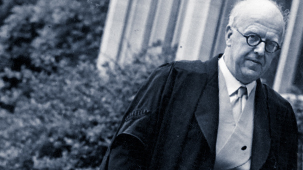
The scientist and novelist C P Snow lamented the breakdown of communication and understanding between the opposing sides of science and the arts in a famous 1959 speech.
Neuroscientist and arts enthusiast Dr Mark Lythgoe investigates the divide between scientists and artists, lamented by C P Snow in a lecture nearly 50 years ago. (2007)
A review of the recent One Culture festival at the Royal Society, which sought to reconcile art and science. (2011)
Stephen Webster considers the role of art-science collaborations within science communication on the Refractive Index blog - Reflections on Science Communication from Imperial College London. (2011)

"I like to transcend the boundaries... "
 Although best known for his towering scientific achievements, Einstein was a fine amateur violinist and occasionally played in public. Indeed, he once said that he got the most joy in his life from playing the violin. (2007)
'Science' was definitely not the entire life of even the top scientists. Quite some of them had hobbies - and there are hints that some of those hobbies may even have made them more successful scientists. Read this blog from Nature.com about some of the ways scientists like to spend their spare time. (2011)
Select a scientist to explore more about their life, work and inspiration. Choose a subject to discover even more from the Radio 4 Archive & beyond. You can download programmes to listen to later or stack them up to listen to in Your Playlist below.

BBC © 2014The BBC is not responsible for the content of external sites. Read more.
This page is best viewed in an up-to-date web browser with style sheets (CSS) enabled. While you will be able to view the content of this page in your current browser, you will not be able to get the full visual experience. Please consider upgrading your browser software or enabling style sheets (CSS) if you are able to do so.

