

Local Navigation
 Paul NurseGenetics and cell biology| From The Life Scientific
 most recentJohn SulstonBiologist | From The Life Scientific
 Nicky ClaytonProfessor of Comparative Cognition | From The Life Scientific
 Matthew TaylorChief Executive of the RSA | From Brain Culture: Neuroscience and Society
 Geoff BunnPsychologist| From A History of the Brain
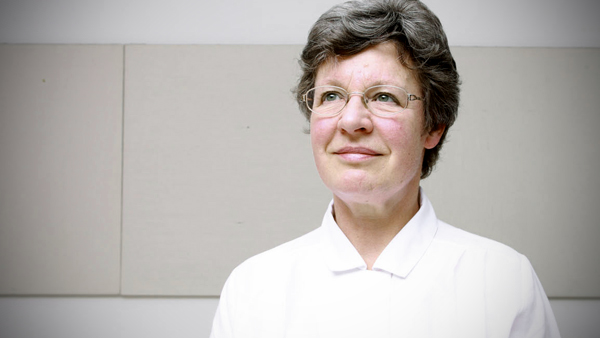 Jocelyn Bell BurnellPhysicist and Astronomer| From The Life Scientific
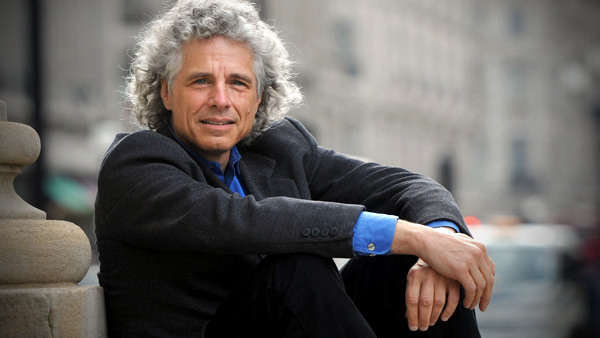 Steven PinkerCognitive Psychologist| From The Life Scientific
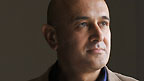 Jim Al-KhaliliTheoretical Physicist| From The Life Scientific
Genetics and cell biology
"A Nobel Prize-winning geneticist and president of Britain's leading scientific body, The Royal Society."
Do excuse me, I have to go now... I think I've won the Nobel prize!

"They kept silent, my family. Think of the irony of it... I'm a geneticist! The irony is touching really."
"I think it really came about from my interest in the natural world around me."

"I had quite a long walk to school. I was often alone... I noticed spider's webs in particular places, why were they where they were?"
 For arachnophobes they are probably the stuff of nightmares, but to spider lovers they are creatures of great beauty. (2010)
 English Ecologist Frank Fraser Darling explores how humans have dominated the natural world by constantly challenging it and altering it to their advantage. (1969)
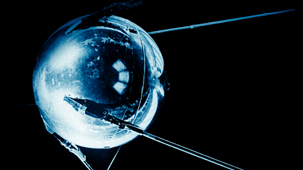
"It was the beginning of the space age when I was 8 or 9...Sputnik 2 was going over...it came over my house in North West London."
Chris Bowlby traces the history of the man-made satellite, beginning with the story of the dramatic Cold War launch of Sputnik. (2006)
 The Communist Cosmos - how the Soviet Union saw space as the key to its global superiority. (2011)
 A history of space missions - see pictures and watch clips on the bbc.co.uk/science website

"I'm hopeless at languages...I managed to fail French O-level 6 times... ".
"If I think "I'm no good at that, but I'm pretty good at other things", it makes you rely on yourself more... it gave me great determination."
 Mistakes often provide the best lessons in life, so why are they so undervalued? Michael Blastland explores our attitude to failure and the impact it has on politics. (2010)
 Sir Clive Sinclair nominates fellow inventor Thomas Edison. Edison invented sound recording, the electric light bulb and moving pictures, but also had his fair share of duds along the way. (2011)
"Science was difficult and it often failed...you at least had to tackle a big problem. A good starting point is 'how do you distinguish living things from non-living things?'"

"It would be a very fundamental problem to understand how cells reproduce themselves."
 Some experts think it's only a matter of years before living synthetic cells will be grown out of inanimate starting materials - a simulation of the origins of life on the young Earth. Science writer Adam Rutherford asks what it will mean to us when it happens. (2010)
 Can it be, as some have suggested, that ageing and death are the price we pay for sex? Does it make sense to think in terms of a 'reproductive duty' to the species, leaving us surplus to requirement when duty is done? (Due to these lectures being recorded in 2001 they may not reflect the latest research.)
Jenny Uglow describes how Anton van Leeuwenhoek was the first person to observe the details of single-celled 'animalcules', when he discovered an unseen world in a drop of water.

Gregor Mendel was the first person to demonstrate the inheritance of traits using pea plants - leading to modern genetics.
 Melvyn Bragg looks at the development of the science of genetics beginning with the work done on peas by Gregor Mendel, a Moravian monk, in his monastery garden. (2001)
 Charles Darwin is an international celebrity following the publication of On the Origin of Species. Growing peas in a monastic garden a thousand miles away, however, Austrian priest Gregor Mendel holds the key to the process of heredity, the missing link in Darwin's theory. (2007)
The classic breakthrough came to Francis Crick and Jim Watson as the climax to an intellectual race between scientists in Cambridge and London, Britain and the USA, Steve Jones tells the story of the discovery of the structure of DNA. (2003)
"Everybody around me was interested in cancer, interested in... how human cells worked. Is there a way in which I could see whether my work with yeast could illuminate that problem."

"The same network of genes that controlled cell division in yeast, did they exist in human cells?"
 In the first of four programmes looking at Britain's leading laboratories, Professor Iain Stewart visits the Institute of Cancer Research in Sutton in Surrey. (2010)
A international group of doctors and medical professionals have found that too much is often spent on cancer drugs of limited benefit.
Dr Mark Porter visits the radiotherapy department at University College London Hospital, to discuss the latest developments in using radiation to treat cancer. (2011)

"The cell, this basic unit of life." Every living thing is made of cells, microscopic building blocks of almost unimaginable power and complexity.
Prof Iain Stewart travels to Scotland to visit the Centre for Regenerative Medicine where scientists and clinicians work closely in their efforts to treat diseases, using stem cell technology. (2010)
Doctors at Moorfields Eye hospital in London have been given the go-ahead to carry out Europe's first clinical trial using human embryonic stem cells.
Andrew Brown investigates the frontier of our knowledge about new brain cells. (2007)

"Gradually it began to dawn on me that actually they were telling me I had won the Nobel Prize... and I still couldn't quite believe it."
 Nobel prize winning scientists describe their favourite moments in the history of science. (2010)
 In conversation with Sue Lawley, Sir Paul talks about his life and work and chooses eight records to take to the mythical island. (2002)
Nobel Prize-winning scientists in conversation with biologist and broadcaster Lewis Wolpert on the BBC Archive website.

"You may have committed three months, six months or in this case years into this..."
Kirsty Young's castaway is the Nobel Prize-winning scientist Professor Sir Martin Evans. He is known as the grandfather of embryonic stem-cell research because of the breakthrough he made more than 25 years ago to first isolate the stem cells of mice and then cultivate them in a laboratory.
 What is it about science that throws up so many examples of simultaneous discovery, or indeed invention, from Newton and Leibniz, to Wallace and Darwin. (2011)

"As the print came out of the computer we could see the similarity of the human gene to the yeast gene that we'd already worked on."
Geoff Watts discusses the future of gene sequencing with Jane Rogers, director of the newly created Genome Analysis Centre in Norwich, and Jane Peterson, an associate director of the US National Human Genome Research Institute. (2009)
 Evolutionary biologist Richard Dawkins explores questions of DNA to mark the tenth anniversary of the sequencing of the human genome. (2010)
Has decoding the genome lived up to the hype? Scientist Dr Caroline Wright says that progress has not been as significant as might have been hoped a decade ago.
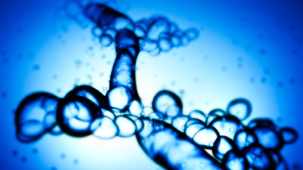
"Yeast and humans diverged, in evolutionary terms, apart from each other, probably 1.5 billion years ago...Yet despite that 1.5 billion years of divergence I could take the gene from yeast and put it into humans and it would still work."
The Professor of Zoology and Comparative Anatomy at University College London, Peter Brian Medawar explores human evolution from the perspective of 1959.
Dr Mark Porter asks whether adult health is determined by our environment and nutrition in the first thousand days of life. (2011)
 Melvyn Bragg and guests discuss the emergence of the world's first organic matter nearly four billion years ago.
"I believe science can dramatically improve the world, and it's our responsibility to do everything we can to make society comfortable with what we're doing and to discuss the issues that concern them."
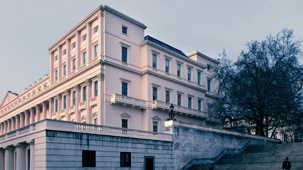
Sir Paul Nurse is the current president of the Royal Society, possibly the oldest society for science in the world. Founded in 1660 some of its early members included Robert Hooke, Robert Boyle, Sir Christopher Wren and Sir Isaac Newton.
 In the 17th century the natural philosopher Francis Bacon heralded the new age of science. - after the civil war a group of scientists gathered together in London to form the Royal Society. Amongst its members were Robert Boyle, Robert Hooke, Christopher Wren and Isaac Newton, who explicitly rejected dogma and insisted on practical experimentation and observation. (2006)
 A series of programmes looking at the history of the oldest scientific learned society of them all: the Royal Society. (2010)
David Attenborough nominates the largely forgotten 17th century-inventor and illustrator Robert Hooke, a founder member of The Royal Society. (2008)

"I think it helps policy and politicans if they have a slight fear..."
 Could there be a better way to fight climate change? A group of top scientists has become exasperated with fighting what they see as a losing battle against carbon dioxide emissions. They want to open an entirely new front. (2010)
 Martin Rees, President of the Royal Society and Astronomer Royal, calls on politicians and other authorities to provide the funding that will keep the UK among the world's front runners in scientific research and discovery. (2010)
Home Planet asks how big stocks of uranium are and whether there really is enough to fuel a nuclear boom.
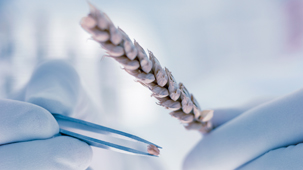
"Some things that can arise in politics, particularly in the US in fact, are just barking mad."
 The Coalition says it is committed to a 'science led' approach to tackling TB in cattle, but as a new badger culling trial is announced in England and the proposed cull in Wales is abandoned by the new Welsh Government, Nick Ravenscroft assesses the impact - on cattle and badgers - of what some describe as a decade of indecision. (2011)
US President Barack Obama has lifted restrictions on federal funding for research on new stem cell lines following George W Bush's block on the use of any government money to fund research on human embryonic stem cell lines.
 Have we now reached the point when Europe needs to take a more tolerant attitude towards the cultivation of GM crops? (2009)
Select a scientist to explore more about their life, work and inspiration. Choose a subject to discover even more from the Radio 4 Archive & beyond. You can download programmes to listen to later or stack them up to listen to in Your Playlist below.

BBC © 2014The BBC is not responsible for the content of external sites. Read more.
This page is best viewed in an up-to-date web browser with style sheets (CSS) enabled. While you will be able to view the content of this page in your current browser, you will not be able to get the full visual experience. Please consider upgrading your browser software or enabling style sheets (CSS) if you are able to do so.

