Disobedient , marvellous and degenerate: Surreal Encounters at the Edinburgh Art Festival
8 August 2016
Edinburgh Art Festival embraces the peculiar with Scotland’s largest ever exhibition of Surrealist art, Surreal Encounters – Collecting the Marvellous. Loved, derided, celebrated, and decried by the Nazis as 'degenerate', Surrealist art has long courted controversy. Featuring a huge array of surrealist art from crowd-pleasing names such as Dali, Magritte, Picasso and Miro, from four very different private collections, the exhibition is as much a celebration of the role of the collector as the works themselves. WILLIAM COOK learns how friendship, obsession, and conservation helped shape this unique exhibition.
‘The marvellous is always beautiful,’ reads a sign on the wall of the Scottish National Museum of Modern Art.
This stirring slogan, by Andre Breton, from his Manifesto of Surrealism, sets the tone for this fascinating, mind expanding exhibition.
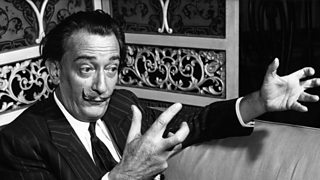
Who needs hallucinogens when you can share the hallucinations of artists like Rene Magritte and Salvador Dali?
Who needs hallucinogens when you can share the hallucinations of artists like Rene Magritte and Salvador Dali? Wandering around this show feels like sleepwalking through a strange, intoxicating dream.
Surreal Encounters – Collecting the Marvellous is a celebration of the artists whose hypnotic visions lit up the art world between the First and Second World Wars.
It’s also a tribute to the art collectors who supported them.
A collaboration with the Hamburger Kunsthalle and the Museum Boijmans Van Beuningen in Rotterdam, it’s built around four private, personal collections.
Brought together for the first time, at this handsome gallery on the green edge of Edinburgh, they add up to a cross-section of Surrealist art.
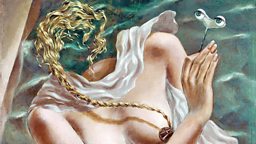
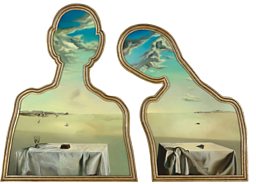
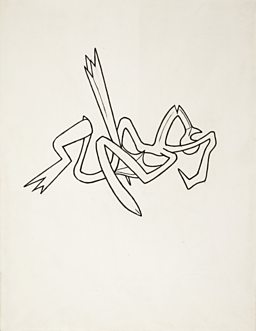
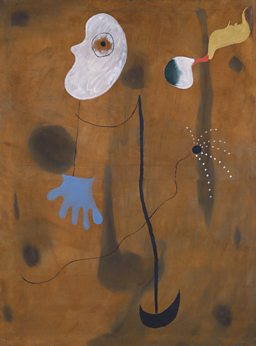
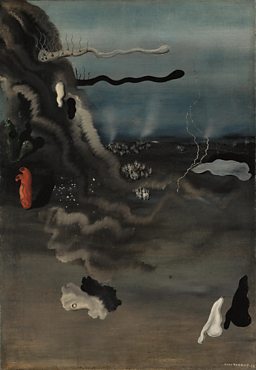
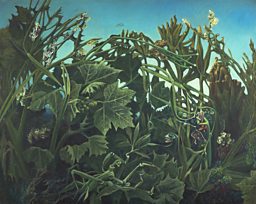
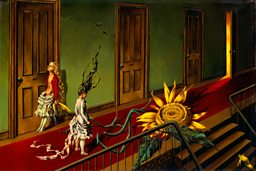
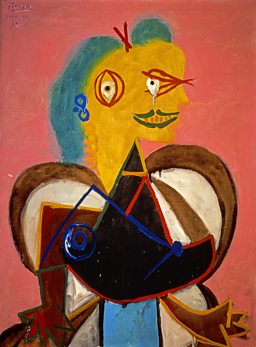
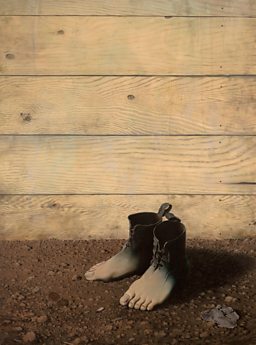
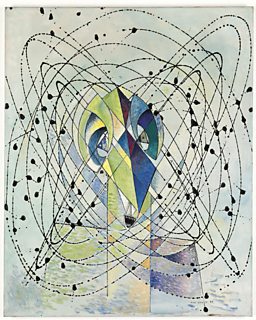
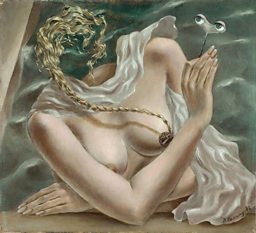
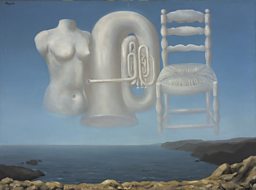
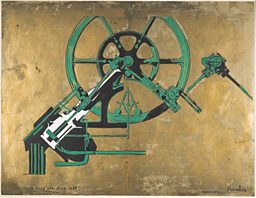
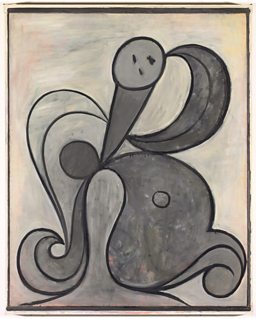
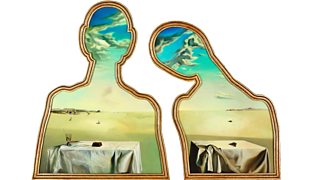
Surreal Encounters features some of Surrealism’s most iconic artworks: Dali’s Mae West Lips Sofa; Magritte’s The Red Model; Man Ray’s The Gift. All the leading players in Surrealism are here, from Joan Miro to Max Ernst, alongside the artists who inspired them, like de Chirico and Picasso.
‘There’s been a huge of growth of interest in Surrealism,’ says Keith Hartley, the curator of this show. His exhibition demonstrates that Surrealism wasn’t just a narrow clique, confined to the 1920s and 1930s.
It anticipated Pop Art and Abstract Expressionism. It resurfaces in the work of contemporary artists like Neo Rauch.
It’s seeped into every avenue of popular culture, from movies to music videos, from album covers to advertising. Its impact has been immense.
However what makes this exhibition more than just another Surrealist retrospective is that it focuses on the biographies of four major collectors of Surrealist art: Roland Penrose, Edward James, Gabrielle Keiller and husband and wife team Ulla & Heiner Pietzsch. Their colourful life stories shed fresh light on the Surrealist movement, and its enduring influence.
British art historian and curator Roland Penrose wasn’t only a collector of Surrealist artworks. A close friend of Picasso, and an artist in his own right, he helped to shape the movement, and promoted Surrealism in Britain.
After he died, the Scottish National Gallery of Modern Art acquired a significant slice of his collection. It’s thrilling to see a rich selection of it here.
English poet Edward James was an even more intriguing figure. He inherited a fortune from his father and spent a good deal of it on Surrealist art.
‘They make the illogical logical and they make it more vivid than ordinary life,’ he said, of his affinity with Surrealist artists. ‘The world is not completely logical all of the time.’
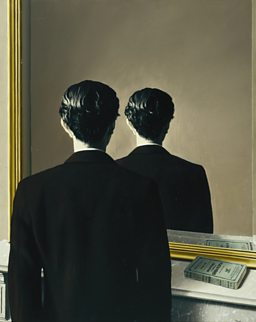
James provided the inspiration for Dali’s Lobster Telephone (included in this exhibition) and appeared in one of Magritte’s most famous paintings, La Reproduction Interdite (Not To Be Reproduced, also on show here).
James sold much of his art collection to fund Las Pozas, his Surrealist folly in the Mexican Jungle.
Britain had probably the two greatest collections of Surrealist art in the world in the ThirtiesKeith Hartley, curator
A lot of this collection eventually ended up in Rotterdam’s Museum Boijmans van Beuningen. It’s travelled to Edinburgh for this show.
‘Public collections rely hugely on the passions of private collectors,’ says Keith Hartley.
‘Britain had probably the two greatest collections of Surrealist art in the world in the Thirties – Penrose and James.’ Their collections have long since been dispersed - Surreal Encounters recreates them.
Penrose and James were integral to the Surrealist movement. They knew the artists - they hung out with them and worked with them.
Gabrielle Keiller wasn’t so closely involved (she didn’t start collecting Surrealist art until the 1960s) but her contribution was equally important. She bought works from James and Penrose, preserving Surrealism for posterity. She bequeathed her collection to the Scottish National Gallery of Modern Art.
Ulla and Heiner Peitzsch are the only collectors in this show who are still alive. Their collection reflects the vigorous revival of the German art scene since the catastrophe of the Third Reich. Heiner’s fascination with Surrealism began in 1946.
As a teenager in occupied Germany, in the aftermath of the Second World War, he attended an exhibition organised by the victorious Allies, devoted to modern artists (including the Surrealists) whom the Nazis had branded ‘degenerate.’ Enthralled, he saw the show six times.
Like the Surrealists, Ulla’s interest in Surrealism stemmed from her interest in Sigmund Freud. ‘I love it because it’s to do with the dream world and the subconscious,’ she tells me, at the opening of this show.
So what exactly is Surrealism? And what made it so significant?
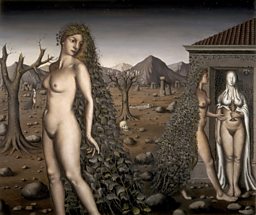
Ever since Andre Breton’s Surrealist Manifesto, in 1924, countless artists have struggled to define it, but I think the Belgian Surrealist Paul Delvaux (whose haunting, erotic paintings are one of the many highlights of this show) put it best.
‘For me, Surrealism represented freedom to disobey rational logic,’ he said. Eighty years since Roland Penrose organised Britain’s first Surrealist exhibition, that freedom to disobey remains the essence of modern art.
Related Links
Surrealism and conceptual art
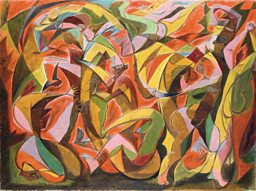
The Edinburgh Art Festival runs from 28 July to 28 August 2016. Surreal Encounters – Collecting the Marvellous is at the Scottish National Gallery of Modern Art from 4 June to 11 September 2016.
The exhibition moves to at the Hamburger Kunsthalle from 7 October 2016 to 22 January 2017, and at the Museum Boijmans van Beuningen in Rotterdam from 11 February to 28 May 2017.
This article has been amended and updated from an original version published on 8 June 2016.
![]()
Odd couple
How Joseph Beuys and Richard Demarco helped change British art
![]()
Every Woman Dazzles in Leith
Watch the Dazzle Ship's timelapse transformation in Leith
![]()
Disobedient, marvellous and degenerate
Surreal Encounters at the Edinburgh Art Festival
![]()
The Scottish Endarkenment
Ian Rankin and Kirsty Wark at Art and Unreason, 1945 to the Present
More from BBC Arts
![]()
Picasso’s ex-factor
Who are the six women who shaped his life and work?
![]()
Quiz: Picasso or pixel?
Can you separate the AI fakes from genuine paintings by Pablo Picasso?
![]()
Frida: Fiery, fierce and passionate
The extraordinary life of Mexican artist Frida Kahlo, in her own words
![]()
Proms 2023: The best bits
From Yuja Wang to Northern Soul, handpicked stand-out moments from this year's Proms