Di pride of Ethiopia - Wetin e take to build Africa largest hydro-electric dam?
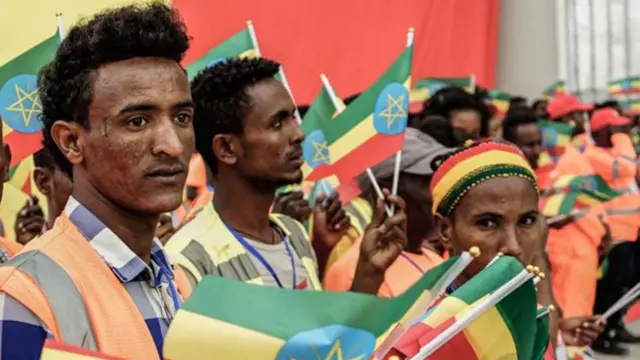
Wia dis foto come from, AFP via Getty Images
- Author, Kalkidan Yibeltal
- Role, BBC News in Addis Ababa
- Published
- Read am in 6 mins
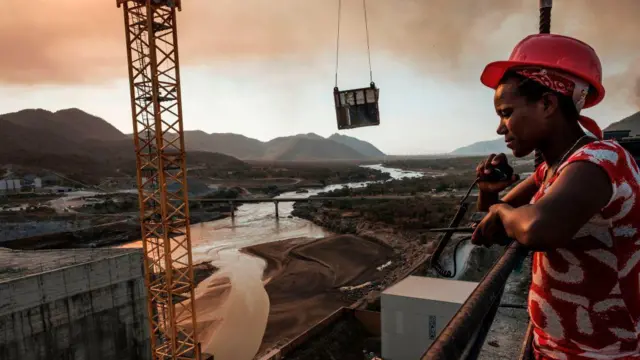
Di size of di building site at first bin too much for di young Ethiopian mechanical engineer.
Hundreds already don dey dig di foundations in tough conditions for wetin now be Africa largest hydro-electric dam, wey big pass di Blue Nile.
Moges Yeshiwas bin dey 27 wen e arrive dat remote corner of western Ethiopia in 2012, eager to gain valuable experience for im profession. Di completion of di project dey set to change im nation, but e also don change im life.
On Tuesday, Prime Minister Abiy Ahmed formally launch di Grand Ethiopian Renaissance Dam (Gerd), wey go help electrify di kontri as well as provide power to di region.
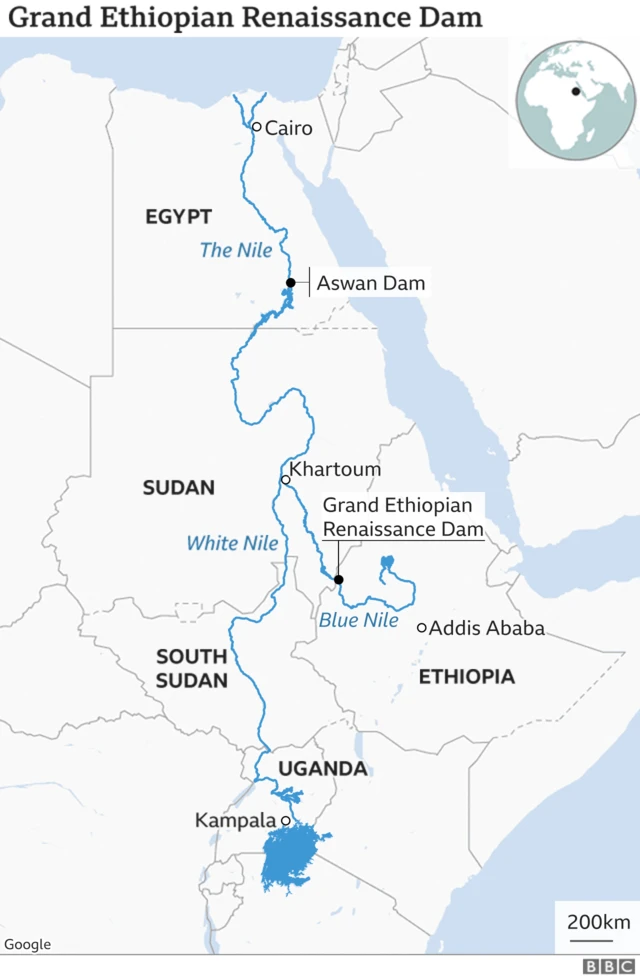
Di dam wall dey stretch 1.78km (1.1 miles) across a valley and stand 145m (475 feet) high – dem construct am with 11 million cubic metres of concrete. E don create a huge reservoir, wey dem call Lake Nigat, wey mean dawn in di Amharic language.
Di dam construction ontop Nile tributary, wey dey provide most of dat great river water, bin dey controversial wit downstream kontris. Diplomatic tension with Egypt increase and dem bin get tok of conflict.
But for Ethiopia di Gerd don become a symbol of national pride and, in Abiy view, e don place im kontri strongly on di world stage.
I came seeking employment, but somewhere along the way, it stopped feeling like just a job"
On a personal level, oga Moges, now 40, bin also dey "very proud to dey part of am".
"Watching di dam progress day by day dey very satisfying. I bin come to find work, but somewia along di way, e stop to feel like just one job. I grow attached to di project, dey worry about di future as if na my own."
But some challenges bin dey.
"Lengthy separation from family bin dey difficult," e tell di BBC. Oga Moges fit only go house – a 400km-drive away for Bahir Dar – twice a year.
Di village location of di dam site and di at times extreme heat – with temperatures wey sometimes dey hit 45C - also carry im own issues. Plus, di working hours bin dey long.
"Our shifts run from 7am to 7pm, wit only one hour break for lunch. Den we hand over to di night crew, becos di work gatz to Kontinu around di clock," Moges tok.
Im job na to make sure say di building work dey structurally sound and construction standards dey maintained.
Di Gerd project na a rare unifying force as di Horn of Africa kontri bin dey suffer political violence and ethnic strife in di past decade.
While some, like di engineer, work directly on di dam, millions of oda Ethiopians bin, literally, dey invested in it.
Pipo from all walks of life contribute to building di dam through donations and di purchase of goment-issued bonds.
Despite claims by US President Donald Trump say Washington financially support di dam construction, Addis Ababa maintain say e dey fully funded domestically.
Wia dis foto come from, AFP via Getty Images
Several fundraising campaigns bin hold wey see members of di public contribute multiple times.
Clinical nurse Kiros Asfaw na one of dem.
Despite say e come from di Tigray region, wey bin dey blighted by a two-year civil war, e contribute fit to di dam construction ever since dem first announce plans in 2011.
E say im buy goment bonds more dan 100 times – though e get to pause im purchases during di conflict, wen basic services, including banking, bin dey suspended in Tigray.
Oga Kiros motivation dey rooted in wetin Ethiopia late Prime Minister Meles Zenawi tok, wey oversee di beginning of di project, say all Ethiopians must come togeda to back di dam.
"I promise myself to do evritin I fit to help am through di finish line," di father-of-five tell di BBC.
Now, wit all di turbines now wey dey work, pipo don begin think di kain difference di power fit bring to Ethiopia.
At full capacity e suppose generate 5,100MW of power - more dan double wetin di kontri dey produce without di dam and enof to supply tens of millions more homes in di kontri. Dat one however dey dependent on di infrastructure wey dey in place to carry di power to different parts of di kontri.
Water and Energy Minister Habtamu Ifeta tell di BBC say nearly half of di kontri 135 million pipo no get access to electricity.
"Dat na wetin we wan reduce now in di coming five years. Our intention na say by 2030 at least 90% of our nation suppose get access to electricity," e tok.
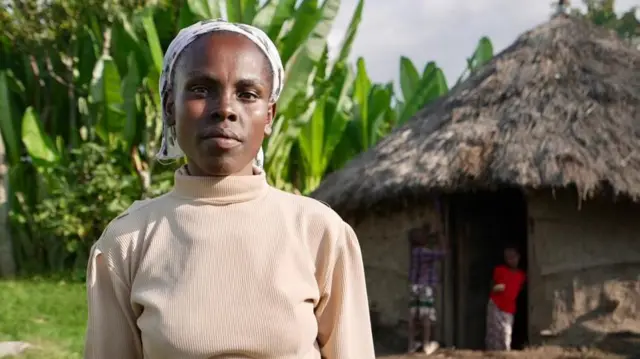
Thirty-five-year-old Getenesh Gabiso, wey dey live for Alamura, a farming village just outside Hawassa, a major city in southern Ethiopia, na one of those wey dey imagine di difference e fit make.
Her life dey like dat of millions of odas in rural Ethiopia.
Despite her small, thatched hut wey just dey 10km from Hawassa, Ms Getenesh, her husband and her three children no get access to electricity.
For cooking she dey collect firewood around dia farm wey dey close.
And for light dem dey use kerosene-powered lamps. Her husband, Germesa Galcha dey concerned for di health of im family.
"[Getenesh] bin dey get big and beautiful eyes. But all dis years of smoke dey spoil dem. Dem don become watery," e tok.
"I dey worry about wetin I go do if di fumes suffocate my children."
Wia dis foto come from, Amensisa Negera / BBC
For Ms Getenesh, wey, wen e dey dark, sometimes dey rely on di weak light from her husband mobile phone, just to fit see for night na wetin she dey dream of.
"I wan see light for my house. All di oda electric goods no matter now. Just light in di evening na all I want," she tell di BBC.
Dem dey look forward to di difference wey di power from Gerd fit make. But di goment minister, Habtamu, admit say dem need to do much more to expand di infrastructure of di national power grid.
Dem still need to lay tens of thousands of kilometres of cable to ensure say small towns and remote villages fit dey connected.
But for di engineer, Moges, di power wey dey generated on di Blue Nile go eventually make a difference.
E get a son wey dem born while e bin dey work on di dam.
"I hate di fact say I no fit dey dia for am as much as I need to," e tok.
"But I know say im future go dey bright becos of sometin wey I don contribute, and I dey so proud to tell am so wen e grow up."
Additional reporting by Hanna Temuari