Why well paid Romania mercenaries wey DR Congo hire to fight dey surrender
Wia dis foto come from, EPA
Dis week na humiliating week for nearly 300 Romanian mercenaries wey dem recruit to fight on di side of di army of di Democratic Republic of Congo.
Dia surrender come afta one rebel attack on di eastern city of Goma don also shatter di dreams of those wey sign up for di job to earn big money.
Di BBC don see contracts wey show say dem dey pay these hired sojas around $5,000 (£4,000) per month, while regular military recruits dey receive around $100, or sometimes dem no go even pay dem.
DR Congo bin contract di Romanians to help dia army fight di Rwanda-backed M23 rebels, wey say dem dey fight to protect di rights of DR Congo minority ethnic Tutsis.
Wen di attack on Goma bin start on Sunday night, di Romanians dey forced to go hide for one UN peacekeeping base.
"Troops and and state-of-di-art military equipment from Rwanda bin support di M23 rebels and dem manage to reach our positions around di city of Goma," Constantin Timofti, wey dem describe as co-ordinator for di group, tell Romanian TVR channel on Monday.
"Di national army stop to dey fight and we dey forced to withdraw."
Romania foreign ministry tok-tok pesin Andrei Țărnea tell BBC say "complex" negotiations follow, wey see as di M23 hand ova di Romanian fighters – wey e describe as private employees of di DR Congo goment on army training mission - to Rwanda.
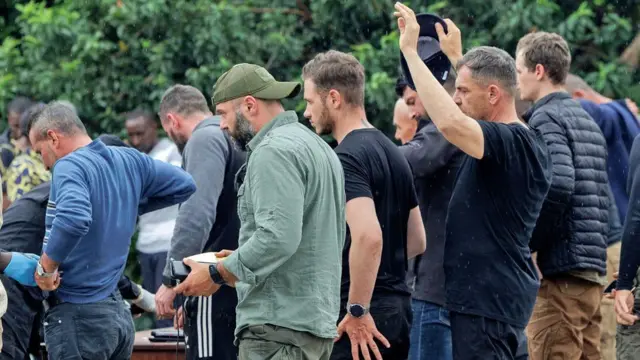
Goma siddon right on di border wit Rwanda – and tori pipo feem di mercenaries as dem cross over and surrender to body searches and oda checks.
Bifor dem cross over, phone footage show as M23 commander Willy Ngoma dey tok down on one of di Romanians in French, e tell am to sit on di ground, cross im legs and put im hands ova im head.
E ask am about im military training – I train wit di French Foreign Legion, di Romanian reply.
"Dem recruit you wit salary of $8,000 per month, you eat well," Ngoma shout, as e point out di difference between dia money and dat of Congolese army recruit salary.
"We dey fight for our future. No come for adventure here," e warn.
Wia dis foto come from, AFP
E no dey clear where Ngoma dey get di $8,000 figure, but di contract wey one former Romanian mercenary show di BBC for October show "strictly confidential remuneration" for senior personnel wey start at $5,000 per month during active duty and $3,000 during periods of leave.
Di agreement outline "indefinite period" of service, and contractors dey scheduled to take one-month break afta every three months of deployment.
I meet di ex-mercenary for Romania capital, Bucharest, wen I go investigate Asociatia RALF, wey one group of UN experts say na Romanian enterprise wit "ex-Romanians from diFrench Foreign Legion".
Na Horațiu Potra, one Romanian wey describe himself as military instructor.
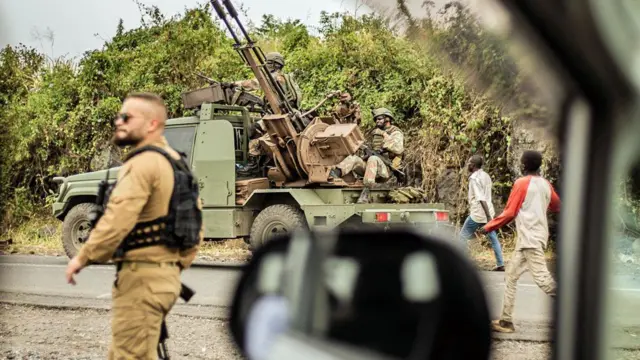
For June while in Goma, I bin notice those kain mercenaries for checkpoints and di ones dem deploy around di city, dem dey work closely wit di army.
Ova di last three years, many pipo don report say dem dey see di Congolese troops dey drive wit army vehicles.
"Wen dem land, everybody dey call dem Russian," Fiston Mahamba, co-founder of disinformation group Check Congo, told the BBC.
"I bin think say dem dey connected to Russian mercenary group, Wagner say dia presence dey for several African countries."
In fact, Asociatia RALF fit also work across Africa – dia contract show say dem get various "operational locations", wey include "Burkina Faso, DR Congo, Ivory Coast, Niger, Senegal, Sierra Leone, Gambia and Guinea".
UN experts say dem bring these two private military companies d to bolster its forces in 2022, not long after the M23 had regrouped and begun capturing territory in North Kivu.
Di province don dey unstable for decades and plenty militias dey operate for there, dey make money from dia minerals like gold and coltan – dem dey use make batteries for electric vehicles and mobile phones.
Di first firm DR Congo sign up na Agemira RDC, wey Olivier Bazin, one French-Congolese national dey head. Di experts say di company employ Bulgarian, Belarusian, Georgian, Algerian, French and Congolese nationals.
Dia work na to renovate and increase DR Congo military air assets, renovate airports and ensure di physical security of aircraft plus oda strategic locations.
Di second contract wey dem sign na between Congo Protection, one Congolese company wey Thierry Kongolo dey represent, and Asociatia RALF.
According to UN experts, di contract show say Asociatia RALF get expertise and extensive experience for di provision of security management services.
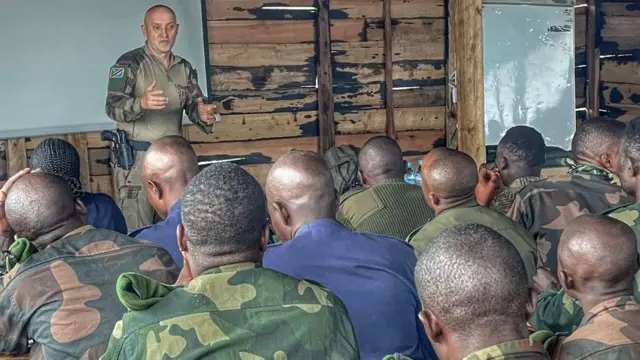
Dem go provide training and instruction to di Congolese troops on di ground through contingent of 300 instructors, many of dem Romanians.
Wia dis foto come from, Horațiu Potra
Wen I follow Oga Potra tok for July about di extent of im group involvement on di ground and weda dem follow for di fight, e say: "We gatz protect ourselves. If M23 attack us, dem no go say: 'Oh, una just be instructors - go house'."
Oga Potra bin dey very active during di DR Congo mission until a few months ago wen e go back Romania - and dey for wrapped for controversy for di middle of di cancelled presidential election there.
Dem dramatically arrest am for December, and e deny providing security for di pro-Russian, far-right candidate Călin Georgescu. And since October, e don refuse to return di BBC calls.
Di ex-mercenary, wey dey im his late forties and follow BBC tok on condition of anonymity, tok say im bin resign becos im dey unhappy on how Asociatia RALF deu operate.
E say di Romanians do plenty things on ground for North Kivu province: "Only very few of us be trainers.
"We dey work long shifts of up to 12 hours, dey guard key positions outside Goma."
E maintain say di money no worth di risks di military contractors gatz take.
"Missions dey disorganised, working conditions poor. Make Romanians stop dey go there becos e dey dangerous."
E also claim say dem no do proper background checks, and some of di Romanian recruits no get military training – e use di example of one of im former colleagues wey be firefighter.
Wia dis foto come from, Vasile Badea family
DR Congo government neva reply to BBC request for comment on weda dem carry out background checks, or about di pay disparity between di private contractors and Congolese troops.
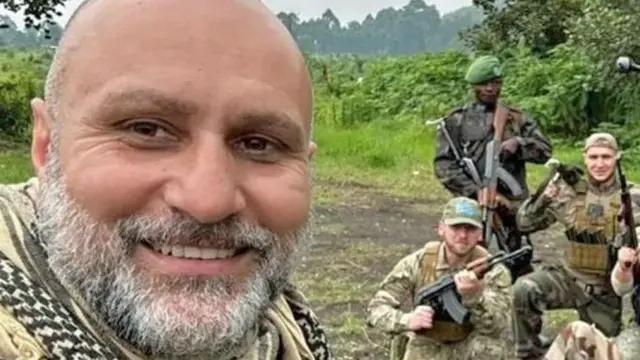
Di family of Vasile Badea, one of two Romanians wey die last February wen M23 fighters ambush one army convoy wey dey on dia way to Sake, one frontline town near Goma, tell BBC say na police officer im be.
Di 46-year-old bin take sabbatical from di force and take up di role for DR Congo sake of di beta salary offer.
Di policeman bin dey struggle to pay for one apartment e just get and need money to pay for am.
Many more Romanians bin dey lured sake of di prospect of a well-paid job.
I meet one man for Bucharest for October, who go back im kontri dey find more recruits to go to Goma. E get military background and don do Nato tours for Afghanistan wit di Romanian army.
"We dey very busy trying to find 800 pipo wey need to dey mentally prepared for di job and sabi how to fight," di mercenary recruiter tell BBC.
E say im no work for Asociatia RALF, and no gree tok which outfit e dey work wit.
"Dem dey place di recruits for positions wey correspond to di level of dia training, ande dem dey earn between $400-$550 per day," e explain.
Wen dem ask am about di recruitment process, e say e dey confidential.
"Dem no dey publish dis kain work anywhere," e tok, and add say na on networks like WhatsApp you go see am.
E show me one WhatsApp group where more dan 300 Romanians don sign up, many of dem be ex-military personnel.
Wia dis foto come from, Reuters
For June last year, Rwanda government tok-tok pesin Yolande Makolo bin kick against di presence of mercenaries for eastern DR Congo, e say na violation of di Geneva Conventions, wey prohibit di use of hired combatants.
In response, Congolese government tok-tok pesin Patrick Muyaya dismiss wetin e call Rwanda perennial complaint.
"We get some instructors wey dey come train our military forces becos we know say we get urgent situation," e tell BBC.
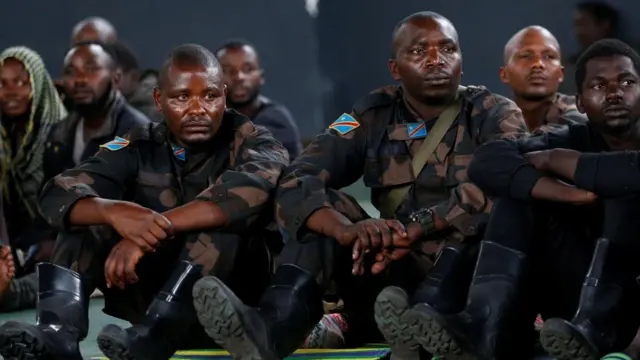
But one Congolese soja wey I meet for June express dia disappointment ova di army strategy.
"Di pay dey unfair. Wen e come to fighting, na us dem dey send go di front lines first," e tell BBC on condition of anonymity.
"Dem [di mercenaries] dey only come as back-up."
E confam say im pay na around $100 a month, but e no dey come on time or make dem no pay at all.
I follow am tok last week ago, and e confam say im stll dey stationed for Kibati, near Goma, where di army get base.
"Things dey very bad," e tok for one voice note to me.
I no fit reach out to am since then - and M23 don take ova di base since and kill many sojas, including dia commander.
Observers say di quick fall of Goma point to DR Congo fractured defence strategy, where overlapping forces plus blurred lines of command later fall into di hands of M23.
Richard Moncrief, International Crisis Group project director for di Great Lakes, say mercenaries, di Congolese army work wit troops from di Southern African Development Community (Sadc), one local militia wey dey known as Wazalendo, plus sojas from Burundi also lead to di fall.
"E create situation wia e dey impossible to plan military attack wen chain of command and responsibility dey messed up," e tell BBC.
"I think say e dey important to work towards far greater coherence in di armed effort for North Kivu, probably reduce di number of armed groups or armed actors on di ground."
For di ex-mercenary, di fate of im former Romanian colleagues no come as surprise.
"Poor command lead to failure," e tell BBC.