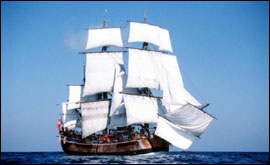
Small settlements grew up across the Atlantic, and the demand for ships meant that shipbuilding became one of Jersey's main trades. In 1833 the Jersey Agricultural and Horticultural Society was formed, and began to breed the Jersey cow. Cider-making and oyster-fishing were also trades that grew during this time. Influx of immigrants Steamers also began to visit the island more, bringing with them thousands of passengers. Many of these passengers stayed - by 1840 there were 5,000 English residents. St. Helier Harbour needed to be expanded, and in 1837 new plans were drawn up for a harbour and quays enclosed by the Victoria and Albert piers. Times of great change In 1856 the island's government changed - it was decided that 14 deputies should be added, as elected representatives of the people. The first Jersey Royal potatoes were grown in the 1880's. In 1891, 70,000 tons of potatoes were exported, bringing in nearly half a million pounds. By 1900 the population had increased from 36,000 to 52,000; English had become the common language; and old industries like knitting, oyster-fishing and cider-making were no longer such important trades. World War I and after When the First World War broke out, 300 Jerseymen volunteered for service. Later, another 3,000 were called up. Jersey was considered so safe that a Prisoner of War camp for 1,500 Germans existed at Blanches Banques. Despite the war, the island itself remained largely undisturbed. The first 40 years of the 20th century were prosperous and peaceful. The Societe Jersiaise began their archaeological digs during this half of the century, and uncovered many spectacular finds. In 1937, St. Peter's Airport opened, meaning that Jersey was now only an hour from London. The island's links with England were greatly strengthened. The outbreak of war in 1939 came as a shock to most islanders, who expected the experience of the previous war to be repeated.
|