BBC HomeExplore the BBC
This page has been archived and is no longer updated. Find out more about page archiving.

28 October 2014
BBC JerseyBBC Jersey - Ch'est eune vaque Jèrriaise
BBC Jersey homepage

BBC Homepage
England
»Jersey
News
Sport
Junior Football
Travel
Weather
Entertainment
Message Boards
Faith
Island Views
Features
My Island
My Space

Radio Jersey


Contact Us

You are in Jersey > My Island > History> In the Beginning
SEE ALSO
News imageIn the beginning
News imageContinuous war
News imagePeace - but not for long
News imageGrowth of new trades
News imageGerman Occupation
News imageOccupation life
AROUND BBCi
News imagePeoples War
News imageBBC History
ON THE WEB
News imageJersey Heritage
The BBC is not responsible for the content of external websites.

News imageHISTORIC SITES
Jersey War Tunnels
News image
Jersey has a rich history with a number of venues to show it off.
News imageJersey War Tunnels
News imageCastles
News imageHamptonne
News imagePANORAMIC VIEWS
Gorey Castle Panorama
News image
Panoramic views of historic sites and general views.
News imageGorey Castle
News imageLa Hougue Bie
News imageFOLKLORE
Caumine
News image
Ghosts, Gouls, Witches and Black Dogs.
News imageGeoffrey's Leap
News imageLe Perquage
News imageSpanish Ships
IN THE BEGINNING
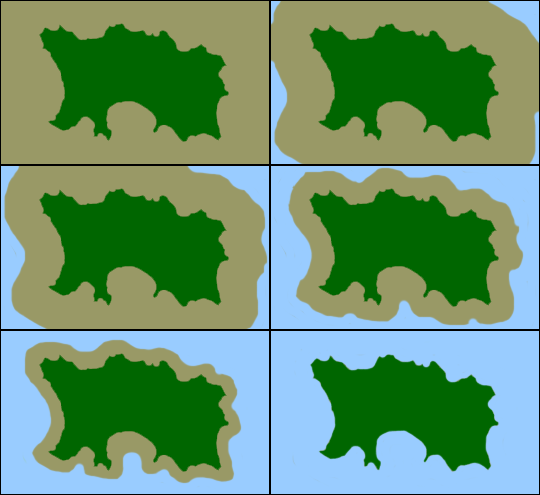
The sea rising around Jersey
How Jersey became the island it is today

Jersey's first foundations were laid when muddy currents running down a sloping seabed deposited layer after layer of fine sand and shale.

600 million years ago a second generation of rocks were produced by ash falls and lava. 100 million years after this, granite was formed by the molten magma that welled up into cracks in the earth's crust.

About 100 million years later, the conglomerates were formed. As mountains were eroded, the pebbles and clay were carried down a river, deposited, and cemented together.

Between this formation of the conglomerates 400 million years ago, and the ice ages that began two million years ago, no new rocks were formed.

Major changes in the earth's crust formed a plateau. As the sea level rose and fell, Jersey constantly changed.

The first settlers

250,000 years ago, the first people appeared on Jersey. They were nomadic hunters, and used the caves at St. Brelade as a base whilst hunting mammoth.

The island was used on and off for 200,000 years until the first ice age ended and Jersey again became an island. The island was unoccupied for 120,000 years until the end of the second ice age.

Permanent settlements

At the end of the second ice age, settlements appeared around Jersey, on the coastal plains. Permanent settlements were not established on Jersey itself until 4500 BC.

These neolithic settlers established trading links with Brittany and with the south coast of England.

Very little else is known about the island from here until about 930 AD. There is evidence of the Gauls and the Romans in the island, but it does not seem that they were permanent settlers.

In 511 Jersey became part of the kingdom of Neustria. It was around this time that the first Christian missionaries arrived in Jersey - St Magloire and St Samson.


Jersey Live festival 2004Catch up on BBC TV and Radio. Watch and listen now.


BBC Jersey website, 18 Parade Road, St Helier, JE2 3PL
phone: 01534 837228 | e-mail: [email protected] | text: 07786 202888


About the BBC | Help | Terms of Use | Privacy & Cookies Policy