BBC HomeExplore the BBC
This page has been archived and is no longer updated. Find out more about page archiving.

28 October 2014
BBC JerseyBBC Jersey - Ch'est eune vaque Jèrriaise
BBC Jersey homepage

BBC Homepage
England
»Jersey
News
Sport
Junior Football
Travel
Weather
Entertainment
Message Boards
Faith
Island Views
Features
My Island
My Space

Radio Jersey


Contact Us

You are in Jersey > My Island > History> German Occupation
SEE ALSO
News imageIn the beginning
News imageContinuous war
News imagePeace - but not for long
News imageGrowth of new trades
News imageGerman Occupation
News imageOccupation life
News imageOccupation food
AROUND BBCi
News imagePeoples War
News imageBBC History
ON THE WEB
News imageJersey Heritage
The BBC is not responsible for the content of external websites.

News imageHISTORIC SITES
Jersey War Tunnels
News image
Jersey has a rich history with a number of venues to show it off.
News imageJersey War Tunnels
News imageCastles
News imageHamptonne
News imagePANORAMIC VIEWS
Gorey Castle Panorama
News image
Panoramic views of historic sites and general views.
News imageGorey Castle
News imageLa Hougue Bie
News imageFOLKLORE
Caumine
News image
Ghosts, Gouls, Witches and Black Dogs.
News imageGeoffrey's Leap
News imageLe Perquage
News imageSpanish Ships
GERMAN OCCUPATION
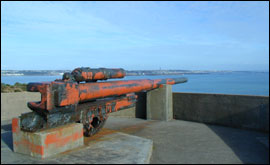
Battery gun at Noirmont point
A battery gun at Noirmont point

During the 1930's Jersey was a peaceful holiday island, with thousands of visitors every summer.

But this was soon to change...

To defend or not to defend?

When the Germans occupied France in 1940, the Lieutenant-Governor of Jersey asked the War Office what would be done to protect Jersey from the Germans.

On 17 June 1940, the decision was made that Jersey would not be defended. All troops and military equipment were to be removed from the island.

Evacuation

Ships were sent to evacuate anyone who wished to leave the island. Those who did wish to leave were told to register at the Town Hall - by the end of the next day, more than 23,000 islanders had registered.

A lot of the islanders who had registered changed their minds, whilst others tried to get onto the ships but were turned away. Of the 23,000 that had registered, only 6,500 actually left.

Homes were ransacked - evacuees could only take what they could carry, and cars and pets were abandoned. The banks ran out of money as people tried to withdraw their savings.

Arrival of the Germans

On the 28 June 1940, the Germans bombed St. Helier harbour and La Rocque. They did not know that Jersey was undefended - England had kept it quiet.

Once the Germans knew the islands were undefended, they immediately occupied them. On 1 July 1940, a paper ultimatum was dropped over Jersey - the islanders had to show their willingness to comply with the Germans by flying white flags from all buildings.

About a hundred German troops arrived that day. Anti-aircraft and machine gun posts were set up, and a list of orders was issued for islanders to follow - these included a curfew from 11pm to 5am, and a ban on the sale of spirits.

By December 1940 there were 1,750 Germans on Jersey. Within a year this had increased to 11,500.

You are in Jersey > My Island > History > German Occupation

News imageprintable versionNews imagesend to a friend

Jersey Live festival 2004Catch up on BBC TV and Radio. Watch and listen now.


BBC Jersey website, 18 Parade Road, St Helier, JE2 3PL
phone: 01534 837228 | e-mail: [email protected] | text: 07786 202888


About the BBC | Help | Terms of Use | Privacy & Cookies Policy