Life after ChelseaAfter the last visitor has staggered home what happened to the gardens left behind? Do any live on, transported piece by piece into someone's back garden? | 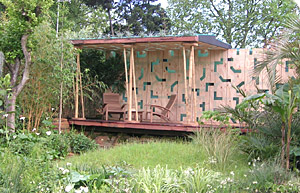 |
Making a garden at the RHS Chelsea Flower Show is an extraordinarily intense experience. For months, it takes over your life, and everyone involved with the garden - designer, plant suppliers, landscape contractors - eats, drinks and dreams of Chelsea. Then after a single week of glory, it's over. Well - not quite. Five of the 19 show gardens created for last year's show lived on beyond their week in the spotlight, and have been admired and enjoyed ever since. The most remarkable reincarnation has to be the Gorilla Garden, which won a silver medal at Chelsea 2006. It's now in the gorilla enclosure at London Zoo, and visitors must walk through its jungly planting to get to the clearing where the gorillas live. 'The show garden was a scaled-down version of the gorilla enclosure,' says designer Graham Pockett. 'The feature stream was a smaller version of the moat separating visitors from the gorillas, and the ramp at the back was a version of what's now the viewing platform.' Plants were kept ticking over at the zoo until September, when the first phase of planting began. The enclosure opened in March and has been massively popular: London Zoo recorded its highest visitor figures for 18 years over the Easter weekend. 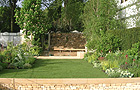 Some gardens were taken home by the sponsor who paid for them. The silver medal winning Barnsley House Spa Gardenwent to Gloucestershire to become part of its hotel sponsor's garden, while the Leeds City Council garden is now part of the White Rose Office Park in south Leeds, owned by sponsor Munro K. 'It was a little tricky to relocate it,' says Martin Walker, of Leeds City Council, who sourced the plants for the show garden. 'When it's at Chelsea, the view from the front is the only view. But when you relocate you have to consider what people will see from other sides, and when they walk through it.' The winner of the People's Award and a gold medal, the Wormcast Garden designed by Chris Beardshaw, was actually borrowed from an existing 19th-century garden at Boveridge House in Dorset. After Chelsea, it simply went back to where it came from, and the original statue and dry stone walling were reinstated. The only thing that didn't go back was the planting - Chris had to design using plants which fitted in with the timing of Chelsea, whereas the original planting, designed by Gertrude Jekyll, peaks in high summer.
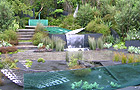 The 100% New Zealand Garden was all about the plants, and attracted considerable controversy by shipping in rare and endangered species from the other side of the world. It's all ended well, though: the plants were donated to the new Bicentenary Glasshouse at RHS Wisley, Surrey, where you'll be able to see them from mid-June. At least three show gardens will be reconstructed again after this year's show, and with the emphasis increasingly on sustainability that figure is set to rise. For some gardens at least, it isn't over, even when it's over - and we can enjoy Chelsea all year round.

| 







