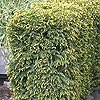
Yew is a native British evergreen, whose wood was once used for making longbows. Young plants are bushy and, if left unclipped, they eventually grow into large trees almost as wide as they are tall. However they are rarely allowed to grow naturally, being a firm favourite for classic style hedges and topiary. The plants withstand quite hard clipping and, if overgrown, can be rejuvenated by cutting them back to the stumps. The are also quite amenable to growing conditions and will grow in any well-drained soil. To propagate, take cuttings in late summer and early autumn. The Royal Horticultural Society have given it their prestigious Award of Garden Merit.
Crambe cordifolia Crambe
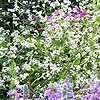
A real border giant, this plant creates the same sort of effect as gunnera when not in flower, but grows in poor dry soil. It is also much hardier and does not need winter protection. In flower it is unmistakable - a plant will cover itself with a frothy mass of foam-like flowers that look fragile and more like those of gypsophila, but with a sweetish perfume. These blooms are attractive to bees. Being deep rooted, it is very drought tolerant, but plants do not move once established so it is vital to pick the right spot first time. Use it at the back of a big border where it is a good foil for other flowers, or grow alone as a specimen plant. The Royal Horticultural Society has given it its prestigious Award of Garden Merit (AGM).
Digitalis purpurea 'Albiflora' Foxglove
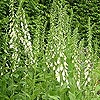
Foxglove is a common favourite, and 'Albiflora' is no exception. This cultivar produces elegant spires of white tubular flowers in June, which are enjoyed by bees throughout the summer. For the best displays, it should be grown annually from seed. Sow in late spring where you want it to flower for blooms the following year. It will grow in virtually any soil as long as it is not very wet or very dry. All parts of the plant cause severe discomfort if ingested. Use gloves when handling the plant as the foliage can irritate the skin.
Viburnum plicatum 'Mariesii' Japanese snowball bush
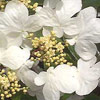
Viburnum plicatum was first introduced as the garden form found in Japan in 1844, before the original wild form, V. f. tomentosum, was discovered. It is a remarkable shrub, with widely spreading branches that naturally assume a series of horizontal tiers. 'Mariesii' emphasises this layered effect, dramatic at any time, but especially when the flowers appear, neat lacecap heads arranged in two parallel rows along the upperside of the spreading branches. Careful pruning, similar to that used for espalier apples, can produce a satisfying symmetrical shrub. The Royal Horticultural Society has given it its prestigious Award of Garden Merit (AGM).
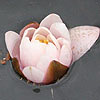
Nymphaea 'Marliacea Carnea' Water lily
A beautiful water lily with a decent spread, making it a good choice for most ponds because it is not so rampant that it will quickly block out everything else. The flowers start deep purple when young, but they gradually fade to a beautiful pale pink, standing out nicely against the dark green leaves. Grow in a lattice basket for pond plants and remove any foliage as it turns yellow.
To view the panoramic image, click on the garden with your mouse and drag it around the picture. To find out about the planting hotspots in the garden, click on the leaf icon. To watch a video about the architectural features in the garden, click on the arrow icon.
If you're having problems viewing the panoramic images, take a look at our still photography of all of the show gardens.
"Celebrating a unique collaboration between two of Britain's most illustrious designers, Thomas Mawson and Gertrude Jekyll, this garden is based on the original archive plans and sketches from the 1920s, giving us a snapshot of how these two great designers worked.
"Unpicking the fabric of Jekyll's original, pencil scribble planting plans has allowed us to ensure this garden is as close to her original as possible. With the ongoing restoration at Boveridge House involving the lifting and relaying of original stonework, this means that much of the stone on the Chelsea garden is taken straight from Mawson's scheme. When Chelsea is over we'll restore the stone to its original Dorset home just as Mawson wanted."
Chris Beardshaw - designer of The Wormcast Garden
Vote now for your favourite garden in the BBC RHS People's Award.









 "Celebrating a unique collaboration between two of Britain's most illustrious designers, Thomas Mawson and Gertrude Jekyll, this garden is based on the original archive plans and sketches from the 1920s, giving us a snapshot of how these two great designers worked.


