‘This is the real-life version of The Bear’
Tom Kerridge’s new series sees him lift the lid on what working in hospitality is really like – and it’s just as intense as the restaurant-based drama series critics are raving about.
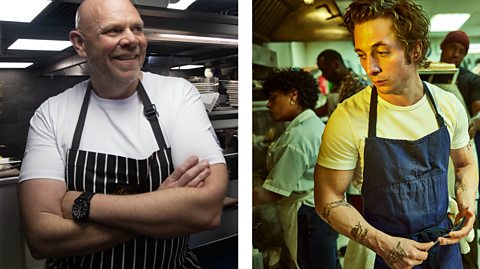 Image source, BBC/Disney +
When TV series The Bear arrived in 2022, it built an instant and solid fanbase. Audiences were enamoured with the drama which centres on the character Carmy, a chef trying to turn around the fortunes of his family’s struggling Chicago restaurant.
Now back for a second series, the Hulu original show has returned in the same month as BBC Two’s The Hidden World of Hospitality premieres. Presented by Tom Kerridge, the documentary delves into the trials and tribulations people in the industry face daily.And it hammers home how true to life the chaos-drenched drama really is.
When art reflects life
“I absolutely loved The Bear,” says Kerridge. “I thought it was the best dramatised depiction I’ve seen of working in a kitchen – it’s the most realistic.
“Obviously, it’s a drama-comedy show that takes artistic licence, but it does portray the pressures that people are under and the mental anguish involved with running a restaurant. That’s as well as the really good energy, the fun and edginess of professional kitchens. You have the excitement of not having enough money, but all these dreams of trying to create a brilliant and amazing space.
“That’s what The Hidden World of Hospitality shows, too. We’re in it and it’s real.”
One difference between the show and Kerridge’s kitchen? The real-life chef is far less likely to be shouting in his kitchen amid a tornado of chaos.
“Like The Bear shows, working kitchen is quite chaotic and adrenaline fuelled – which makes it really good fun. But a calm and controlled kitchen is always the best for producing consistent results. If there is shouting and you hear ‘move quick! Hurry up!’, something is going wrong – it’s becoming quite reactionary.
“The skill set comes when you’re 50 years old and you’ve been doing it for 32 years. You can foresee common problems and you’re reading the room. So, I think the older you are, the more experienced you are and the calmer the kitchen you’re probably in.”
When mental health struggles and work collide
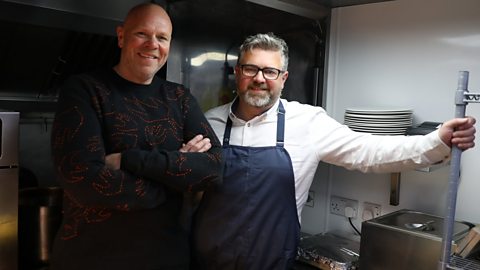
“Kitchens are high-octane. Even when the kitchen’s controlled, everyone’s moving very quickly,” says Kerridge.
As we see in The Bear, this constant pressure – when combined with other stresses that the industry brings – can lead to poor health outcomes if people don’t take steps to protect themselves, says Kerridge.
We see this first-hand on Kerridge’s new series. In episode one, he spends time with fellow Michelin star chef Ryan Blackburn, who’s struggling with the weight of expectation that comes with working in a high-end restaurant. It’s taking a toll on his life outside of the kitchen.
This is something Kerridge can relate to. On the programme, he reveals that he has been through similar experiences, which almost took him down a dangerous path.
“My own ambition to become a top chef nearly came at an extremely high price,” he says on the show. He adds that the pressure to try and win a second Michelin star caused him health issues.
That drive, he says, would motivate him through busy services but afterwards, late at night, the all-important release would come in the form of “massively heavy drinking. Like, every single day. If I hadn’t stopped being that person, I don’t think I’d be sat here now either. I think it’d be done; I wouldn’t be here.”
He advises Blackburn to make sure he takes time away from the kitchen to relieve the pressure. And explains that in the hospitality industry, wider changes are being made to improve the mental and physical health of those who work in it.
“That’s changed massively over the last 10 years. The hospitality industry works very, very hard now to try and make sure that people are in a much more secure and safe place.
“Now you’re seeing many restaurants that are closing, say, five lunches a week so that people can get time away. They’re operating to the time that people can work, rather than operating to the time that people feel pressured to work.
“The upshot is that there’s a cost there – for the guests that come through the door – but there needs to be an understanding that this cost is because we’re taking care of our staff.”
A career for perfectionists?
Perfectionism – like that displayed by Carmy in The Bear – seems to be a common personality trait in those who work in hospitality.
“There are a couple of characteristics the best people in hospitality tend to have: they’re very driven and always want to improve.
“The beautiful thing about being in hospitality is that you’re surrounded by so many people that have the same heart, desire and passion – whether they’re making cheese, brewing beer or growing carrots. It’s infectious too. This is a real passion-led industry.
This is on display throughout Kerridge’s series, which highlights how he and Blackburn are cut from the same cloth.
“He [Blackburn] questions every single thing that goes into that restaurant. Every move, every structure, every plate, every knife and fork, every positioning of anything within that restaurant – not just the food. And that can cause a huge amount of mental anguish. It comes from being in a profession he dearly loves. He’s driven by a passion and wants to improve himself daily, again and again. Those pressures come and are self-inflicted, but they’re also real.”
“Sometimes, it causes mental stress and strain. But Ryan wouldn’t change it for the world. Nor would I and nor would many top chefs because you do get an absolute pleasure pushing yourself.”
Perception vs. reality
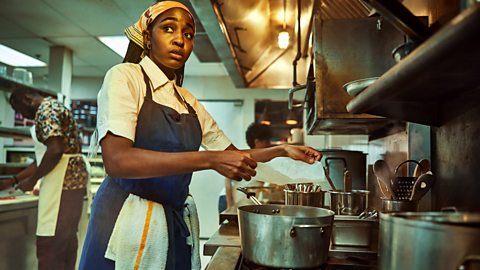 Image source, Disney+
If you’re wondering how dramatised kitchens differ from the reality, Kerridge believes there are a couple of key differences between how people imagine the hospitality industry to be and what it’s actually like.
“There are two misconceptions. The first is that people think if you go into hospitality as a young person, there’s no social life. It couldn't be further from the truth. The social life is incredible – it’s just very different to everybody else’s.
“You’re not going out on a Friday or Saturday night at 7pm because that’s probably when you’re working, but you are going out at midnight and you know all the best late-night pubs, clubs, bars and spaces to go. And you connect with so many different people. Your social life is way better, more fun and extreme than other peoples.
“The second misconception is, I think, when people go to a busy place, they assume it’s making tonnes of money – that's not the truth. You aren’t seeing the peaks and troughs. It might be busy on a Saturday night, but it’s a lot quieter on a Monday or Tuesday. Regardless, we need to have staffing for both.
“If hospitality was making loads of money, two out of three [businesses] wouldn’t shut in their first year, and 1,000 businesses a month wouldn’t be closing. Irrespective of how busy a place is when you visit or how expensive a pint of beer is, it’s probably struggling and not making loads of money.”
So why do people choose to open or work in restaurants? There are lots of reasons of course. But, for many, it’s all about the love of the job, the food and the culture.
“I consider myself the luckiest person in the world, because at 18 I fell into an industry that was the most magical. It’s just been brilliant.”
Watch BBC Two’s The Hidden World of Hospitality with Tom Kerridge on BBC Two, weekly at 8pm from Thursday, 27 August. Or catch up on BBC Two’s iPlayer.
Originally published July 2023