Archives for November 2011

The Thinking Allowed Newsletter: What do you think of it so far?

Blog comments are currently unavailable. Find out more.

Post categories: , 

Laurie TaylorLaurie Taylor15:18, Wednesday, 30 November 2011

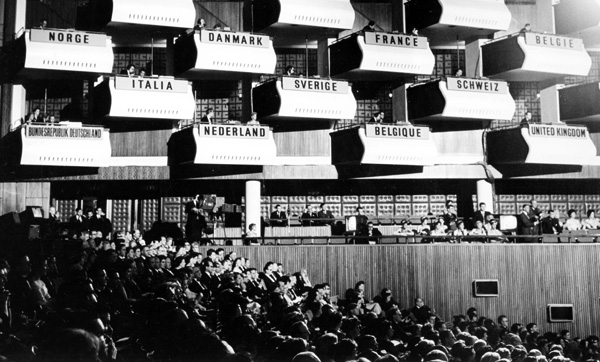
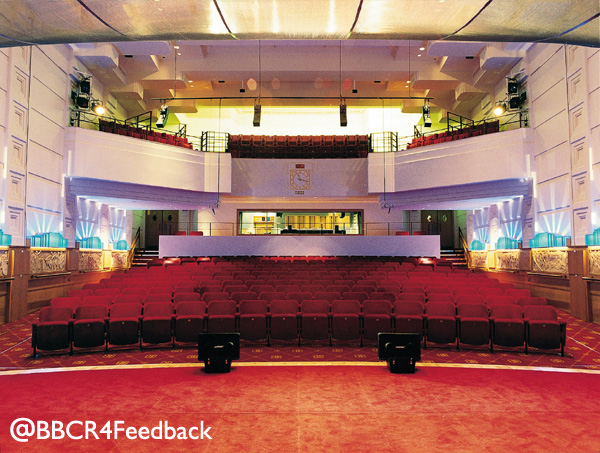
Eurovision Song Contest, 1960

Boxes for foreign commentators at the 1960 Eurovision Song Contest which was televised by the BBC

from the Royal Festival Hall, London.

I know I'm in for a difficult and embarrassing evening when the compère of a show kicks off the proceedings by asking the audience if they're enjoying themselves.

As those around me respond by whooping with apparent delight and then proceed to whoop even louder when the compère complains about their relative lack of enthusiasm, I am mentally composing a brief letter to the management in which I point out that being asked to pronounce on the state of my enjoyment before the proceedings have even commenced is not dissimilar to being asked for a gastronomic verdict on a meal before the soup has arrived.

But there's often worse to come. I've been to several concerts in recent years at which the artist has no sooner appeared than they're asking members of the audience to act as unpaid assistants. "Put your hands together", they demand as they begin their first number.

I've always regarded this an appalling injunction.

For a start it means that the performer is about to embark upon a song without any rhythmic sophistication whatsoever. As I've observed on many occasions any slight rhythmic shift precipitates a sudden crisis of confidence in the clappers who no longer know whether they're supposed to be still putting their hands together or sitting quietly and relishing the performer's artistry.

It might just about be tolerable if the mindless clappers kept their hands to themselves.

At the theatre it's perfectly possible at the end of the performance to keep one's hands unobtrusively by one's side while others around are politely applauding.

But at a popular music concert it's almost de rigueur to clap with one's hands above one's head. This not only obscures the stage for extended periods but also draws the attention of everyone else in the row to the one immobile figure in their midst, me.

Although it's highly distressing to spend a long evening next to someone who regards whooping joyfully and clapping loudly as perfectly acceptable public behaviour, it's even more disconcerting to find that you are sitting within spitting distance of a yelper.

Yelpers are distinguished from whoopers by virtue of their solitariness.

Whereas whoopers all whoop together when asked if they're enjoying themselves or if they'd like to hear one more number, yelpers are individualists. They typically emit their solitary yelps during a solemn part of the artists' introduction. "This song", says the singer, "has a particular importance to me because it concerns a man who has always been my musical inspiration" (Yelp).

Some artists ignore these incongruous yelps but I've been unfortunate enough to attend concerts where the performer has actually compounded the absurdity of the situation by actually yelping back.

It's not, you understand, that I'm against expressions of delight. Indeed, I tended to laugh more loudly than most when Ronnie Scott used to put down a silent audience at his jazz club by commending its members on the success they were having in restraining their enthusiasm.

What I dislike I suspect, is anything resembling fandom: anything which encourages the suspension of critical judgement: anything which gives too much weight to emotion and too little to technique and artistry.

All of which means that I'd experience nothing but deep embarrassment if I ever found myself amongst the opera fans of Buenos Aires whose passionate devotion to the art form is brilliantly documented in a new book called The Opera Fanatic: Ethnography of an Obsession.

You can hear me talking to the author of that study at four o'clock today or after the midnight news on Sunday or on our podcast.

Also on the programme: Did grammar schools aid social mobility? A new study suggests not.

Laurie Taylor presents Thinking Allowed

The Last Jews of Iraq

Blog comments are currently unavailable. Find out more.

Post categories: , 

Hannah MarshallHannah Marshall17:00, Tuesday, 29 November 2011

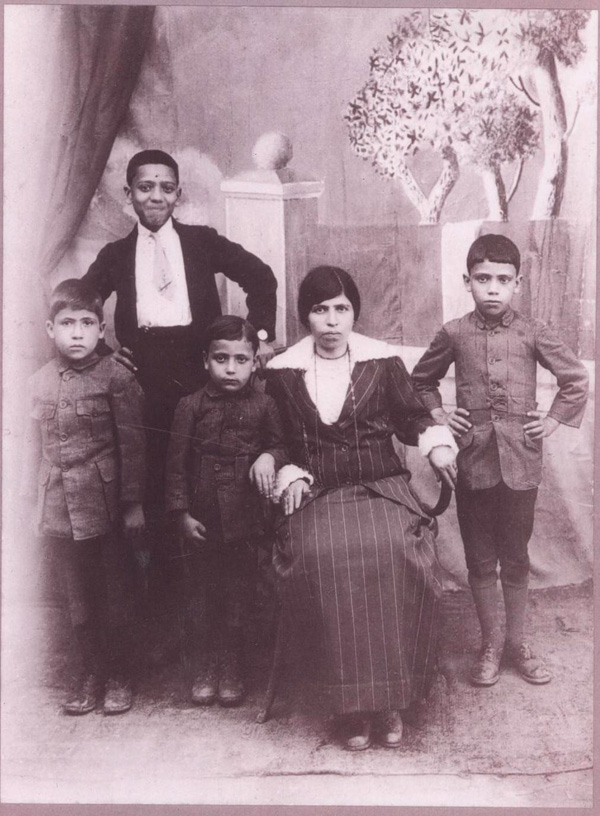
Basra, 1918

Hannah Marshall: "This is the picture of my grandfather and his family. It shows my grandfather, his mother

and three brothers. The picture was taken in Basra in 1918. My grandfather is the boy

standing at the back of the picture, with the black jacket and tie."

My grandfather was an Iraqi Jew, who ended up living in a North Wales seaside town. I never met him, but I've always been fascinated by this side of the family. A couple of years ago, I decided to find out more. I got in touch with distant cousins, and cousins of cousins, and friends of cousins - everyone in the Iraqi-Jewish community is linked to everyone else, somehow. The stories they shared were shocking, and revealed a deep-rooted history.

In 1917, a third of the population of Baghdad was Jewish.

Today just seven Jewish people live incognito in the city, their lives under constant threat. You're probably more surprised by the old figure than the new one. A third of the population? In fact Iraqi Jews thrived - they ran successful businesses, dominated the civil service and lived in relative peace and friendship with their Muslim neighbours. Then everything changed.

In the 1940s Arab nationalism, Nazi propaganda and anti-Zionism fuelled by the formation of Israel combined to create a wave of often violent anti-Jewish feeling. By 1951 nearly 120,000 Jews had fled, most evacuated to tent cities in Israel in a huge airlift. They left everything behind.

Today ancient Jewish shrines remain across Iraq, but the synagogues are empty and most Iraqis know nothing about the Jewish history which surrounds them. We're used to hearing accounts of Jewish exile, and tales of violence in Iraq, but this is the untold story.

The people I spoke to explained that Jewish history in Iraq goes back 1,600 years. In 597BC King Nebuchadnezzar captured the Jewish homeland of Jerusalem and brought them as slaves to Babylon, as it was then known. They flourished between two rivers, the Tigris and the Euphrates.

I heard stories of parties on sailing boats and of sleeping on the roof in the summer heat. They talked about Muslim friends and business partners, about feeling proud to be Iraqis. They described a Baghdad in which so much of the trade was in Jewish ownership that on a Saturday the souks would go quiet and banks would close.

And, of course, they talked about food - everywhere I went plates of chewy Iraqi macaroons were pressed upon me until I could barely move. The Iraqi Jews in the diaspora have retained their proud tradition of Arabic hospitality.

Alan Yentob, creative director of the BBC, is himself the child of Iraqi-Jewish immigrants. He has never been to Iraq, the dangers are too great, but he grew up in Manchester feeling part of Judeo-Arabic culture - eating Iraqi food, hearing Baghdadi songs and speaking Arabic with his grandmother. He, too, wanted to find out more about his community's history.

For this programme, The Last Jews of Iraq, we talked again to people who remember life in Baghdad, including members of Alan's own family. We found recordings of Judeo-Arabic mvusic from the 1920s, when Jewish musicians dominated Baghdad's music scene.

But we also heard about Jews thrown out of their jobs, people attacked in the street, and young Jewish girls burnt with acid. People remembered their shock when in 1941 Arab neighbours and friends turned on them in a pogrom known as the Farhud.

One man recalled his mother breaking down when she saw the hanging of nine suspected Zionist spies, all relatives or friends of the family, live on Baghdad TV.

The stories of persecution and terror were many but the common sentiment was astonishment that a country in which Jewish people had for centuries been proud citizens could turn on them so suddenly.

And then, just as we finished making the programme, came news of a fresh threat to the seven Jews who remain in Baghdad. An American embassy memo, published by Wikileaks, has revealed their names and identities, which have been reprinted in local Iraqi newspapers. One is now trying to leave the country, the others are determined to stay in the land of their ancestors, despite the dangers.

It all brought home to us the urgency of telling this story now, before it disappears completely. With the news dominated by Middle Eastern tension, it feels so important to hear the tales of my grandfather's world, in which Jews and Arabs lived side by side, sharing their lives, their music, their food and their country.

Hannah Marshall is the producer of the Last Jews of Iraq, a Loftus Audio production for BBC Radio 4.

In Our Time newsletter: Judas Maccabeus

Blog comments are currently unavailable. Find out more.

Post categories: , 

Melvyn BraggMelvyn Bragg16:30, Tuesday, 29 November 2011

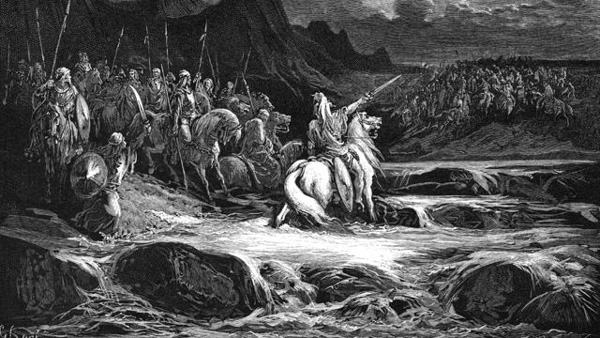
Editor's note: In last week's programme Melvyn Bragg and his guests discussed Judas Maccabeus. As always the programme is available to listen to online or to download and keep - PM.
Judas Maccabeus

Hello

After the programme had finished, Philip Alexander said that although the First Book of Maccabees was the more authoritative and reliable, the Second Book was much more fun and he wished that he could have believed more of it.

A friend of mine, later in the day, said that he thought that I was a little bit too keen to disprove the validity of the evidence brought forward in these books. It worried me a bit. And then I thought, well, that is what I was trained to do as a historian - to question the evidence - and there was a general agreement among the three contributors that some was reliable and some was less reliable. The problem, as always, was which bit was which. But that, I think, is the attraction of scholarship of ancient times. The element of puzzle and mystery, and the necessity for detective work and even forensic skills.

Just as a contrast, Tessa Rajak let us all know that Judas Maccabeus has been made into a feature film, which will star Braveheart himself, Mel Gibson.

The canopy of culture stretches very widely.

Tessa was also at pains to point out that Salome, the woman ruler in this eighty-year span of the sons and descendants of Judas's father, was easily the best ruler. She got the Pharisees on her side, she made everybody happy, the corn grew high and she became the mother of the nation.

Women rulers seem to enjoy a much better reputation than men.

Afterwards, a couple of meetings and then off to the British Library to continue with Tom Morris on the search for the history of the written word.

There were a couple of treats, but the one that drew my attention most firmly was the Gospel of St Cuthbert. This was discovered in the coffin of St Cuthbert, opened in 1104 in Durham Cathedral, having been sealed in 698 on the island of Lindisfarne.

It is the oldest surviving bound book in Western history. It is a beautiful, hand-sized object, described in loving detail by its curator who is the only person in the British Library allowed to touch it!

A descendant of Wordsworth, in the late 19th century, declared that this was even more beautiful than the Lindisfarne Gospels. It was put together at about the same time in the same place, and it never ceases to exhilarate me that the foundational artefacts of what could be called British or even English culture were books.

The British Library is one of the most extraordinary spaces in London.

After all the abuse and angst and lamentations and tears that it had to leave its old space in the British Museum, it has risen again a mile or two away and is totally magnificent. A wonderful courtyard, beautiful rooms in which to work, floods of mostly young people surging in with their laptops and occupying literally every available seat, while the library itself is full of scholars and the stacks revolve swiftly and endlessly as books are brought.

It employs almost two thousand people, half of them in Yorkshire where a building of a similar size exists to do the work of deep and lasting storage. Perhaps we will be the most recorded civilisation in history. But who will be there to look at the records?

Oh dear. But the epidemic of gloom is hard to resist.

So off to lunch with a pal, and then a stroll in the park, and then back to the office.

Best wishes

Melvyn Bragg

PS: But the most beguiling thing to me was the notion that had not Judaea come together and formed a nucleus of a serious Jewish state, then Judaism would not have thrived in the way it did and led to Christianity and then to Islamism, and the world would be a totally different place. It's one of the great "might not have beens" of history.

Feedback: BBC Asian Network

Blog comments are currently unavailable. Find out more.

Post categories: , 

Roger BoltonRoger Bolton14:00, Tuesday, 29 November 2011

Ed's note: Apologies for the delay in publishing the weekly Feedback blog post. Feedback returns in January - PM.

Tommy

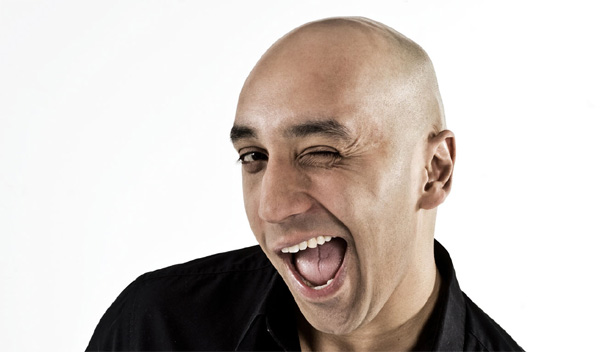
The host of BBC Asian Network's morning show, Tommy Sandhu

Last Tuesday morning it was cold and grey in the Chilterns where I live. I drove to the railway station through the drizzle to find commuters with resigned faces, as once more their expensive trains to London were delayed.

More trackside lines failures, or was it the points?

When I reached Western House off Great Portland Street in central London, at just before 8am, the only warm part of me was the hand in which I held a plastic cup of coffee.

Then I was taken up to the studio from where the BBC Asian Network's morning show is broadcast - and colour and heat burst back into my life. Tommy Sandhu, the presenter, was on his feet dancing around to the latest glorious Bollywood mix.

I felt very overdressed, not to say grey and middle-aged. Well that's stretching it a bit. I think I was middle-aged before Tommy was born. It was impossible not to grin and start shuffling around in what approximates in my case to dancing.

I was watching what broadcasting life is like after death, or at least after a death sentence has been commuted.

Both BBC 6 Music and the Asian Network, two digitals channels set up when all was possible in the digital spring, were considered not to have attracted sufficient audiences to merit their running costs and so were to be quietly put to sleep.

The reaction to the news was anything but quiet.

6Music was the first to be reprieved as its audiences soared and the sainted Jarvis Cocker and others got to work.

The Asian Network was also let out of death row, but, as a result of those initials which are engraved on every BBC heart, DQF, is about to have to make cuts of around 46 per cent in its spending. Never mind, it lives.

In Feedback this week you can hear about my visit to the Asian Network breakfast. Here's Tommy.

In order to see this content you need to have both Javascript enabled and Flash installed. Visit BBC Webwise for full instructions

And here's my interview with the Network's head of programmes Husain Husaini.

In order to see this content you need to have both Javascript enabled and Flash installed. Visit BBC Webwise for full instructions

Feedback is now off the air until January 20th, but do keep listening and writing to us.

With the results of DQF being published early in the New Year we will soon find out if the BBC is any good at listening.

Have a good break.

Roger Bolton presents Feedback

Charles Dickens on the BBC

Blog comments are currently unavailable. Find out more.

Post categories: , , , , 

Jeremy Mortimer12:01, Sunday, 27 November 2011

Charles Dickens

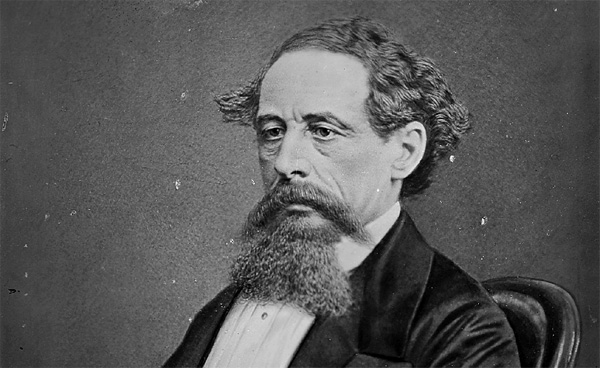
Charles Dickens by Mathew Brady, US National Archives

In the run-up to the bicentenary of Dickens's birth in February 2012, BBC Radio and BBC TV will be doing the master-storyteller proud, with new productions of four of the novels, and a whole host of other programming, starting with Penelope Wilton reading five extracts from Claire Tomalin's extraordinary new biography - Charles Dickens - A Life.

There are few bits of central and east London that Dickens didn't walk through on his epic walks, observing all of London life and working through the plots of his books.

But the route south from Camden Town, where his family lived when he was a child, to the Strand, and the Navy Pay Office in Somerset House where his father worked, is one that two centuries later is still full of Dickens reminders.

I work at Bush House, and often walk by the Old Curiosity Shop - the slightly dilapidated cottage in Portsmouth Street which inspired one of his earliest novels. And just the other side of Kingsway is Covent Garden, where the young Dickens got lost and found himself walking right out to Whitechapel in the east end. An episode that inspired a terrifying sequence in Dombey and Son, and which also features in the first episode of Michael Eaton's new Radio 4 series Dickens in London.

Dickens was a broadcaster before broadcasting.

Not only did he master the technique of serialisation, with audiences desperate to catch up with the latest episode in each succeeding novel, but he licensed stage performances of his books to coincide with publication, and finally took to halls and theatres across Britain and the United States to perform his own abridged readings.

So when the 20th Century eventually caught up, and the BBC started broadcasting plays and readings, it is hardly surprising that Dickens took to the airwaves.

Jeremy Mortimer is a producer in BBC Radio Drama. Together with Jessica Dromgoole he has produced a new dramatisation of A Tale of Two Cities, starring Robert Lindsay and Alison Steadman, which will be broadcast across the Afternoon Play slots on Radio 4 the week after Christmas. He is also producing Dickens in London for the Woman's Hour drama, for broadcast in February 2012.

The Dickens Season on the BBC

Book of the Week - Charles Dickens: A Life

Monday 28 November - Friday 2 December 2011, 9.45am

BBC Radio 4

Claire Tomalin's acclaimed new biography of Britain's great novelist paints a portrait of an extraordinarily complex man. Abridged by Richard Hamilton and read by Penelope Wilton.

The Verb

Friday 9 December, 10pm

BBC Radio 3

Ian McMillan hosts a special edition of his weekly cabaret of the word before an audience at the BBC's Radio Theatre to celebrate the art of reading Dickens aloud.

Night Waves

Wednesday 14 December, 10pm

BBC Radio 3

Philip Dodd presents a landmark edition of Radio 3's art and ideas programme, devoted to Charles Dickens as the bicentenary of his birth approaches.

A Tale of Two Cities

Monday 26 - Friday 30 December 2011, 2.15pm

BBC Radio 4

Robert Lindsay and Alison Steadman star in a new dramatisation of Charles Dickens's classic, A Tale of Two Cities, dramatised by Mike Walker to be broadcast on Radio 4 as a sequence of five Afternoon Plays in the week after Christmas. Dickens's novel of the French revolution tells a story of the redemptive powers of love in the face of cruelty, violence and neglect. With Jonathan Coy, Andrew Scott, Paul Ready and Karl Johnson, with original music by Lennert Busch.

The Essay - The Writers' Dickens

Monday 19 - Friday 23 December, 10.45pm

BBC Radio 3

In a special series of The Essay, five contemporary novelists - Tessa Hadley, A L Kennedy, Alexander McAll Smith, Romesh Gunesekera and Justin Cartwright - examine the craft of Dickens' prose, and reflect on how the giant of British nineteenth century fiction is both a role model and a shadow looming over their own writing.

The Tale of A Tale of Two Cities

Thursday 29 December 2011, 11.30am

BBC Radio 4

When Dickens wrote A Tale of Two Cities in 1859 it was, for him at least, both 'the best of times' and 'the worst of times'. He had separated from his wife, started a new weekly journal and was becoming increasingly recognised as a performer of his own works. For this programme, crime writer Frances Fyfield has been given access to those original manuscript pages, held by the Victoria and Albert Museum in London, and along with the scholar Robert Patten and actor David Timson, she explores the frantic hand-writing, the ferocious self-editing and the sheer energy of Dickens' writing.

The Mumbai Chuzzlewits

Sunday 1, 8, and 15 January 2012, 3.00pm

BBC Radio 4

Award-winning writer Ayeesha Menon's reworking of Charles Dickens's Martin Chuzzlewit is set amongst the Catholic community in modern day Mumbai, India. Convinced his relatives are after his money, Martin Chuzzlewit, a wealthy old landlord, has adopted orphan girl Mary as his carer with the understanding she will be housed and fed as long as he lives - but that upon his death, she will inherit nothing. Told from the point of view of orphan Thomas, an observer into the world of the Chuzzlewits, this is a fast-paced drama full of intrigue, romance, suspense and murder. Recorded on location in India, the cast stars Roshan Seth, Karan Pandit, Zafar Karachiwala and Nimrat Kaur.

The Mystery of the Mystery of Edwin Drood

Thursday 19 January 2012, 11.30am

BBC Radio 4

Crime writer Frances Fyfield uses the hand written manuscript of Charles Dickens' last, unfinished novel, The Mystery of Edwin Drood, to try and answer some of the many questions about the last days of Dickens' life and, more particularly, the loose ends of this tantalising novel. This programme complements the broadcast of Gwyneth Hughes' new BBC TWO drama, The Mystery of Edwin Drood.

Dickens in London

Monday 6 - Friday 10 February 2012, 10.45am

BBC Radio 4

Dickens in London presents five short plays based on Charles Dickens' journalism about walking in London to tell the story of the writer's life. Adapted by Michael Eaton, the cast stars Samuel Barnett, Alex Jennings and Antony Sher each taking their turn to play Dickens.

Following Dickens' changing relationship with the city that fired his imagination, each stand-alone play takes its title from one of Dickens's own appellations: A Not Over-Particularly-Taken-Care-Of-Boy; Boz; the Sparkler of Albion; the Uncommercial Traveller; and The Inimitable.

Dickens in London is part of an innovative collaboration between Film London Artists' Moving Image Network (FLAMIN), BBC Radio 4 and BBC Radio Drama. A commission for film artist Chris Newby, writer Michael Eaton, and composer Neil Brand to produce a set of cross-platform works for radio, interactive television (Red Button) and the Radio 4 website. The project is supported with a Grants for the Arts Award from Arts Council England.

More links

The Radio 4 Christmas Appeal 2011

Blog comments are currently unavailable. Find out more.

Post categories: , , , , , , 

Sally FlatmanSally Flatman16:58, Thursday, 24 November 2011

street scene

One young homeless woman tells me, when you are on the streets, it is as if the world is going on normally on the other side of the glass and if you could just take one step you could step back into that world.

Another man who was homeless for over 20 years smiles: "That glass looks so thin and fragile but it's very thick."

(Ed's note: You can hear from some of the people helped on this video slideshow - PM)

For the past few weeks I have been gathering stories for this years Radio 4 St Martin-in-the-Fields Christmas Appeal. I laugh with one interviewee as we compare notes on our favourite Radio 4 comedies. He was a project manager in construction, until a series of misfortunes including cancer, and debts left him with no money and no home. Originally from Glasgow he says "At least you won't run into your neighbour when you are 300 miles from home."

In order to see this content you need to have both Javascript enabled and Flash installed. Visit BBC Webwise for full instructions

Libby Purves and I visit the night centre at The Connection for the report back programme Received with Thanks.

Listening back to the interview with a man who was sleeping there that night, I realise he keeps telling us how cold he gets, how hard it is to get warm, how he never really truly sleeps because he's so cold.

In Cardiff I met a woman who arrived back from hospital with her new baby only to be evicted from her house along with her two older sons and her partner. I joined her as she was given a grant for £250 by the Vicar's Relief Fund to help buy a bed, bedding and a cooker for the temporary accommodation they had just moved into. I was struck by her stoicism:

"I have to stay strong for my boys but it's all a front, deep down it's ripped me apart but if the boys see me upset it will upset them".

She bought a bed to be delivered later that afternoon "you just like to be snug don't you and have a good nights sleep".

In order to see this content you need to have both Javascript enabled and Flash installed. Visit BBC Webwise for full instructions

The average Vicar's Relief Fund grant is £180 and takes just 3 days to turn around. These are crisis grants, helping to prevent an eviction, secure a tenancy or buy vital household goods. Grants go all over the UK.

The Connection at St Martin-in-the-Fields helps over 200 homeless people a day. They've faced reductions in their statutory funding and the Chief Executive describes last years record Radio 4 Christmas Appeal as a "lifeline".

In order to see this content you need to have both Javascript enabled and Flash installed. Visit BBC Webwise for full instructions

So I want to thank every donor for every gift however big or small.

I also want to thank all the troubled people who give me their stories with such brutal honesty. The stories will be told through the Radio 4 Programmes Received with Thanks and the Vicar's appeal. They will be on our slideshow on the BBC Bigscreens or the web.

What is great about giving to this appeal is that people are not merely saying they support the charity financially they seem to say "We support what you are doing". It also says they care about the individuals whose stories have been told.

Sally Flatman is producer of The Radio 4 Appeal

The Thinking Allowed Newsletter: Bring on the stripper

Blog comments are currently unavailable. Find out more.

Post categories: , 

Laurie TaylorLaurie Taylor16:30, Wednesday, 23 November 2011

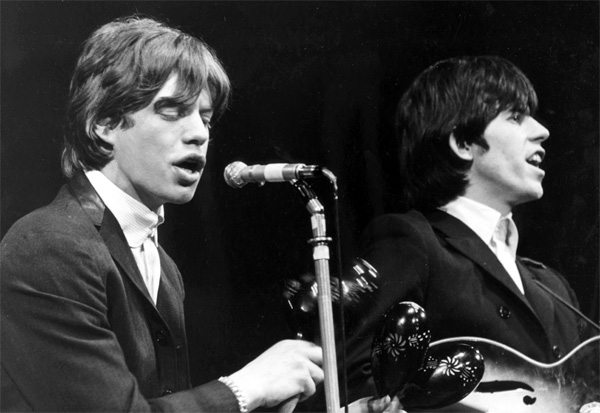
Mick Jagger and Keith Richards

Mick Jagger and Keith Richards on "Top Beat", BBC2, 1964.

It must have been the spring term back in 1969 when Paul had his bright idea.

"You know what", he said, banging his pint down on the table in the Derwent College student bar. "We should devise a happening".

Even though my grasp of the language of the sixties cultural revolution was inadequate, it still struck me that there was something mildly illogical about planning an event which was supposed to be characterised by spontaneity. Surely "happenings" just happened?

Paul, who at the time was one of my brightest second year sociology students, knew better.

"You can't just wait for things to happen", he told me and the rest of the table. "You have to bring together some combustible ingredients and then throw in a match. It has to be planned."

Three weeks later I saw the first results of that planning - a large poster advertising a Night of Deviance which would be held in a local theatre and feature The Incredible String Band, performances by Jeff Nuttall and the People's Theatre, a new film about Bob Dylan, and "comedians and strippers".

"It's an impressive line-up" I told Paul. "The rumours are even more impressive", said Paul. "I've put it about that Mick Jagger will be making a surprise appearance."

"And will he?", I asked. "'Course not", said Paul. "And neither will The Incredible String Band, but you've got to raise people's expectations. Bring the crowds in."

I can now say with all the confidence of advanced age that the event was quite the most embarrassing experience of my life.

The auditorium of the theatre was packed and there were rumours that the police had been called in to deal with the hundreds of students and general layabouts who'd been unable to gain admission.

Paul's involvement though seemed to be entirely confined to arousing all this enthusiasm. Far less time had gone into considering how it might be satisfied.

When I took my place in the wings I was told that there was no running order. Several people hadn't yet arrived so could I please go on and ad lib for a few minutes.

But it was quickly clear that the audience wasn't in the mood to listen to inconsequential chat from a lecturer in sociology. They wanted Mick Jagger. They wanted The Incredible String Band.

I gesticulated wildly towards the wings. Did they have an act they could send on to help me out? I couldn't stand there much longer without provoking a riot. A moment later, prompted by roars from the audience I looked to the side and realised Paul had responded. Downstage right a plump blonde lady was rapidly divesting herself of a sequined bra. I should, I thought, be thankful for small mercies. At least the stripper had arrived on time.

It was all downhill from then on. No sooner had the stripper taken her knickers off than the stage was invaded by a bunch of actors from the People's Theatre who proceeded to present a sort of improvised drama which involved some very graphic semi-naked portrayals of homosexual acts.

This so incensed some sections of the audience that I was approached in the wings by a steward who ordered me to intervene immediately. I strolled on, grabbed the microphone, and said that the People's Theatre presentation was now concluded. As Jeff Nuttall passed me at the microphone he said in a booming voice, "Bloody liberal".

There was no Mick Jagger. No Incredibles. No comedians. And when it was time to show the Dylan film, Don't Look Back, a mistake in the projection box which proved incurable meant that it was shown, to a chorus of boos, upside down.

Eventually, dissatisfied punters stormed the stage and the police arrived to clear the auditorium.

"There", said Paul, as I ran off the stage in search of somewhere to hide. "That's what you call a happening."

It was not the word used next day by the local paper. They preferred such terms as "orgy" and "riot". In an editorial they spoke of the decline in "civilised values" exhibited by the show and called for its organisers to be punished.

Paul was sanguine. "All good art is scandalous", he announced. "Its primary function is to give offence."

I thought of Paul and his "happening" as I was reading a new book about a whole series of phenomena - books, songs, sculptures - which, over the years, have given offence to particular communities.

You can hear me talking to Steven Tepper, the author of Not Here, Not Now, Not That! Protest over Art and Culture in America, at four o'clock today or after the midnight news on Sunday. Or on our podcast.

Also in this episode: What is it like to be elderly and gay and living in the English countryside?

Laurie Taylor presents Thinking Allowed

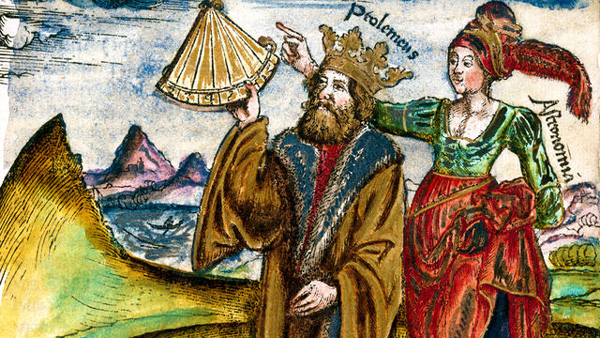
In Our Time newsletter: Ptolemy and Ancient Astronomy

Blog comments are currently unavailable. Find out more.

Post categories: , 

Melvyn BraggMelvyn Bragg13:22, Monday, 21 November 2011

Editor's note: This week Melvyn Bragg and his guests discussed Ptolemy and Ancient Astronomy. As always the programme is available to listen to online or to download and keep - PM.

Ptolemy and Ancient Astronomy

Hello

It's such a great day out there that I want to talk a little about that, but first the footnote to the programme.

Is it more fascinating to know very little about someone (Shakespeare, Ptolemy) or much, perhaps too much (Dickens, Dostoevsky)?

Ptolemy's religious views were taken up in the Arabic tradition and his vague divinity was made into a belief in Allah, so Charles Burnett, the Arabic expert, told us. He also said that so many people went to the Arabic in the late Middle Ages in order, or solely, to look out the Almagest.

It was the great book to read at the time. Having said that, he added, it was such a difficult text that most people didn't get beyond the first few chapters and abridged and simplified versions sold a lot better.

Out onto the streets afterwards and what a day it was. First a meeting with Tom Morris, who has left In Our Time for the moment to produce a series called The Written World. In pursuit of that, we spent yesterday in the British Library which was a sort of paradise.

We saw a first edition of the Gutenberg translation of the Bible; writing almost four thousand years old on the shoulder blades of oxen in Chinese and much, much more. Including being able to pop in to see the illuminated manuscripts exhibition which is fantastic.

Okay, I have a privileged life. I also got to the Leonardo - queued, though, and half an hour in front of most other people - and think that the Leonardo at the National Gallery, and the illuminated manuscripts at the British Library, and the never-ending refurbished diversity at the British Museum make London a fountain of visual culture. (Did I write that?)

Down Regent Street then. Not many sales these days. Towards St James's Park. And there he was! The man on the white horse who I saw three months ago. He has a flowing cloak; he has a burnished helmet with a plume in it; he faces the palace; he has a sword. And as I came he turned his horse and galloped - yes, dear reader, he galloped! - towards Horse Guards Parade and towards six or eight jet-black horses, each one surmounted by another chap in a burnished helmet with a plume. I rubbed my eyes and realised that, yes, this was England.

Down to St Margaret's Church, the little niece of the Abbey of Westminster. A beautiful church, in which my daughter was taking a service that morning. Saw the tomb of Walter Raleigh with its wonderful inscription about being a man full of errors but also a man full of virtues, but, most of all, he was mortal. Then wandered around the precincts of the Abbey with my daughter to find the Church House Bookshop, to cash in a book token I'd been given for being part of a series of lectures inside the Abbey itself to mark the 400th anniversary of the King James Bible. Bought a wonderful facsimile edition of the King James Bible itself.

Back through St James's Park (sorry that I'm having such a good time). The black swan with the red beak was pecking its chest vigorously, and up through the congested traffic of Pall Mall. Fell into step with a senior Tory politician who said "It wasn't broke, why mend it? Will Boris never learn?" And then... oh, this is getting far too much, isn't it? But I was on my way to lunch with a man I met more than fifty years ago, one of my very best friends, and about every six weeks we split a lunch to talk about nothing at all.

And then back to the office and down to a pile of e-mails. And what have I left out?

Well, odd things. Why the great plastic growths in the gardens of the British Academy? Why do police motorcycles, which can easily thread through traffic, put the full blare on as they go through Piccadilly? Why do wine merchants put wonderful looking wine in their windows without a price attached? It's about time I got back to work.

Best wishes

Melvyn Bragg

PS: As I was walking up St James's, feeling that I might well be melding into someone in a P G Wodehouse novel, a large car passed by, the window was lowered and Lord Puttnam himself leaned out and said "Loved Ptolemy", and his wife, Patsy, leaned out also and said "I expect we'll be reading about this walk later". That's what friends are for!

Melvyn Bragg presents In Our Time

Five podcasts for the weekend: 18 November 2011

Blog comments are currently unavailable. Find out more.

Post categories: , 

Paul MurphyPaul Murphy18:45, Friday, 18 November 2011

Pacino

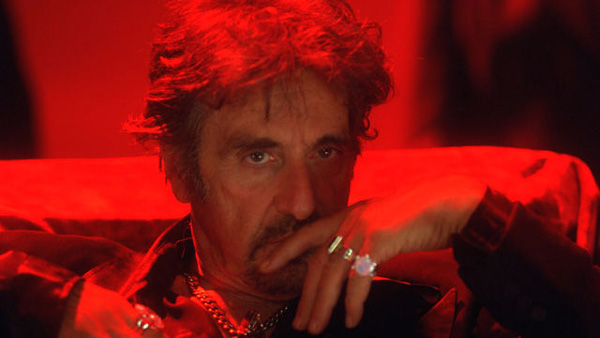
Oscar and Al Pacino: Pacino talks about his obsession with the work of Oscar Wilde

The preamble

Here are some of the many radio podcasts available from the BBC. I've picked out a selection for your weekend's pleasure. (Actually the eagle-eyed will notice there are six this week - it seemed better to let you choose the final five yourselves.)

You can listen online or download to keep, or put onto your phone or MP3 player. This being the Radio 4 blog I'd also like to direct you to the Radio 4 podcast page.

Some podcasts are available for only seven days (eg Comedy of the Week; Friday Night Comedy) but others do have a huge archive you can download at any time (eg Desert Island Discs; In Our Time). If you haven't used podcasts from the BBC before there's some podcast help here.

This week's selection

1. Documentary of the Week: Oscar and Al Pacino

Al Pacino talks about his obsession with the work of Oscar Wilde and his decision to stage Wilde's Salome - he first saw the play performed by Steven Berkoff, and says that he was 'bitten by the rub of love' - in Los Angeles, and to film the process of putting it on stage.

Download here: https://www.bbc.co.uk/podcasts/series/r4choice

More info: https://www.bbc.co.uk/programmes/b0174dzr

2. The Media Show

The Leveson Inquiry into the culture, ethics and practices of the media started this week. Meanwhile, on Monday, print editors gathered in a hotel in Surrey to discuss how they could address the perceived problems of self-regulation, at the Society of Editors conference.

Download here: https://www.bbc.co.uk/podcasts/series/media

More info: https://www.bbc.co.uk/programmes/b0174hrr

3. Brain Culture Part 1

Matthew Taylor explores how neuroscience will change society, asking how the justice system will change now that we can scan criminal brains.

Download here: https://www.bbc.co.uk/podcasts/series/moreorless

More info: https://www.bbc.co.uk/programmes/b017n523

4. Open Book: Penelope Lively, Terry Jones, John Sessions (go to Sun, 13 Nov 11)

Ex-Python and Chaucer-enthusiast Terry Jones is joined by Professor John Mullan to discuss medieval bawdy humour. And kicking off the series, John Sessions defends his pick for Open Book's Funniest Book.

Download here: https://www.bbc.co.uk/podcasts/series/openbook

More info: https://www.bbc.co.uk/programmes/b01724z4

5. Play of the week: The Thank You Present

You can get a play every week to download and keep, usually from Radio 4 or Radio 3. There's only one available at any time and it's changed every Friday. This week from Radio 3: A drama centring on a man's search for the truth behind his old friend's suicide.

Download here: https://www.bbc.co.uk/podcasts/series/ptw

More info: https://www.bbc.co.uk/programmes/b01755p0

6. Comedy of the Week: Listen Against

Listen Against is the comedy that takes the back off your radio and television, fiddles round with the programmes inside and then puts them all back the wrong way round. Starring Jon Holmes and Alice Arnold, with Kevin Eldon (Brass Eye, Big Train), Justin Edwards (The Thick of It), Sarah Hadland (Miranda) and more.

Download here: https://www.bbc.co.uk/podcasts/series/comedy

More info: https://www.bbc.co.uk/programmes/b00fgt18

Paul Murphy is the editor of the Radio 4 blog

Feedback: Roger Bolton interviews Radio 4's controller Gwyneth Williams

Blog comments are currently unavailable. Find out more.

Post categories: , , , , 

Roger BoltonRoger Bolton16:20, Friday, 18 November 2011

Radio theatre

BBC Radio Theatre in Broadcasting House, London

There is an expression floating around the internet at the moment, plucked from a number of American magazines. It's "pulling a Gwyneth" and refers to that somewhat eccentric actress Gwyneth Paltrow.

Well on Feedback this week we pulled our own Gwyneth - Gwyneth Williams - who as Controller of Radio 4 has introduced the most significant changes to the network's schedule since James Boyle, well over a decade ago.

In private his successors will tell you that they were grateful for many of the changes he made, but at the time there was a huge uproar and shortly afterwards the man, nicknamed McBirt, retired to the quieter waters of Leith and the world of Scottish arts.

His next two successors, Helen Boaden and Mark Damazer concentrated on the programmes and those who make them.

Now Gwyneth Williams, driven in part, some suspect, by the need to make economies, but also by a genuine belief that The World at One needs more time, and that her network needs more science and less Americana, has refashioned the schedule she has inherited.

Quite a number of those who have contacted Feedback approve of what she has done, but a larger number worry that Radio 4 is now too dominated by news. They point out that between 6am and midnight over a third of the Radio 4 output is news or news related.

"We already have 5live", one wrote. "We don't need another rolling news station". I put the concerns to Gwyneth Williams when we met this week. (By the way the name Gwyneth, Welsh of course, means "white, fair, blessed". Well I can confirm that she is white and fair. You can decide on the third attribute.)

Here is our discussion.

In order to see this content you need to have both Javascript enabled and Flash installed. Visit BBC Webwise for full instructions

Please let us know what you want Feedback to look into, and remember, the BBC Trust's consultation on Delivering Quality First ends on 21 December.

Make sure your voice is heard.

Roger Bolton presents Feedback

Open Book's Funny Books: What's your Funniest Book of all time?

Blog comments are currently unavailable. Find out more.

Post categories: , , 

Fiona CouperFiona Couper12:00, Thursday, 17 November 2011

pages of a book

Open Book wants to know what your funniest book is and why

Open Book is celebrating funny books and funny writing.

We'd love to hear from you about YOUR favourite funny books and to kick us off, here are a couple of Mariella's favourites - William Boyd's Stars and Bars and Poor Cow by the sadly overlooked Nell Dunn.

Do you agree and what are your suggestions for books that are profoundly funny and why?

Leave a comment below or you can contact us via the Open Book website.
Fiona Couper is editor of Open Book and Bookclub

The Telegraph's Gillian Reynolds in conversation with Radio 4's Gwyneth Williams

Blog comments are currently unavailable. Find out more.

Post categories: , , , 

Paul MurphyPaul Murphy21:01, Wednesday, 16 November 2011

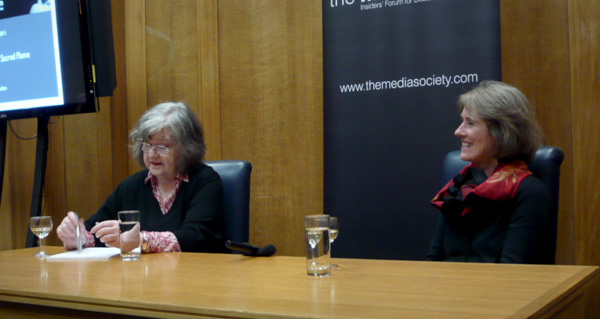
Gillian Reynolds and Gwyn Williams

Gillian Reynolds and Gwyn Williams at the Media Society organised event

I mentioned in Monday's round up of what the critics were saying about Radio 4's schedule change that the Telegraph's radio reviewer Gillian Reynolds would be meeting Radio 4's controller at an event to talk about her first year in the job.

Gillian Reynolds is a classy interviewer who knows what she's talking about and while charm might be her main means to getting an answer, she isn't shy in saying when she disagrees.

Gwyneth Williams talked about her previous role at the World Service and the importance of radio to her growing up in apartheid era South Africa: "We would listen to the radio to find out the truth."

Williams also revealed that previous controller of Radio 4 Mark Damazer still phones her up regularly - but not as much as he used to.

The interview was recorded and will be available as a video in the next day or two on the College of Journalism website (Ed's update: The video of the interview is on CoJo's YouTube channel.) You'll be able to see Gillian Reynolds expand on her view of what's wrong with TV news ("Picture first, sense last") and Gwyneth Williams on how she feels the Sunday night comedy slot is going.

In the meantime I'll leave you with Williams recalling one of the first letters she got from a listener welcoming her to the Radio 4 role:

"Dear Controller of Radio 4,

Now that the last controller has left (to, I hope, the innermost of Dante's circles of Hell) is there any chance of getting the UK theme back?"

Paul Murphy is the editor of the Radio 4 blog

Feedback and the Radio 4 schedule changes

Blog comments are currently unavailable. Find out more.

Post categories: , , 

Paul MurphyPaul Murphy17:30, Monday, 14 November 2011

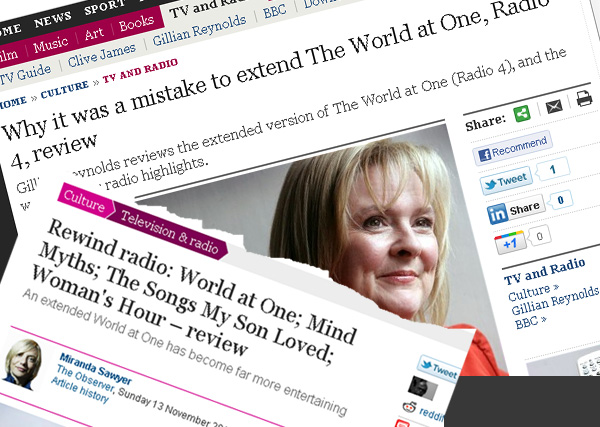
Observer and Telegraph radio reviews

In the Observer radio critic Miranda Sawyer has written about the recent schedule changes at Radio 4. While she isn't happy about some of the afternoon switches:

Oh, and I don't like The Media Show being on at 4.30pm. Just so you know.

she is more complimentary about the reason the reshuffle came about in the first place:

"...The biggest change, which is that World at One has been given an extra 15 minutes, has proved very successful. It was a newsy week, and the programme has used this wisely...

Somehow World at One's extra 15 minutes has turned it into a far more rigorous, surprising, entertaining programme, and Radio 4 now has its news studded successfully throughout the day: Today, World at One, PM, each with a distinct personality, as well as good journalism. No more news, though, please. We already have 5 Live."

At the start of last week Gillian Reynolds, the Telegraph's radio reviewer, wasn't impressed by the new changes, writing under the headline Why it was a mistake to extend The World at One:

"When, for instance, Martha Kearney's trailer for the new World at One told me the programme's extra time would give them the chance to 'unpick' the story of Greek debt my switch went directly to 'off'. Unpick? Penelope at her Homeric loom, keeping off her suitors all those years Odysseus was away, could not have done more unpicking than the endless reports I have heard on this story."

Radio 4's controller Gwyneth Williams is appearing on Feedback soon and Roger Bolton, Feedback's presenter, has asked for your questions so he can put them to her. You can find contact details for Feedback on his regular weekly blog posts on the Radio 4 blog. Gwyneth Williams is in conversation this Wednesday night with "doyenne of radio columnists Gillian Reynolds" at a Media Society event:

"Gwyneth Williams has just completed her first year as Controller of Radio 4, the station with the most vocal and critical audience of any on the airwaves. How easy is it to innovate without upsetting the traditionalists? How can the station attract younger people without alienating older ones? What is the future for the flagship Today programme? Are there enough women on the air?"

More details here.

Paul Murphy is the editor of the Radio 4 blog

Edward Stourton walks the WWII escape route over the Pyrenees: The Freedom Trail

Blog comments are currently unavailable. Find out more.

Post categories: , 

Edward Stourton11:00, Monday, 14 November 2011

"The good escaper", says the 1944 document Tips for Escapers and Evaders, "is the man who keeps himself fit, cheerful and comfortable. He is not a 'he-man' who boasts about his capacity to endure discomfort. He should be a man with sound common sense and above all a man of great determination".

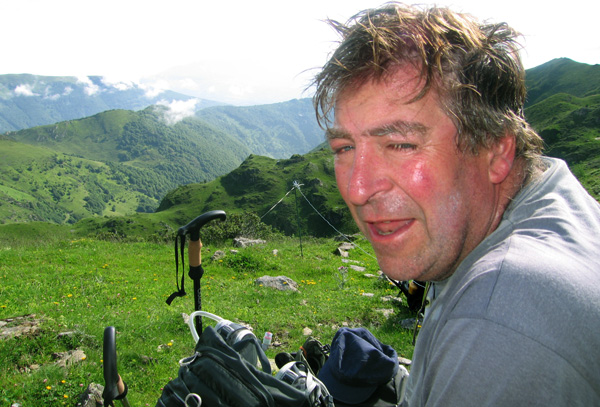
Edward Stourton

Edward Stourton on the World War II Freedom Trail

It is a very good definition of what today we would call the "skill set" you need to accomplish the Chemin de la Liberte, the four day, forty mile trek across the Pyrenees which is walked each year to commemorate the escapers, evaders and helpers who made the journey during the dark days of the Nazi Occupation of France.

I am certainly not a he-man, and I hate discomfort, so there has never been any danger of me boasting about my capacity to endure it. I am cheerful by nature, endowed with a reasonable supply of common sense (I hope), and I like achieving my goals. The problem lay in that unassuming little word "fit"; I am fifty-three years old, most of my work involves sitting in studios or at desks, and I like the good things in life.

The BBC agreed to my proposal for a series of programmes on walking the Chemin back in the spring, and immediately sent me off to an extreme sports clinic in Harley Street, where I was put through a human version of an MOT.

It involved attaching a great number of electrodes to my chest and strapping a strangely fashioned respirator to my mouth. I was then required to peddle away on an exercise bike until I reached near collapse. A group of technicians monitored the behaviour of my heart and lungs, chatting away calmly as I huffed and puffed to the point where both seemed ready to explode.

Over the past decade I have developed a passion for programmes built around journeys. It began in 2001 with an odyssey around the Mediterranean in the Footsteps of St Paul, a journey I made with a producer from the BBC's Religion and Ethics department, Phil Pegum.

Since then Phil and I have made radio pilgrimages in the footsteps of Mohammed, Moses and Jesus, and negotiated the waters of the Jordan and the Bosphorus. Every time we do it I am more convinced that travelling helps bring history alive. For my generation it requires a huge imaginative effort to get inside the mind of someone who lived through the Second World War (let alone someone who lived in St Paul's time) but seeing what they saw and going to the places they would have passed through brings their experience that bit closer.

We were well equipped and well fed and watered; those who walked the Chemin "for real" would have had little more than a pair of espadrilles and a stick by way of equipment, and they were often malnourished (almost everyone in Europe was short of food during that period, and it is striking how large the eating issue looms in evader and escaper memoirs). But I suffered enough to be able to get some sense of what they went through.

Phil is as thin as a whip and during the weeks leading up to the walk he was often spotted walking up and down the staircase of the BBC's Manchester officers with a rucksack full of bricks. He brought along another producer to help; Graham Hoyland is an experienced mountaineer and Everest veteran, and polished his fitness with a few days yomping over the Scottish Highlands.

I, on the other hand, found it extremely difficult to keep up the fitness regime I had been given, simply because I was so busy with other projects. There was no doubt about who was the weak link in the chain, and I was duly punished by pain.

Freedom Trail

On the Freedom Trail

I discovered that a really tough walk like this is, oddly, not a very good way of appreciating nature or views; you tend to keep your head down and your eyes on the boots in front, concentrating on each step, and when we stopped for a break I usually found myself flat on my back staring at the sky. But the trance-like state you hit as you plod along is very good for encouraging reflection.

I also realised how clever Chaucer was to set his masterpiece, the Canterbury Tales, in an inn full of pilgrims. The Chemin is a kind of pilgrimage, and, like Chaucer's, it brings together people who might never otherwise have met, but who share a common purpose. Whenever we could, we talked, and as I listened to my fellow-walkers explain why they had come and what the Chemin meant to them, I came to understand why remembering matters so much.

Edward Stourton presents The Freedom Trail

So You Want to Be a Scientist? The deadline approaches...

Blog comments are currently unavailable. Find out more.

Post categories: , 

Michelle MartinMichelle Martin15:00, Saturday, 12 November 2011

Snails

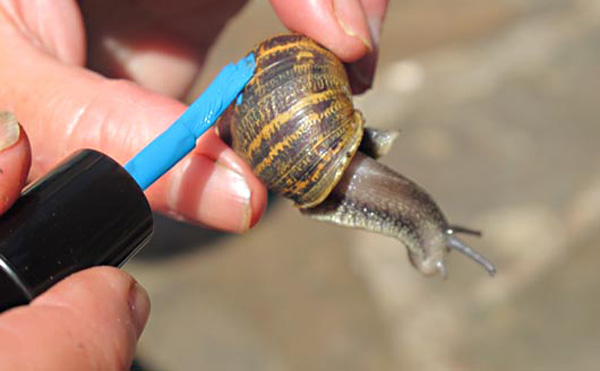
From the 2010 experiments - Ruth Brooks: Homing Snails

Looking for a new hobby? Try science.

One of the reasons that we launched our search for the BBC's Amateur Scientist of the Year is because science isn't really seen as a hobby.

Science is generally viewed as something that's done in a lab containing machines that go beep and test tubes bubbling over with brightly coloured liquid which may, or may not, present a health and safety hazard.

It's a very different scenario in the Arts, where despite having no discernible talent or knowledge, many of us decide to have a go at writing a poem, painting a picture or starting a band. Would any of us similarly decide to "have a go" at biochemistry?

Perhaps the nearest most of us get is the odd spot of domestic science, experiments which are rarely precise and prone to disaster. My first foray into jam-making last weekend showed that the boiling time stated in the recipe, and the actual duration to reach a setting point, had an extremely large error bar. This would not have cut the mustard, or indeed the jam, in my GCSE chemistry practical.

So can, and should, everyone practise science as a hobby? Our last winner, 70 yr old gardener Ruth Brooks A.K.A. The Snail Lady, is a testament to the idea that anyone can be niggled by a question and need to find the answer. Did the snails she threw over the fence really return to haunt her garden? If so, how far should she take them away to be sure that didn't come back?

With no science qualifications or formal training, all that Ruth was armed with was an enormous appetite for knowledge and a childlike curiosity about how the world works.

Now after a year of research she is set to become one of the lead authors on a science paper having discovered something genuinely new and exciting in the realm of ecology - that these little creatures do have a homing instinct and that you need to move them over 100m to make sure they have been exorcised from your garden for good.

So, if you have any questions at all, big or small, inside or outside, you have a few days left to enter them online before entries close at midnight on Tuesday 15 November. If you're selected as one of our four finalists I can promise it will be a voyage of discovery and a fascinating new hobby.

You can find out more about So You Want to Be a Scientist? on Material World Thursday 4.30pm repeated Monday at 9pm.

Michelle Martin is senior producer BBC Radio Science Unit

Five podcasts for the weekend: 11 November 2011

Blog comments are currently unavailable. Find out more.

Post categories: , 

Paul MurphyPaul Murphy21:00, Friday, 11 November 2011

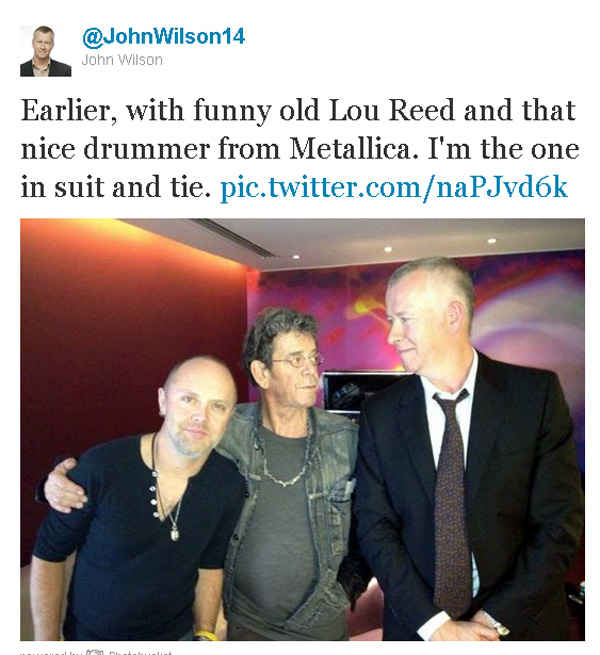
Front Row's John Wilson and Lou Reed

From @JohnWilson14 on twitter: Lou Reed on the Front Row daily podcast

The preamble

I've picked out a selection of the currently available Radio 4 BBC podcasts. This week I've included the Ouch! podcast which isn't broadcast on Radio 4 (it isn't broadcast anywhere but is available to download). The other big news is that The Moral Maze is now available as a podcast.

You can listen online or download to keep, or put onto your phone or MP3 player. There are many more available on the Radio 4 podcast page.

Some podcasts are available for only seven days (eg Comedy of the Week; Friday Night Comedy) but others do have a huge archive you can download at any time (eg Desert Island Discs; In Our Time). If you haven't used podcasts from the BBC before there's some podcast help here.

The selection

1. The Moral Maze: St Paul's Protest

This week the debate centres on the moral issues behind the Occupy London protest camp. Chaired by Michael Buerk with Melanie Phillips, Matthew Taylor, Claire Fox and Clifford Longley.

Download here: https://www.bbc.co.uk/podcasts/series/moralmaze

Programme info: https://www.bbc.co.uk/programmes/b016x23q

2. Front Row: The charming Nile Rodgers and the grumpy Lou Reed

The Front Row daily podcast with, as presenter John Wilson puts it, "two very different interviews with legendary musicians the charming and funky Nile Rodgers, and later grumpy old Lou Reed". He's not wrong on either count.

Download (go to Wed, 9 Nov 11): https://www.bbc.co.uk/podcasts/series/frontrow

Programme info: https://www.bbc.co.uk/programmes/b016x23n

3. Ouch! Disability Talk Show: Ricky Gervais and language

When is it ok to say 'crip' or the M word that Ricky Gervais used recently, Paralympic sitting volleyballers have their prosthetics taken away, and Bianca Nicholas, singer with cystic fibrosis enchants us all. With Mat Fraser and Liz Carr.

Download and more info here: https://www.bbc.co.uk/podcasts/series/ouch

4. Bookclub: The Wasp Factory - James Naughtie with Iain Banks

Iain Banks meets James Naughtie and readers at the National Library of Scotland in Edinburgh to talk about his debut novel The Wasp Factory, first published in 1984.

Download here: https://www.bbc.co.uk/podcasts/series/openbook

Programme info: https://www.bbc.co.uk/programmes/b016w0nf

5. Cook The Perfect Christmas Cake

From the weekly Woman's Hour segment it's Cook The Perfect Christmas Cake with the country's best young baker - 26 year old Edd Kimber from Thackley, West Yorkshire, the winner of the Great British Bake off 2010. This one's a little different - lighter in texture and colour. Series also features soda bread, fish pie and chicken noodle soup.

More info: https://www.bbc.co.uk/radio4/features/womans-hour/

Download here: https://www.bbc.co.uk/podcasts/series/cookperfect

Paul Murphy is the editor of the Radio 4 blog

Open Book's Funniest Book

Blog comments are currently unavailable. Find out more.

Post categories: , , 

Fiona CouperFiona Couper17:15, Friday, 11 November 2011

Mariella Frostrup

Open Book's presenter Mariella Frostrup

Between now and Christmas, Open Book is on a mission to dispel the gloom that's all around us by celebrating the enduring pleasure of classic comic writing. Mariella Frostrup and her guests will celebrate funny books, funny writers and the much under-rated virtues of laughter-inducing literature.

She'll be engaging the talents of some top writers and comedians to help uncover Open Book's Funniest Book, and asking listeners about the book they'd recommend to put a smile back on people's faces.

In the five Open Books leading up to Xmas, listeners can follow a mini history of funny humour, when Mariella, with the help of academic John Mullen, romps through centuries of comic writing.

In the programme this week is ex-Python Terry Jones on the enduring chortle power of Chaucer - raunchy, risque and strangely contemporary. Coming up are Fiona Shaw on Shakespeare, Jenny Uglow on the 18th century, Roy Hattersley on the 19th century and Ronald Harwood on the 20th century.

Mariella will also invite listeners to join her for Open Book's Funniest Book balloon debate, happening in the Radio Theatre (recorded 8 December and on Radio 4 in an Open Books special on 24 December). She'll be joined by Jo Brand, Tony Parsons, A L Kennedy and John Sessions amongst others as they try to convince the audience that their book is the most consistently rewarding funny read.

Their choices are:

And each week our panel will take it in turns to come onto the programme to tell us more about their funny writer and give some background to their lives. Too often maligned as a sub-standard genre, Open Book wants to elevate comic writing to its rightful place.

Fiona Couper is editor of Open Book and Bookclub

Feedback: The BBC Trust

Blog comments are currently unavailable. Find out more.

Post categories: , 

Roger BoltonRoger Bolton16:30, Friday, 11 November 2011

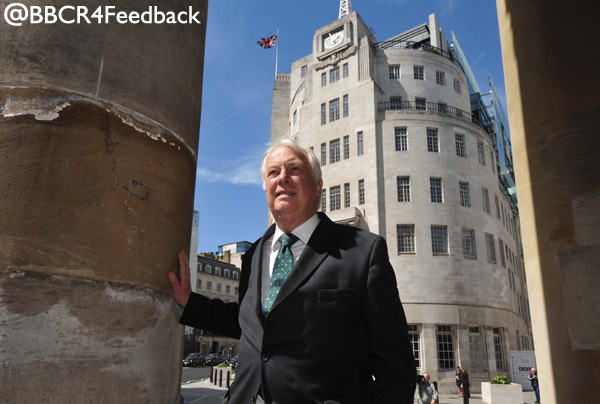
Lord Patten outside BBC Broadcasting House

Lord Patten on his first day as the new BBC Trust Chairman, 3 May 2011

This week on Feedback I talked to a member of the BBC Trust, the body which replaced the BBC Governors, about impartiality in journalism.

It took my mind back to the rather fraught period around 1980 when I was editor of the Panorama programme and at frequent loggerheads with the Governors about our coverage of Northern Ireland. Mrs Thatcher was saying that the BBC had to be for or against terrorism.

On the side of law and order.

No middle way.

After all, the Iron Lady said, we did work for the BRITISH Broadcasting Corporation.

It would have helped us all in those days if at least one of the Governors had experience of on the ground reporting in the province where the confused realities and complicated journalistic dilemmas would soon have become evident.

It would also have helped if the BBC management and the Governors had not held each other in a degree of distrust, sometimes bordering on contempt.

The situation is somewhat different today. There is a much clearer separation of responsibilities between management and Trust, and in Alison Hastings, the Chair of the Trust Editorial Standards Committee, they have someone who knows what journalists have to do to get a story.

She is a former editor of a metropolitan evening newspaper and, some years ago, served on the now largely discredited Press Complaints Commission.

Ms Hastings is now in charge of the latest in a series of reviews by the Trust, this time into the impartiality of BBC Coverage of the Arab Spring.

Previous reviews have been conducted into business (2007), network news and current affairs coverage of the UK nations (2008) and science (2011).

When I met Alison Hastings I wanted to know why the Trust had chosen this as the subject of its current review.

Had there been widespread concern about the BBC's impartiality? This is our conversation.

In order to see this content you need to have both Javascript enabled and Flash installed. Visit BBC Webwise for full instructions

By the way the Controller of Radio 4 is coming onto Feedback in a couple of weeks - so please let us have your questions for the person who changed the schedule!

Roger Bolton presents Feedback

In Our Time newsletter: The Continental-Analytic Split

Blog comments are currently unavailable. Find out more.

Post categories: , 

Melvyn BraggMelvyn Bragg12:50, Friday, 11 November 2011

Editor's note: This week Melvyn Bragg and his guests discussed the Continental-Analytic split in Western philosophy. As always the programme is available to listen to online or to download and keep - PM.

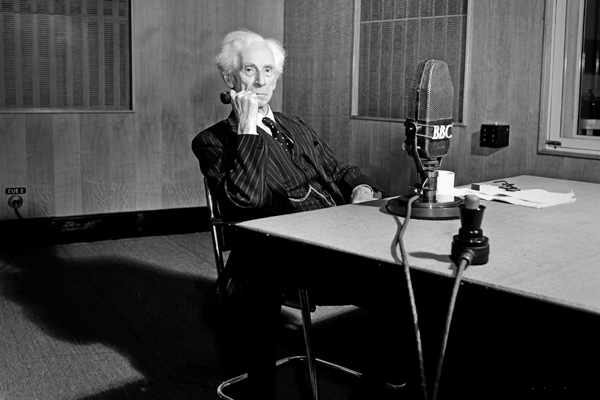
Bertrand Russell

Bertrand Russell in 1953

During today's programme I had a distinct feeling that a quart was trying to get into a thimble.

This is not uncommon, but usually the thimble seems to expand as the programme goes on and, by and large, all's reasonably well that ends reasonably well.

Of course, as by now you know, after every programme the cry goes up "Why didn't we talk about X, or Y, or Z, or A, or B, or C...?" Well, it's because we have forty-two minutes and not three hours is the best answer.

But this programme did seem to be particularly crowded.

Stephen Mulhall, whose opening remarks on Analytic philosophy were stunningly good, I thought, did feel that putting Analytic against Continental philosophy was a mistake.

A better analogue would have been existentialism, say, or phenomenology. Or one or two other such subjects and not the whole Continental drift. On the other hand, that's what we set out to do, and we could and we would have changed it if pressed by those who know the subject better than we do.

It was a pleasure to meet Hans-Johann Glock - he had never been on the programme before, unlike the other two - and afterwards he launched into much more plain speaking about the divide between Analytic and Continental, having been as deeply thicketed as the others about it beforehand!

He also developed the idea of three sorts of arguments in philosophy: the mathematically tested, the legally tested and the poetic method.

Beatrice Han-Pile quoted Foucault: "You can't change a culture without changing its institutions", which I liked, but I can't quite remember what it was attached to, in the rather rushed few minutes while we have a cup of tea and are apprehensive of the arrival of the cavalry of Desert Island Discs.

A new programme possibility did come out of it, though: the notion of "ordinary language philosophy", especially Ryle, Austin and Strawson in Oxford in the middle of the last century, as it were, "supervised" by Wittgenstein. Tom Morris and I have chalked that one down and when we recover from this we will move on.

This is not special pleading, but among the e-mails I've already had (it's just after midday) is one saying that not much was understood, but what an enormous pleasure to hear such brilliant people talking in such a calm, collected way, when everything around seems to be falling to bits.

It made her proud to be in this country! And another saying it was one of the toughest he'd heard, so thank goodness he could hear it again and again.

Perhaps I'm overcompensating, but when Alice Feinstein (whose last In Our Time, in terms of being the editor of the morning series it was - farewell, Alice, you are going two doors down the corridor!) and Natalia Fernandez, who produced this programme, when we spoke we seemed to think that it had delivered what we wanted to deliver which is thoughtful conversation, often in areas that people find very difficult to follow but want to be led.

Instead of drifting down to St James's Park afterwards and looking at the ducks (I did that the last two days - they're all in good form, every single duck of them), I went up the hill to Belsize Park to get my teeth rattled. They're still there. They were jabbed and the gums were criticised, and then the whine of a descaler buzzed around like a hornet in the mouth.

On from there to the Royal Free Hospital to get a blood test, but the queue was so long I would have missed my train (literally - to Southwold for the literary festival). So, another day, another visit.

Off for some sea air now to what must be a contender for the prettiest seaside town in Britain.

Melvyn Bragg presents In Our Time

Len Deighton's Bomber on Radio 4 Extra: Drama in real time

Blog comments are currently unavailable. Find out more.

Post categories: , , 

Jonathan Ruffle16:40, Thursday, 10 November 2011

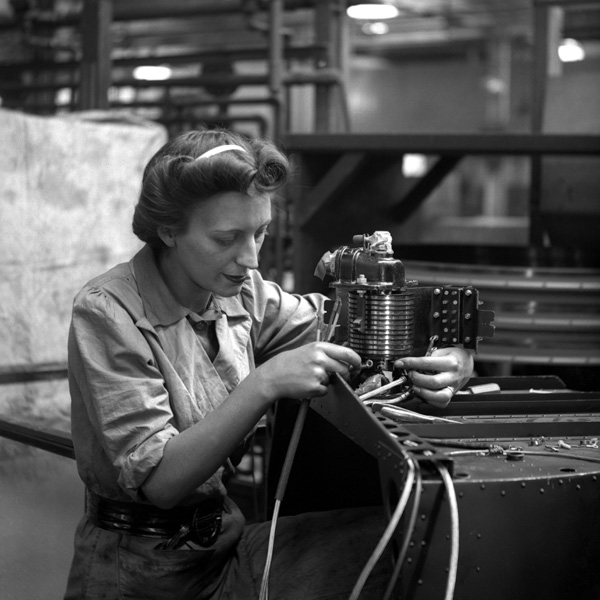
Mrs Dorothy Downs

From the BBC archives: "Mrs Dorothy Downs is one of a group of women workers who recently volunteered

to give up their holidays to work very long hours in order to back up the RAF's 1,000 bomber raids over Germany."

Repeating Bomber on Armistice Day of all days is a massive compliment to everyone involved in the programme.

We have also been paid a more subtle accolade. Radio 4 Extra is replicating the original real-time nature of the broadcast. It must have been tempting to chop the thing into more conventional lumps, so I thank them for doing so.

I'm hoping to persuade you to find the time to listen to the programme live. However the reasons to do so are elusive and resist explanation.

Briefly, Bomber tells the story of a bombing raid on Germany by the RAF in 1943. It focuses on the experiences of a handful of bomber crews, the civilians in the town they bomb, and the nightfighter crews sent against them. The bombers take off in the early evening. It will take them three hours to plod to Germany, and three hours to crawl back. Those destined to make it home, or survive on the ground, do so before midnight.

Real time has always fascinated me, even at a mundane level. I was the sort of child who noticed that, in spite of Blofeld's henchman clearly announcing there was only thirty seconds and counting, James Bond always had a good couple of minutes to defuse the nuclear device. Would it, I wondered, be better if he didn't?

Len Deighton's documentary novel spans twenty-four hours. I first read it as a sparks working night shifts at BBC World Service. The backs of my legs aching through tiredness, I learned of fatal lapses of concentration in the early hours. It was, of course, a simple enough light bulb moment: perhaps I could match a listener's physical experience to the remorseless clock of a drama.

Twelve years later (I had meanwhile had a career as a Radio 1 producer) Radio 4 decided to test the real time theory. No-one knew whether this experiment would work or not. I think it did.

Firstly, tension - especially as Len's marvellous characters were impossible not to care about - is rarely allowed to build over nine hours in any medium. That delayed action bomb, fused in the mid-afternoon, only concludes its deadly purpose just before midnight.

Secondly, just carrying on with one's petty schedule (I was unpacking in my new flat), lends a remarkable contrasting insight to the unfolding dramatic incidents. It took an hour to do those three boxes, and an hour for ten Lancaster bombers to be shot down with seven men aboard each one. I have never felt so humblingly safe in my life.

Thirdly, and this was originally me laying the ghost of James Bond to rest, we had time checks that worked in both time frames. To hear the crews synchronise their watches and see the same on the kitchen clock sounds like sleight-of-hand, but it had another extraordinary connecting effect to the drama.

There are many other things about Bomber, not least the performances, the script, the direction, the authenticity for which we strove and the remarkable reminiscences I recorded in peaceful sitting rooms in Britain and Germany, dovetailed into the action.

But the effect of all these will, I promise you, be multiplied if you are able to follow the story in real time. Park the iPlayer for this one. As one listener wrote after the first transmission:

"Thank you for Bomber. It completely ruined my day. I had planned a dinner party, but my guests and I were compelled to sit by the radio right through to midnight."

Bomber is directed by Adrian Bean and produced by Jonathan Ruffle

Bruce Robinson on The Film Programme

Blog comments are currently unavailable. Find out more.

Post categories:

Paul MurphyPaul Murphy15:30, Thursday, 10 November 2011

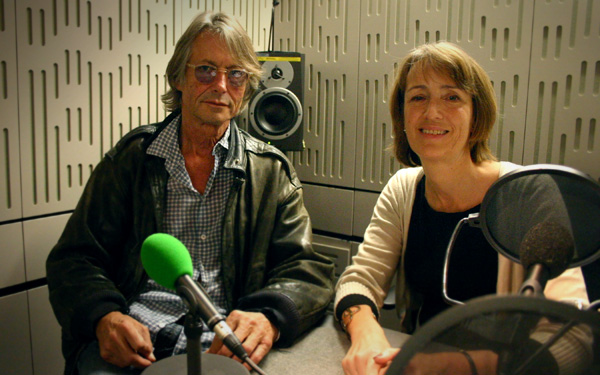
Francine and Bruce Robinson

Writer and director of Withnail and I, Bruce Robinson, with Francine

Today The Film Programme appears for the first time in its new slot on Thursdays rather than Fridays and at the earlier time of 4pm.

Bruce Robinson, perhaps best known as the writer and director of the classic Withnail and I, is one of Francine Stock's guests on the programme talking about his new film The Rum Diary starring Johnny Depp. Also on today is Errol Morris on his new documentary and Fish Tank's director Andrea Arnold on her new version of Wuthering Heights.

The Film Programme is on today at 4pm and will be available to listen online shortly afterwards. There's also a huge archive of previous programmes to listen to on the Radio 4 website.
Paul Murphy is the editor of the Radio 4 blog

Catching up with the Soundstart winners

Blog comments are currently unavailable. Find out more.

Post categories: , 

Matthew MillsMatthew Mills14:00, Thursday, 10 November 2011

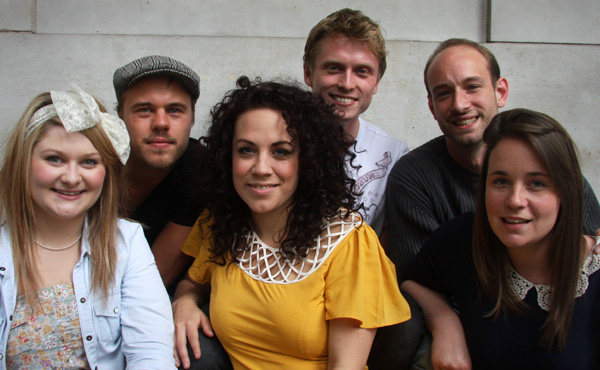
Soundstarters

Rikki Lawton (2nd from left) and Alex Rivers (far right) with the other winners of the BBC's Soundstart scheme

With the announcement of the BBC Audio Drama Awards, it seemed a good time to catch up with some possible future recipients. The Soundstart winners have been members of the BBC Radio Drama Company for over three months now, so I met up with Rikki Lawton and Alex Rivers to see what they'd been up to since we met them last.

"I think I've been quite lucky, I've got some good parts" says Rikki, "I've found a lot of them have been with my own accent really, but even within that, a London accent from the nineteenth century is completely different to what it is now, so I'm learning all the time".

Has this versatility been difficult? "It's been challenging going away to learn different accents. It's interesting: on the rep there are some actors that stick to their own voice and change it a little bit for each production; then there are others who are more character actors and completely change their accent and dialect. It's a mixture of both really".

In order to see this content you need to have both Javascript enabled and Flash installed. Visit BBC Webwise for full instructions

You heard Rikki in The Ambassadors which is broadcast on 13th November on BBC Radio 4.

Alex has also enjoyed a large number of different roles. "I don't really think the Rep has a routine, there's complete variety. It's not like I'm doing a play four days a week, every week. I'd like to!" she laughs, "I've done readings for Open Book, and a couple of us from the Rep did some readings for BBC School Radio, stories for five to seven year olds".

How different is your approach to this sort of work? "Well, with children's stories, you want to keep them engaged by doing little characters here and there, but then if they're played too much, the kids switch off, or get too hyper." Naturally something to be avoided at all costs!

In order to see this content you need to have both Javascript enabled and Flash installed. Visit BBC Webwise for full instructions

Excerpts were of Alex and Bill Nighy in the latest series of Charles Paris, due for broadcast at the start of next year on BBC Radio 4.

As Rikki and Alex have found, the breadth of Radio Drama's output requires a company of actors adept at applying themselves to roles both large and small; tackling characters they wouldn't get a chance to play on film or stage, often cast against physical type. It's all down to what the voice can do.

It's an enormous learning curve, and one that obviously creates a very special bond between those on the Rep, as members past and present will testify. "I'd loved to be involved in radio for the rest of my career' Alex confirms "now that I've got the bug".

You can keep up to speed with them and the rest of Radio Drama by signing up to the BBC Radio Drama newsletter.

Matthew Mills is production coordinator, BBC Radio Drama

Mark Watson's Live Address to the Nation

Blog comments are currently unavailable. Find out more.

Post categories:

Sidd Khajuria12:00, Wednesday, 9 November 2011

At 11.25pm last Wednesday night, the comedian Mark Watson was hoist aloft by Hunter (of Gladiator fame):

You'll need to listen back to Mark Watson's Live Address to the Nation in order to fully understand why that happened.

Assisted by Tom Basden and Tim Key, Mark's back on Radio 4 to look once again at some of the qualities and character traits that make a person. But in a change from his previous series, the audience - with their tweets, texts and comments - find themselves at the heart of a live programme. It's appropriate, then, to tell the story of the first episode through a selection of tweets, photos and audio which all appeared online at some point on the day of the show.

  • "Hello. Mark Watson's going to be live on Radio 4 in just over 12 hours and needs your help..." - from the live blog. Throughout the day, the audience sent in their stories of physical and mental strength. A selection of them made it into the show, including:

    "claitysan: @bbccomedy #watsonlive I once pulled a really stubborn nail out of a skirting board by shouting 'I'm Brian Blessed' at it, works brilliantly" and "ilikearainbow: @bbccomedy I used to sift 10 kgs of flour/icing sugar using a sieve that was almost bigger that me when working in a patisserie. #watsonlive"
  • Gillian Reynolds previews the programme in the Telegraph. She was right about the 'bold', but (sadly) not about the overtime. - "This is bold. It really is live and because of that, and the time of night, it's going to be expensive (all the behind-the-scenes people will be on overtime)"
  • Photo: The trio tweak the script and prepare for the evening's programme with their producer Lianne Coop
  • "watsoncomedian: Radio 4 series starts 11pm tonight. Pick Of Day in Telegraph/Indy/Express. Odd, as it's live." - Mark tweets ahead of the programme
  • "CalDoughty: THE MARK WATSON RADIO SHOW BEGINS AGAIN TONIGHT WITH TIM KEY AND TOM BASDEN. EXCIIIIIIITEMENT!" - @caldoughty hits the CAPS LOCK key on Twitter.
  • Mark prepares for #watsonlive by BBC Radio 4 & Radio 4 Ext - Mark looks ahead to the evening's programme
  • Photo: Studio managers prepare the stage
  • At the outset, Mark announced that audience would decide how the show should end. For the first programme, the choice lay between Mark performing an act of physical or mental strength. @SkevosMavros chimed in on Twitter with "Old Greek saying: 'Strong body, strong mind'. Then again, those old Greeks did sport in the nude... #watsonlive"
  • If you've watched the video at the top of the page, you'll know what happened next. The last word, though, should probably go to @samuelerobinson on Twitter: "'An agreeable shambles' is a marvellous description of the show. #watsonlive"
  • Hundreds of tweets came in throughout the day; you can read them by searching #watsonlive on Twitter
  • You can see some more photos from the production here

Siddharth Khajuria is the online producer for Mark Watson's Live Address to the Nation

  • Tune in tonight at 11pm for the next episode, when Mark will be talking about faith. He will, once again, need your help. You can tweet using #watsonlive or take part at https://bbc.in/watsonlive
  • Mark Watson's Live Address to the Nation is produced by Lianne Coop

The Poppy Factory

Blog comments are currently unavailable. Find out more.

Post categories:

Chris LedgardChris Ledgard16:50, Tuesday, 8 November 2011

The Poppy Factory, Wednesday 9 November at 11am, tells the story behind the red commemorative poppies and the ex-service men and women who make them. It's also a Radio Times choice of the day - PM.

Cutting Out Petals at The Poppy Factory in 1935

Cutting out petals at the Poppy Factory in 1935

With the death of the last First World War combatant earlier this year, another of the human threads connecting us to that time fell away.

But in a white factory building by the Thames, there is an unbroken link between modern ex-service men and women and the soldiers who came back from the 1914-18 war, wounded and in need of work.

The building is the Poppy Factory, and for nearly ninety years it has provided a safe place to work for people who face challenges in civilian life.

Tony is 57 and left the army after being badly burned on a training exercise.

"I was on the sick for three years. Basically I'd been written off. I do have psychological problems and in the end I just couldn't work because of panic attacks. There's no other way I could get work unless I came through a supported programme.

"I make as many poppies as I can, but in the background there's no stress or anxiety about having to do a certain number."

Preparing Foliage for Wreaths in the early 1920s at The Poppy Factory

Preparing Foliage for Wreaths in the early 1920s at The Poppy Factory

The Poppy Factory was the creation of Major George Howson, an engineer with remarkable energy and imagination. His family still talk of the pulley he rigged up across his large garden, and the bridges he built across stream at the bottom.

He had a genius for connections. After the success of the first Poppy Appeal in 1921, when flowers had been imported from France, he could see the need for British poppies. And as founder of the Disabled Society, he knew the plight of wounded soldiers. So he put the two together.

But he wasn't optimistic about his plan to set his men to the delicate, repetitive task of making poppies. "I do not think it can be a great success," he told his parents in 1922.

His workforce of five grew quickly, and within a few years more than three hundred and fifty men were meeting the entire demand for Remembrance poppies, along with a sister factory in Edinburgh. The Poppy Factory moved to Richmond, where it still stands.

Major Howson with colleagues

Major Howson with colleagues

Though it's a smaller team now - some of the work is done by home-workers and machines at the Poppy Appeal headquarters - millions of poppies, wreaths and crosses are still made in Richmond.

Barry spent thirty years in the Royal Navy. He has a box of chocolate éclairs at his feet, family pictures around his desk, and a shelf of Abba albums and greatest hymn collections. It's repetitive work, clicking together the plastic and paper to make poppy after poppy, but he cherishes the environment.

"I always wanted to visit the Poppy Factory, never thinking I'd ever work here. I was indoors for three years with arthritis. They're lovely people to work with."

Dave Brown demonstrates the cutting machine

Dave Brown demonstrates the cutting machine to visiting Chelsea Pensioners

Bill saw a poster about the factory when he was visiting the organisation Combat Stress in Leatherhead.

"You get a lot of military banter, but if you start to feel uncomfortable for some reason and want to back off, then they let you be quiet. It's a safe environment for ex-service people with certain problems."

The 1920s soldier wouldn't recognise the spacious factory floor and working conditions. But the need for mental space and time to find your own working rhythm hasn't changed. Neither has the importance of jokes. Before coming here, Bill says, he did a horticultural course, but then couldn't find a job.

"I'm still working with flowers though."

Chris Ledgard is the producer of The Poppy Factory

Richard Herring's Objective returns

Blog comments are currently unavailable. Find out more.

Post categories:

Richard HerringRichard Herring15:20, Tuesday, 8 November 2011

Richard Herring

Richard Herring returns to Radio 4 tonight with a new series of Richard Herring's Objective at 6.30pm. Examining and dissecting objects of scorn and controversy, in the first series the comedian investigated "The Hitler Moustache", "The Hoodie" and "The St. George's Flag". On his blog, part of which is below, Richard talks about the first choice for the new series - PM.

"The script for the first Objective of the second series has been a tricky one to get right - the golliwog is an incendiary item and I wanted to write a show that was funny, though not disrespectful to the broader issues. Even attempting to defend the golliwog could be needlessly offensive to many (though others would undoubtedly feel offended that this "innocent" toy would need defending).

It's been a really fascinating subject to research. Having met the original Golliwogg at the Museum of Childhood in Bethnal Green, I was able to see he was a bullied and unattractive doll who Upton turned into a hero and children saw beyond his outward appearance and recognised his inner goodness.

Comedian Ava Vidal was my guest - she is black and has a great routine about the golliwog, but had also just been to a protest about the doll being stocked in a South London shop. But she gave some context to how the golliwog had affected her own childhood, which hopefully would make the people who said it was just a harmless toy think again."

Richard Herring presents Richard Herring's Objective

Richard Herring

Richard Herring at the recording of the second series of Richard Herring's Objective

Bookclub: The Wasp Factory

Blog comments are currently unavailable. Find out more.

Post categories: , 

Jim Naughtie12:30, Tuesday, 8 November 2011

Ed's note: Radio 4's Bookclub was on Sunday 6 November and is repeated this Thursday 10 November at the new time of 3.30pm. More listening options including details of the podcast archive at the end of this post - PM

Iain Banks and a reader Janet

Iain Banks at the National Library in Scotland, Edinburgh, talking about The Wasp Factory.

A reader, Janet, brought along her wasp torch for Iain to sign.

I'm fairly sure that Iain Banks is the first guest on Bookclub of whom I have asked the question: have you ever let yourself be psycho-analysed? I was therefore slightly disappointed when the answer was no, but it was worth a try.

If you know The Wasp Factory, the book that launched Iain's serious writing career 27 years ago, you will know why the question arose. Frank's story, which gives the book its shape and its spirit, is one of grotesque adolescent excess, particularly in the matter of violence.

He has killed three people (at least, we're told, one of them a sibling) and much of his delight while he is growing up comes from meting out undeserved punishment on any living thing that passes by. Take the alarm clock contraption which involves wasps being pinned to the hands and, as a consequence, being killed to a timetable set by Frank, allowing him to wake up to see his latest victim being squashed as the clock strikes the hour, with another one coming along behind.

The book is a picture of disturbance, a kind of punk's-eye view of the world, which is a place of gothic horror and badness. Yet, as Iain told us, "Frank thinks he is relatively normal - it's as simple as that."

You can see why I wondered if he'd ever had his head examined to see where the story came from, and he recalled happily a launch party for one of his books in Edinburgh when an American student asked him if he had experienced a very troubled childhood, expecting the answer yes. Iain pointed out his grey-haired mother in the crowd, who duly obliged with the truth: "Och no, Iain was always a happy wee boy."

We were talking in the National Library of Scotland in Edinburgh, where our readers had been re-reading the book, sometimes after several years, and returning to the themes that Iain has picked up in his overtly science fiction books (which he writes under the name of Iain M. Banks, a distinction which I think he now mildly regrets) and which have given him a cult following.

The Wasp Factory presents a world where the certainties that Frank lives with are ones that would repel or terrify the average reader - burning dogs, tortured wasps, murders, a bizarre substitute religion in which he believes that the future is foretold by one of his grotesque killing machines, which kills its animal victims in a dozen different ways. So why was the book so popular?

His answer is that he thinks readers get the joke - "it was a hoot and a giggle" - in a way that critics certainly didn't. A number of reviewers wondered how a publisher could stoop so low in letting the book onto the streets. Why can't they get it, he wonders? "It's a simple method, gross exaggeration. Being a science fiction writer helps - the term is extrapolation but it's basically exaggeration."

When Eric, a brother whom Frank hasn't killed, emerges from an old-style psychiatric hospital, it allows Frank to appear normal by comparison, but readers learn of the strange happenings in his past. By the end of the story, Franks makes a discovery that is clearly one of the most important of his life and will shape his future.

We do mention in the course of the programme what this revelation is, simply because the book has been around for long enough for that to seem reasonable, but I won't talk about it here, in case some of you are reading the book for the first time. Let's just say that it changes his identity.

The story is set in a community in the far north of Scotland, which Iain knows well, on an island. Frank's father Angus, an eccentric doctor, is part of the psychological puzzle of the novel, going every now and again to Inverness to sell drugs, which he makes at home, and perhaps sharing some of the Frank's attitude towards women - in the absence of a mother in the house, he rails against the betrayals of women, even Mrs Clampy, the housekeeper, who is a bastion of sanity in the place. Iain is happy to describe it as a psychological study: Frank creates not just a physical environment that suits him, and his urges, but a mythological one too.

Iain is as convinced an aetheist as you are ever likely to meet (he will acknowledge that perhaps 1% of him is simply agnostic, but no more). Iain says, as you might expect, that he's always found Frank a fascinating character, but he echoed the feelings of surely nearly every reader of the book when he said that he wouldn't like to find himself living next door to him.

I don't know if you agree with the reviewer who said that he found it incomprehensible that a publisher could have stooped to such levels of depravity (that was The Irish Times) or with one of our readers who said that, having not expected to enjoy it, she found herself reading the gory and funny bits to her husband on a long car journey and laughing out loud. Either way, it was a landmark book - a piece of gothic fiction and fantasy that established Iain Banks' career and seem to fit happily into the early 80s punk-influenced popular culture. I hope you enjoy the programme.

Our next recording will be with the American writer Art Speigelman on his phenomenon, Maus, an allegory about the Holocaust in graphic novel form.

That's Wednesday 7 December.

And the following week on Tuesday 13 December, we're discussing God's Own Country by Ross Raisin, a young writer who's considered one of our most promising authors. It was his first book, in 2008. So if you want to be one of the group of readers on either of these occasions, both in London, let us know via the website.
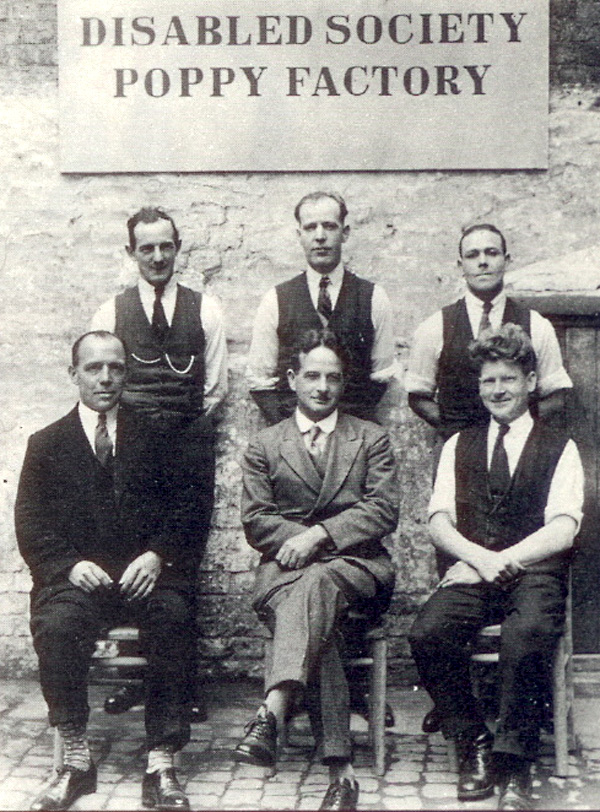
The next programme on air will be with Sebastian Barry, author of The Secret Scripture, on December 4th (repeated on Thursday 8th) and I can promise you that it is a corker.

And just to remind you, the new time of our Thursday edition is now 3.30pm.

Happy reading.

Jim Naughtie presents Bookclub

In Our Time newsletter: The Moon

Blog comments are currently unavailable. Find out more.

Post categories: , 

Melvyn BraggMelvyn Bragg16:00, Monday, 7 November 2011

Editor's note: This week Melvyn Bragg and his guests discussed the Moon. As always the programme is available to listen to online or to download and keep - PM.

Moon

Immediately after the programme Carolin produced a piece of the Moon. It was a sliver of a lunar meteorite which had landed in the Sahara. It was strange to hold something of the Moon. Immediately they went into a discussion about the future of space travel and space exploration. One of the contributors spoke of the Treasury's reluctance to fund it; apparently in space the Treasury is interested only in what we can learn about the weather, or... well, that seems to be about it.

Meanwhile, the Chinese, twenty years ago, set up a plan for space which they are steadily achieving. They have hit every target so far, Paul Murdin said, though not precisely on time. Their next big goal is to colonise the Moon and he's quite sure that they will.

This scares the USA, he says, because it is still interested in global competition, even though it is not feeding its own space programme at the moment. But space programmes can be recreated, as Kennedy did when he created NASA to put men on the Moon.

There is a tendency to compare the Moon with the Antarctic and say that it will belong to everybody and nobody. This was dismissed by those around the table. Paul Murdin didn't even think it would really apply to the Antarctic much longer. He'd been in Australia when there was a row about Australian scientists putting up a statue of a famous Australian explorer in the Antarctic. The committee demanded to know why waste so much money. It was explained that they were staking a claim. The committee demanded to know why the statue wasn't much, much bigger.

The idea of war for and on another planet (starting with the Moon) has ceased to be H G Wells and is coming into view, it seems.

Afterwards I went across the road with Tom Morris, the producer, and we worked out the programmes until Christmas and sketched in a few for January. Then a discussion with a former producer of In Our Time, James Cook, who is working on another project.

And so down Regent Street in the drizzle.

Still very warm in London, but this lovely, refreshing drizzle. I walked along the Mall, slushing my feet through the dead leaves, and was instantly taken back to childhood autumns when this was a big thing to do. Trailing your feet in these piles of leaves. The sound and the sensation came back in a flash. It's curious how tiny moments can electrify you.

The other night I was in the Parks in Oxford. I'd gone back to my old college and I was walking around the Parks in the dusk, enjoying the dusk thickening, the river darkening and still as glass, the paths disappearing between high bushes.

Suddenly, behind me, a voice - it must have been that of a five- or six-year-old girl (I didn't want to look round in case I spoiled it all) - began to sing "Twinkle, twinkle little bat, how I wonder what you're at". And she kept on singing it! Then she laughed and it really was peals of crystal. Her mother (or was it her mother? I didn't want to look round) then joined in. And suddenly I was - on another planet? It felt like that and it's stayed with me already for over a week and I suspect it will linger around, or I want it to, for a long time to come.

And speaking of the Moon, we forgot to make any real reference to poetry. Paul Murdin's favourite Moon lines are from Keats in Endymion:

"What is there in thee, Moon! that thou shouldst move / My heart so potently?"

And found among Shelley's papers was this poetic fragment:

"Art thou pale for weariness / Of climbing heaven and gazing on the earth, / Wandering companionless / Among the stars that have a different birth, / And ever changing, like a joyless eye / That finds no object worth its constancy?"

Melvyn Bragg presents In Our Time

Dr Geoff Bunn introduces A History of the Brain

Blog comments are currently unavailable. Find out more.

Post categories: , 

Dr Geoff BunnDr Geoff Bunn13:15, Monday, 7 November 2011

Ed's note: A History of the Brain, presented by Dr Geoff Bunn, starts today on Radio 4 at 1.45pm and is on every weekday for the next two weeks. See the links at the end of this post for more info - PM.

Sphinx and Pyramid

Egypt: Gizeh, Sphinx and Pyramid, Brooklyn Museum Archives

In researching A History of the Brain, what struck me was how different historical eras have understood the brain in their own different ways.

For example, today we find the "brain-as-computer" metaphor plausible because computers have permeated every aspect of our lives.

But sometimes it might be more appropriate to view the brain as more like a compost heap than as an information processor. After all, unlike the information stored in a computer, human memories gradually degrade and change over time.

The ancient Egyptians discarded the brain during mummification, pulling it out through the nose bit by bit with a hook. Even though they had a basic knowledge of brain function, the Egyptians thought the heart was the most important organ, vital for a person's passage into the afterlife.

Curiously, the Egyptians were one of the few ancient peoples who didn't practice trepanation, the drilling of holes through the skull of the living person, in order to drain blood clots or to release evil spirits.

There is no doubt that our knowledge of the brain has steadily improved since ancient Greek philosophers first agreed that the brain was the controlling organ of the body. But progress was agonisingly slow at first. From the Dark Ages up to the Renaissance, the brain's three fluid-filled ventricles were thought to house the psychological functions of sensation, cognition and memory. The "common sense" was the first ventricle, the place where the senses were combined into a whole.

Thomas Willis' Anatomy of the Brain and Nerves of 1664 was a groundbreaking attempt to correlate mind and brain. According to Willis (who was Charles the First's personal physician), the brain was a "kingdom", the "chapel of the deity" and the sovereign organ of the body. Nerves were "companies of soldiers", acting on orders to move muscles "like the explosion of gunpowder". At a time when the world was turned upside down, Willis saw the brain as an analogy of the divine right of kings to govern.

Willis has been called the father of neuroscience. Yet at the time it was far from universally accepted that the study of the brain would lead to great discoveries. The Cambridge philosopher Henry More ridiculed what he considered to be a complete waste of time:

"Verily if we take a right view of this lax pith or marrow in Man's Head, neither our Sense nor Understanding can discover anything more in this Substance that can pretend to such noble Operations, as free Imagination and the sagacious Collections of Reason, than we can discern in a Cake of Sewet or a Bowl of Curds."

Many important innovations in the brain sciences had unusual origins.

Camillo Golgi stumbled on his spectacular "black reaction" brain tissue stain in 1872. This, together with the development of better quality microscopes, led to the discovery of the synaptic gap between nerve cells. The experiment that eventually proved that nerve transmission was a chemical process came to Otto Loewi in a dream in 1920. In 1925, Hans Berger invented the EEG brain scanning machine by accident whilst trying to prove the existence of psychic energy.

A variety of new neuro disciplines such as Neuroesthetics, Neuroeducation and Social Neuroscience have emerged since President Bush announced funding for the "Decade of the Brain" in 1990. The recent shift toward a brain-based understanding of almost every aspect of human personality is truly remarkable.

But is it the whole story?

According to popular understandings, we think and act as we do because our brains are "hard wired" like a computer. But perhaps the metaphor of plasticity is a more appropriate way of explaining the brain's enormous potential for flexibility. Indeed, the history of the brain itself has been one in which chance events, accidents, and creativity have all played a vital part.

Dr Geoff Bunn is the writer and presenter of A History of the Brain

Lives in a Landscape now available as a podcast

Blog comments are currently unavailable. Find out more.

Post categories: , 

Laurence GrissellLaurence Grissell10:45, Monday, 7 November 2011

Siva

Siva Kandiah, a Hackney shopkeeper, whose life was turned upside down by the August riots.

Ever since I produced the first ever Lives in a Landscape back in 2005, our ambition has has remained the same: to travel to every corner of the country, chasing compelling stories you'd never find elsewhere and finding people who rarely make the news.

These aren't just documentaries, they're features - that great radio tradition - but they're features which are very much rooted in Britain today.

In this series presenter Alan Dein returned to Hackney after the riots - long after the TV trucks of the 24 hour news channels had moved out - following up on the story of shopkeeper Siva Kandiah whose local store was left in ruins by looters. It highlighted the strange demographics of an area in which greasy spoons sit alongside bourgeois coffee shops, an intriguingly subtle take on the riots from producer Sara Jane Hall - one you'd be hard pressed to find elsewhere.

For my own programme in this series, Alan and myself travelled to Boston in Lincolnshire where an influx of migrant workers attracted by agricultural work are causing tensions among the local population. We heard from jobless 17 year old Luke, who felt the future in Boston was so bleak he'd decided to join the army. On the flipside, we heard from migrant worker Renata, working to pay for an operation for her sick daughter back in Poland. It's a complex story there, very far from black and white, and we tried hard to faithfully render the complexity of the scene.

We believe our audience crave something more than the predictable - in Kate Bissell's programme on the Craigmillar Estate in Edinburgh, it's urban decay which provides the backdrop to a portrait of life among evangelical travellers, whilst in Neil George's programme on Woodhouses, it's urban sprawl which threatens a very English way of life in this Lancashire cricketing village.

Whether it's Lancashire or Hackney, Alan Dein never arrives anywhere with an agenda - his desire to listen without prejudice is what makes him such a remarkable presenter.

The entire team care passionately about this series and we craft the programmes with great care. We very much believe they'll stand the test of time - that's why we'll be making the archive available over the coming weeks when the programme is off air.

We hope you'll enjoy listening to them - it's certainly a great privilege to produce them.

Laurence Grissell is one of the producers of Lives in a Landscape

The World at One: Extra time

Blog comments are currently unavailable. Find out more.

Post categories: , 

Nick SuttonNick Sutton20:00, Sunday, 6 November 2011

World at One radio news studio gallery, 2002

The World at One radio news studio gallery, 2002

A small bit of radio history was made on Friday lunchtime when Edward Stourton became the last presenter of The World at One to say, "that's the World at One Thirty".

From Monday, the programme will be extended to 45 minutes - and as a result the presenter's payoff will change. Of course, it's not the first time that the duration has been altered. In 1998, the then Radio 4 controller, James Boyle, cut the duration of The World at One - or WATO as we call it - from 40 minutes to 30 minutes and moved the Archers from 1.40pm to 2.00pm.

Some people complain that there is too much news already on Radio 4, but our audience is at record levels with a weekly reach of 3.3m and around 1.4m listening to WATO each day. There seems to be a real appetite to find out what's happening in the world and for us to explain it.

As Gwyn Williams has said, the faster development of stories following Today (especially now that Parliament sits in the morning) means there simply isn't enough time in 30 minutes to cover the full news agenda, both foreign and domestic.

The programme was extended to an hour throughout the general election campaign and in what has been an incredibly dramatic year - with the economic troubles at home and in the eurozone; the Arab uprising; and the summer riots - we've extended WATO a number of times on an ad hoc basis.

My intention is that the programme will continue to be the home for strong, news-making interviews, analysis and discussion. However, too often at the moment, the programme feels boxed in by its duration. I've lost count of the number of times I or my colleagues have had to talk into Martha Kearney's ear telling her to wrap up an interview or move on to the next item, even though we know there are questions we'd like to have asked our guests. I understand how frustrating listeners find this and the extension to 45 minutes will allow the interviews and discussions time to breathe just a bit more.

I'm hoping we'll also be able to use the extra time to do a slightly broader range of stories. Audience research suggests that you really appreciate what we do at the moment - comprehensive, in-depth coverage of domestic, political and international news - and would welcome more of the same. But that there's also demand from our listeners for greater reporting of technology issues, business and economics news, and arts and culture.

I would also like to experiment with using different formats on the programme - being creative in our production and treatment, with more outside broadcasts and more reporting (by Martha, Shaun Ley and Edward; by the dedicated reporters we have on news programmes; and by the great team of BBC correspondents in the UK and around the world).

Do let us know what you think.

Nick Sutton is the editor of The World at One

Five podcasts for the weekend: 4 November 2011

Blog comments are currently unavailable. Find out more.

Post categories: , 

Paul MurphyPaul Murphy17:50, Friday, 4 November 2011

Laurie Taylor

Thinking Allowed's Laurie Taylor

The preamble

As last week I've picked out a selection of the currently available Radio 4 podcasts. You can listen online or download to keep, or put onto your phone or MP3 player. There are many more available on the Radio 4 podcast page.

Some podcasts are available for only seven days (eg Comedy of the Week; Friday Night Comedy) but others do have a huge archive you can download at any time (eg Desert Island Discs; In Our Time). If you haven't used podcasts from the BBC before there's some podcast help here.

The selection

1. Lives in a Landscape

All of the current series where award-winning presenter Alan Dein goes in search of original stories from around the country is now available as a podcast.

More programme info

Download the podcast

2. Thinking Allowed: Kissing men - Decline of violence in history Laurie Taylor explores Professor Steven Pinker's notion of a decline in human violence as well an apparent rise in heterosexual men kissing other men.

More programme info

Download the podcast

3. Four Thought: Dreda Say Mitchell

Crime novelist Dreda Say Mitchell argues that the importance of the family, faith and community has been ignored in the debate about social mobility.

More programme info

Download the podcast

4. Warhorses of Letters

Stephen Fry stars as Napoleon's horse and Daniel Rigby stars as Wellington's horse in a love story of two horses sundered by war told through their letters to each other.

More programme info

Download the podcast

5. Desert Island Discs: John Peel Archive Special

Sue Lawley's castaway is broadcaster John Peel. This episode has been made available to mark the broadcast of the first John Peel Lecture on 6 Music.

More programme info

Download the podcast

Paul Murphy is the editor of the Radio 4 blog

REM interviewed on Front Row

Blog comments are currently unavailable. Find out more.

Post categories:

Paul MurphyPaul Murphy17:40, Friday, 4 November 2011

Singer Michael Stipe and bassist Mike Mills

Michael Stipe and Mike Mills from REM. Picture by Jerome Weatherald

Singer Michael Stipe and bassist Mike Mills from the band REM discuss what it feels like to "call it a day as a band" after 30 years, 15 studio albums and 85 million albums sold. They reflect on their career in the light of a new retrospective double album called REM, Part Lies, Part Heart, Part Truth, Part Garbage, 1982-2011.

Tonight at 7.15pm on Radio 4 and shortly afterwards on the website and podcast.

Paul Murphy is the editor of the Radio 4 blog

Rescheduling Radio 4

Blog comments are currently unavailable. Find out more.

Post categories:

Tony Pilgrim16:30, Friday, 4 November 2011

Francine and Bruce Robinson

The Film Programme moves to Thursdays starting next week when one of the guests is the writer and

director of film classic Withnail and I, Bruce Robinson, director of new release The Rum Diary.

As Paul Murphy posted earlier this week, next Monday sees the start of The World At One's extension to 45 minutes. Gwyn has set out the editorial rationale behind this 15 minute extension.

I will try to explain here some of the issues and opportunities we face when working through a reschedule of this kind.

The challenges set by this change include:

  • A total of one hour 15 minutes added across Monday-Friday, one hour 15 minutes needs to come out
  • The cost of the schedule needs to be balanced
  • The shape of the schedule changes - different sized holes in different places
  • New homes need to be found for displaced programmes
  • An opportunity to make the schedule work best for contemporary afternoon audiences

Adding 15 minutes Monday to Friday adds up to one hour 15 minutes that needs to come out of the schedule, so something had to give.

We explored various options, all of them difficult as there are no programmes in our schedule that are without merit, and every one has its fans among our loyal audience.

We wanted to keep the reduction in originations (as opposed to repeats) to a minimum, just to balance the schedule cost and no more.

Our decision, reluctantly, was to drop the repeat of the Archive on 4, to drop one short story per week from the Radio 4 schedule, and to displace one per week to Sunday at 7.45 pm.

The extension meant that a 15 minute space opened up from 1.45pm to 2.00 pm. We had been thinking for some time about how we could get the highly acclaimed Narrative History and 15 minute feature series available to a higher audience than its current 3.45 pm slot, and this was the natural move.

This changed the shape of the afternoons, as there would no longer be the 15 minute gaps Tuesday to Thursdays at 3.30 pm where the short stories currently sit.

Also, if we were to keep to a minimum the number of programmes dropped, we needed the space for displaced half hour programmes. It does mean that some other programmes are inevitably moving to lower audience slots, but in many cases the move results in a fairly neutral change in size.

Whilst grappling with this logistical jigsaw puzzle, we also wanted to keep trying to make an afternoon schedule that works for today's afternoon audiences. I say audiences plural, because we have a diverse audience with diverse lifestyles.

For example, we have listeners for whom 3-4 pm is a time to relax and be gently entertained or diverted. At the same time we have others who are racing around to finish one task and moving on to the next, but still wanting to dip into our programmes.

With Radio 4's broad mix of genres and variety of formats this is not a perfect science. But we hope that this next iteration of the schedule is coherent and attractive - a bit clearer in terms of what kind of thing to expect in different parts of the afternoon.

One of the questions raised so far concerns how some programmes have moved to different days as well as times.

Let's take the case of The Film Programme, which moves from 4.30 on Friday to 4.00 on Thursday. We had the half hour of Feedback / More Or Less (these series share the same slot across the year) being displaced from 1.30 pm on Friday. We wanted to keep the 45 minute Gardeners' Question Time in its current 3.00 pm Friday slot. So we had only two half-hour slots between 4.00 and 5.00 on Fridays to play with, currently occupied by Last Word and The Film Programme.

We decided that Last Word and Feedback / More Or Less should stay on Fridays, and that we would move The Film Programme to Thursday afternoons at 4.00-4.30. This has the added advantage of moving Radio 4's main film programme away from being scheduled on the same afternoon as 5 live's main film programme, Kermode and Mayo's Film Review. This was not a key driver of our decision, but is an improvement in terms of providing more choice for audiences who listen across BBC networks, where we try to avoid having the same genre of programmes at the same time in the schedule, apart from obvious peak news times.

We do not make these changes lightly.

We now have the great advantage that all of these programmes can be listened to on-demand, so that if people have access to a computer or enabled mobile device, they will still be able to listen to their favourite programmes at a time to suit them.

But we know that for the vast majority of listeners it is the live schedule that is their companion at different times of the day. We will continue to review and evolve the schedule, taking on board the various views we gain from audience research, Feedback, comments on the blogs and elsewhere, and try to please everyone at least some of the time!

Thanks for the feedback so far.

Tony Pilgrim is Head of Planning and Scheduling at BBC Radio 4

Other blog posts about the schedule change:

Feedback: Local Radio and Radio 4's schedule changes

Blog comments are currently unavailable. Find out more.

Post categories: , , 

Roger BoltonRoger Bolton13:33, Friday, 4 November 2011

Picture shows - Bill Oddie, John Cleese, Tim Brooke-Taylor, Jo Kendall, Graeme Garden and David Hatch (Producer) from

Bill Oddie, John Cleese, Tim Brooke-Taylor, Jo Kendall, Graeme Garden and David Hatch (Producer)

from "I'm Sorry I'll Read That Again", 1968

Controllers of Radio 4 do not change their schedules lightly.

Their listeners tend to want to keep what they have and are doubtful whether any change will be for the better.

David Hatch was a much loved and successful controller 30 years ago but when he died he had "Rollercoaster" engraved on his heart. He had introduced a rolling schedule that soon steam-rollered over him.

His successor Michael Green had the temerity to move Woman's Hour to the morning and faced strident rebellions both inside and outside Broadcasting House.

He held his nerve and in the end won through, though he has scars to show for it.

However, after 25 years, even some of the producers and Jenni Murray herself now acknowledge that he was right to make the move.

In Feedback this week I talked to the Head of Planning and Scheduling at Radio 4 Tony Pilgrim about the changes.

In order to see this content you need to have both Javascript enabled and Flash installed. Visit BBC Webwise for full instructions

What will audiences make of the latest changes which see the World at One extended by 15 minutes to 1.45pm and several half hour programmes, such as Feedback, moved elsewhere?

I am sure we will soon find out. You can find more details of the changes elsewhere on the Radio 4 blog.

Also this week I went to Salford to meet the BBC's boss of local radio, David Holdsworth. We discussed the planned cuts in his output which have resulted from the Delivering Quality First process.

Already there have been protests online, it's been raised in Westminster and at Broadcasting House in London.

St Paul's is not the only august institution under siege.

I took with me a passionate fan of Radio Shropshire, Andy Boddington.

In order to see this content you need to have both Javascript enabled and Flash installed. Visit BBC Webwise for full instructions

Please let us know what you want Feedback to look into, and remember, the BBC Trust's consultation on Delivering Quality First ends on December 21st.

Make sure your voice is heard.

Roger Bolton presents Feedback

The Thinking Allowed Newsletter: The Kissing fields

Blog comments are currently unavailable. Find out more.

Post categories:

Laurie TaylorLaurie Taylor16:30, Thursday, 3 November 2011

Kissing couple

Whenever I took a new girl friend home for the first time I had to brace myself for my mother's embarrassing doorstep attempts at immediate intimacy.

"Hello, mum", I'd say as she opened the door. "This is Cecilia". "Lovely to meet you", my mother would say.

"Now, do we kiss?"

I knew only too well from experience that this simple question was the prelude to a wholly predictable sequence in which my mother would lean forward to kiss Cecilia on the cheek, but would do so with such a degree of uncertainty and hesitation that Cecilia (or Barbara or Marjorie) would have little clue as to which of her cheeks was the target for my mother's puckered lips.

When one adds in the additional complication that my mother's kiss was being initiated from the top step, while Cecilia was firmly located on the bottom, it becomes easier to understand the ensuing concatenation of lips and cheeks and mumbled apologies.

I'm too much of a sociologist to believe that my own troubled adolescent experience of social kissing had a genetic component but some sort of special explanation would seem to be needed for the several years in which my inability to perform properly on doorsteps meant that very few girls ever volunteered for a second date.
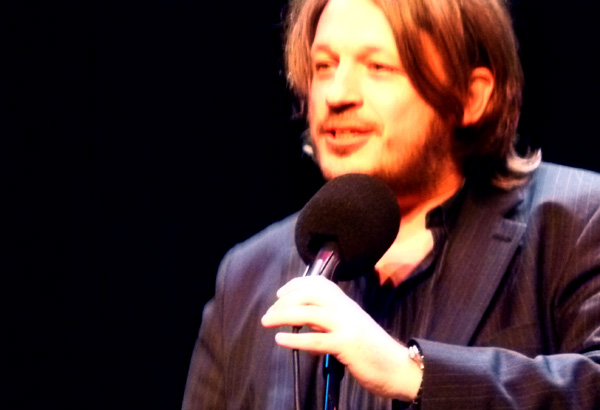
Timing was one problem.

In films lovers always seemed able to synchronise their kissing. They came together harmoniously. This never seemed to work for me. I'd decide that the moment had arrived only to be told by my new beloved that I should back off so as to give her time to finish her sentence or put out her Woodbine.
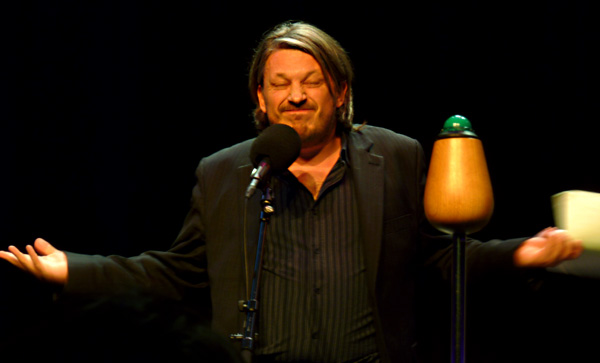
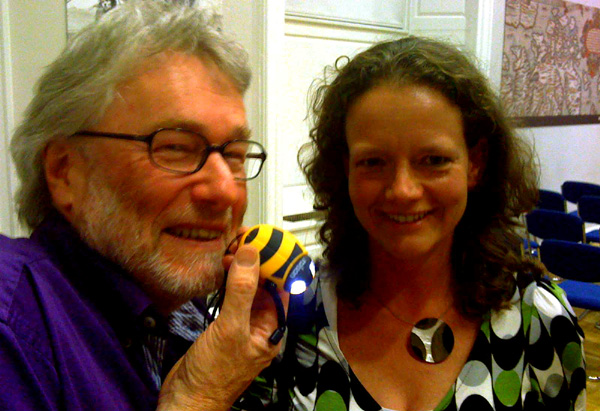
But even more troubling was my obsessive anxiety about whether I should kiss to the right or the left. On several occasions I'd got it wrong, inclining my head to the right or the left and then discovering that my new sweetheart's face had gone in the same direction so that we both looked as though we were not so much trying to embrace as to peer over each other's shoulders.

I tried to get the problem sorted out by watching how Clark Gable and James Mason and Stewart Granger got to grips with their leading ladies. But as these actors tended to be filmed in profile and to enjoy their romantic encounters on deserted beaches or on moonlit balconies rather than on the steps of terraced houses in Bootle, it was difficult to draw any direct parallels.

Even more disastrous was my attempt to follow my friend Jim's instructions on the proper way to manage a "French Kiss".

"Just slide your tongue slowly between her lips", he told me. "Like posting a letter".

"And then?" I said.

"And then move your tongue around a bit", he said. "There's nothing more to it."

Two nights later I tested Jim's instructions on Marjorie. A normal kiss at first. Not too bad. She didn't recoil. And I'd managed to land the kiss more or less on the centre of her mouth. And then, very slowly, I unleashed my tongue. Like posting a letter. But then came the rebuff - a rebuff which was to set back my attempts at French kissing for the best part of five years.

"Wait a minute", said Marjorie, pushing me away. "I can't do that".

"You can't?" I said.

"Not until I've taken out me Juicy Fruit" said Marjorie.

Attitudes to kissing are under discussion this week when I meet the author of a research paper on the growing popularity of kissing between heterosexual men.

Plus an interview with Steven Pinker, the author of Better Angels of Our Nature one of the most significant and controversial books published in the last twelve months.

Laurie Taylor presents Thinking Allowed

Radio 4's Brain Season

Blog comments are currently unavailable. Find out more.

Post categories: , 

Paul MurphyPaul Murphy12:25, Thursday, 3 November 2011

Next week sees the start of a season of programmes about the brain on Radio 4. It covers 5000 years of understanding (and misunderstanding) of what the brain is and what it does from the ancient Egyptians to recent advances in neuroscience. It takes in the myths and fallacies about the brain and what that tells us about the culture of the times.

Here's more info on the programmes that make up the brain season. Many of them will be available as podcasts to download and keep and there'll be profiles and interviews with many of the series' contributors including neuroscientist Colin Blakemore on Radio 4's interactive Science Explorer. I'll update with links to the programmes and podcasts as they become available.

A History of the Brain

Dr Geoff Bunn, who's also written a blog post on the series, presents 10 programmes on weekdays at 1.45pm covering 5,000 years of our understanding of the brain. From Neolithic times to the present day the series takes us through the many different historical ideas about what the brain is for and how it does its job. Starts Monday 7 November at 1.45pm and an omnibus at 9pm on Fridays.

Programme page: A History of the Brain

Brain Culture: Neuroscience and Society

A three-part series where Matthew Taylor explores new imaging techniques and their insights into the functioning of the brain. If we change our view of how the mind works should we teach, punish and rule people differently? Starts on Tuesday 15 November at 4pm. Programme page: Brain Culture: Neuroscience and Society

The Lobotomists

Hugh Levinson tells the story of the lobotomy craze of the 1940s and 50s and what it says about our attitude towards mental health then and now. On Monday 7 November at 8pm.

Programme page: The Lobotomists

Mind Myths

Radio 4's psychologist Claudia Hammond debunks common myths about the brain and its workings. Do we really only use 10% of our brain and does listening to Mozart makes children smarter? On Tuesday 8 November at 9pm.

Programme page: Mind Myths

The Life Scientific

In the next episode Jim Al-Khalili gets inside the mind of leading neuroscientist, Colin Blakemore. Tuesday 8 November at 9am.

Programme page: Colin Blakemore on The Life Scientific

The Life Scientific podcast

Paul Murphy is the editor of the Radio 4 blog

There's also a selection of brain and mind related material as part of the excellent Reith lectures archive including Colin Blakemore:

  • 2003 VS Ramachandran: The Emerging Mind Neuroscientist Vilayanur Ramachandran, Director of the Centre for Brain and Cognition at the University of California, lectures on new insights into the human brain's workings.
  • 1984 John Searle: Minds, Brains and ScienceAmerican philosopher and Professor of Philosophy at the University of California, Berkeley, John Searle examines the connections between Minds, Brains and Science.
  • 1976 Colin Blakemore: Mechanics of the Mind Neurobiologist Dr Colin Blakemore, Fellow of Downing College, Cambridge, explores different facets of human consciousness in six lectures.
  • 1950 John Zachary Young: Doubt and Certainty in Science English zoologist and neurophysiologist John Zachary Young explores the function of the brain, and the current scientific methods used to increase our understanding of it.

The Science Explorer and the Radio 4 science archive

Blog comments are currently unavailable. Find out more.

Post categories: , , , , 

Deborah CohenDeborah Cohen15:00, Tuesday, 1 November 2011

Science Explorer screenshot

The Science Explorer

It sure was a trip back in time. Could it really have been 1995 when I had interviewed Steven Pinker about his work on the mistakes young children make in language - "taked" instead of "took", and "hidded" rather than "hid"? And now Pinker is probably one of the best known psychologists in the world, causing controversy with every book he writes.

Philip from R4 interactive had appeared with a long list of programmes from the archive on neuroscience and psychology, as we were putting together the Science Explorer pages to accompany Pinker's recent interview on The Life Scientific.

The list reminded me of another story that I'd followed over the decades.

In the late 1970s there was a fashion for trying to teach apes to use sign language. In the US Herb Terrace of Columbia University worked with a chimpanzee called Nim, although he was critical of the idea that chimps could use language in a human fashion, and I produced a long interview about the experiment.

Fast forward to 2011 and the feature film Project Nim is released. We persuaded Herb Terrace into a studio in New York to discuss what had happened since to Nim and the teaching language to chimps research on Material World on Radio 4. And basically Prof Terrace told us that the whole venture was wrong headed. It's not often that a scientist will admit that. Our attitude to the great apes is so different today. And Nim lived to 20, ending his days in a reservation.

What's kept me so interested in producing and editing science programmes are the new ideas that come from the minds of the researchers and the impact they have on society. In the last thirty years we've had the appearance of AIDS and the development of drugs to keep the disease at bay; the disasters such as BSE; the controversial areas of stem cells and genetically manipulated crops; climate change; and then the pure science areas of cosmology - like seeing planets around other stars and the prediction of dark energy.

The way we cover the stories has constantly changed. Scientists have got better at communicating their ideas at a level the general public can understand. Our coverage is more informal and funny, particularly in programmes such as The Infinite Monkey Cage and Material World. Our documentaries are shorter - there are few programmes longer than 28 minutes, when in the past some were 45 minutes.

Although science is more popular with the public now than it was, it's still true that we have to work hard to get across the ideas. What hasn't changed is the fact that many listeners have forgotten all the science they were taught at school, if they had much teaching in the subjects at all. And much of the content is unfamiliar and downright weird in the case of subatomic physics.

We don't cover all aspects of science - we think some of it is just too hard to get across, and very obscure. But you can be sure to find the important stuff that you need to know to understand the modern world on Radio 4. It could be in the news bulletins, or the current affairs programmes, or in the specialist science output, such as Material World or Frontiers. And now in The Life Scientific you can hear about what makes scientists tick, how their research fits into their field and how they personally deal with adversity.

And if you have become curious about how the scientists got to where they are today go and search the Radio 4 archive. There's a wealth of programmes that will give the history of any of the current hot topics. I think the first documentary about stem cells was an episode of Frontiers from 1999.

Deborah Cohen is editor of the Radio Science Unit, BBC

More from this blog...

Categories

These are some of the popular topics this blog covers.