
The Poppy Factory
Post categories: remembrance
 16:50, Tuesday, 8 November 2011
The Poppy Factory, Wednesday 9 November at 11am, tells the story behind the red commemorative poppies and the ex-service men and women who make them. It's also a Radio Times choice of the day - PM.
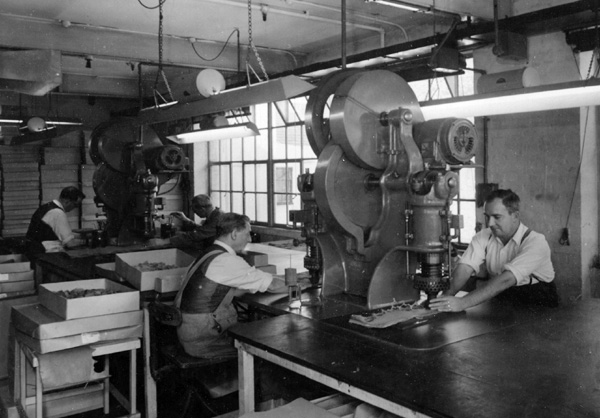
Cutting out petals at the Poppy Factory in 1935
With the death of the last First World War combatant earlier this year, another of the human threads connecting us to that time fell away.
But in a white factory building by the Thames, there is an unbroken link between modern ex-service men and women and the soldiers who came back from the 1914-18 war, wounded and in need of work.
The building is the Poppy Factory, and for nearly ninety years it has provided a safe place to work for people who face challenges in civilian life.
Tony is 57 and left the army after being badly burned on a training exercise.
"I was on the sick for three years. Basically I'd been written off. I do have psychological problems and in the end I just couldn't work because of panic attacks. There's no other way I could get work unless I came through a supported programme.
"I make as many poppies as I can, but in the background there's no stress or anxiety about having to do a certain number."
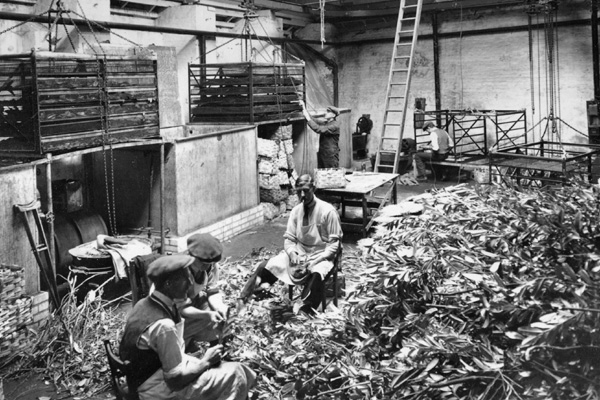
Preparing Foliage for Wreaths in the early 1920s at The Poppy Factory
The Poppy Factory was the creation of Major George Howson, an engineer with remarkable energy and imagination. His family still talk of the pulley he rigged up across his large garden, and the bridges he built across stream at the bottom.
He had a genius for connections. After the success of the first Poppy Appeal in 1921, when flowers had been imported from France, he could see the need for British poppies. And as founder of the Disabled Society, he knew the plight of wounded soldiers. So he put the two together.
But he wasn't optimistic about his plan to set his men to the delicate, repetitive task of making poppies. "I do not think it can be a great success," he told his parents in 1922.
His workforce of five grew quickly, and within a few years more than three hundred and fifty men were meeting the entire demand for Remembrance poppies, along with a sister factory in Edinburgh. The Poppy Factory moved to Richmond, where it still stands.
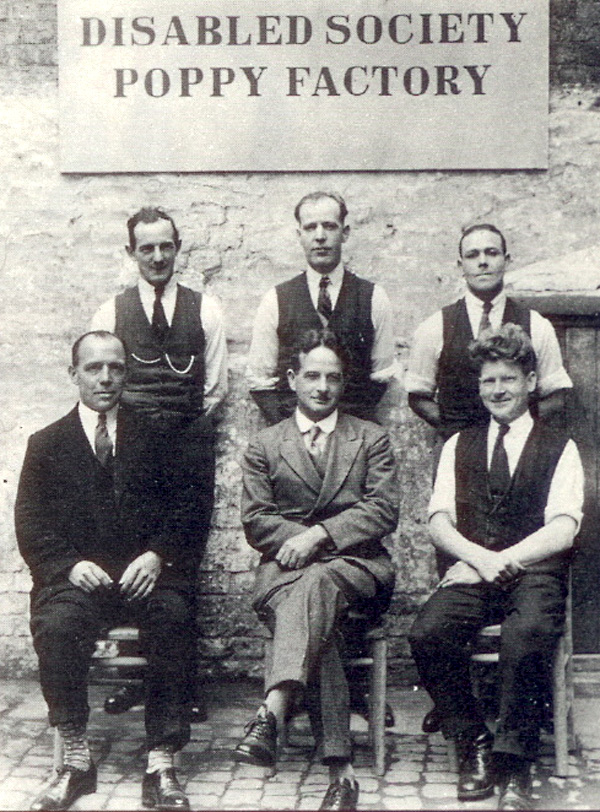
Major Howson with colleagues
Though it's a smaller team now - some of the work is done by home-workers and machines at the Poppy Appeal headquarters - millions of poppies, wreaths and crosses are still made in Richmond.
Barry spent thirty years in the Royal Navy. He has a box of chocolate éclairs at his feet, family pictures around his desk, and a shelf of Abba albums and greatest hymn collections. It's repetitive work, clicking together the plastic and paper to make poppy after poppy, but he cherishes the environment.
"I always wanted to visit the Poppy Factory, never thinking I'd ever work here. I was indoors for three years with arthritis. They're lovely people to work with."
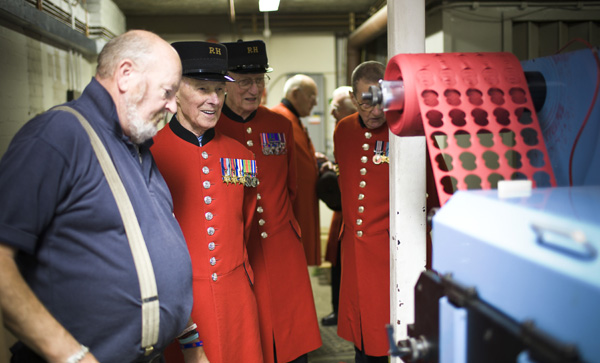
Dave Brown demonstrates the cutting machine to visiting Chelsea Pensioners
Bill saw a poster about the factory when he was visiting the organisation Combat Stress in Leatherhead.
"You get a lot of military banter, but if you start to feel uncomfortable for some reason and want to back off, then they let you be quiet. It's a safe environment for ex-service people with certain problems."
The 1920s soldier wouldn't recognise the spacious factory floor and working conditions. But the need for mental space and time to find your own working rhythm hasn't changed. Neither has the importance of jokes. Before coming here, Bill says, he did a horticultural course, but then couldn't find a job.
"I'm still working with flowers though."
Chris Ledgard is the producer of The Poppy Factory
- The Poppy Factory, is on Wednesday 9 November at 11am and you'll also be able to hear it shortly afterwards on the Radio 4 website.

Comment number 1.
At 09:48 9th Nov 2011, Richard wrote:A Facinating story that brings a tear to your eye's. I just wish the world would get it's priority's right, the E.U. and Fifa should not be allowed to stop countries from respecting and remembering those who gave their lives for future generations!! Should the so called government not step in and protect our wishes as a nation? and tell Fifa that it is our demacratic right to wear a poppy if we so wish.
Complain about this comment (Comment number 1)
Comment number 2.
At 10:32 9th Nov 2011, mizanthrope wrote:I find the whole thing mawkish and xenophobic. Yes, we should all be aware of what has occurred in the past, and I will never forget what World War Two did to my father. Every armistice day the horrors he witnessed were stirred up and drove him insane. The idea that a bunch overgrown and overpaid boymen running around kicking a ball with poppies on their chests in any way dignifies what he went through is preposterous.
Complain about this comment (Comment number 2)
Comment number 3.
At 10:50 9th Nov 2011, dodge18 wrote:I think it is disgraceful that a fifa can ban ENGLISH FOOTBALL TEAM from wearing a poppy who do they think they are
Complain about this comment (Comment number 3)
Comment number 4.
At 11:39 9th Nov 2011, BlackRose wrote:If Fifa have a rule against political emblems, then this rule should be followed by the English football team.
The poppy is a political symbol, and people should remember that it may cause offensive to other nations. Even within the UK, the poppy is used to remind people that the British Army were allowed to murder innocent civilians in their doorsteps. Such things happened to Derry and Belfast, and I find it disgusting that families of the victims of the British Army have to be constantly reminded of their loss by the poppy
Complain about this comment (Comment number 4)
Comment number 5.
At 10:16 10th Nov 2011, richard wrote:What is Richard on about, blaming the EU for FIFA briefly trying to stop footballers wearing poppies? FIFA is NOTHING to do with the EU. Richard is duped by the Murdoch press.
Complain about this comment (Comment number 5)