 Friday 9pm
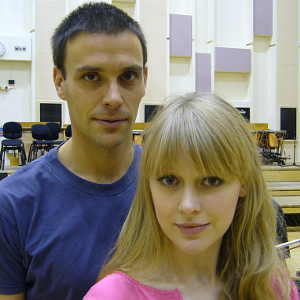
Hello, I'm Ros Porter - I'm attending the Free Thinking Festival as a Radio 3 listener and I'll be posting blogs here during the weekend.
My background is in classical music - I was Radio 3's Listener Diarist for the Tchaikovsky-Stravinsky Festival a couple of years back, and I couldn't resist the Free Thinking Festival at The Sage Gateshead because I live in Gateshead and it's on my doorstep.
I've just come out of the opening event - a fascinating and challenging lecture by clinical psychologist Tanya Byron: Tanya's talk is on Radio 3 at 915pm so if you see this I'd highly recommend you tune in! If you miss it there's always the iPlayer ...
More later!
Ros
Saturday morning ... early
'We live in a society where children are raised in captivity by their parents. They are afraid to be themselves.' - Prof. Tanya Byron. This quote from the Free Thinking brochure made it obvious beforehand that we were to hear some harsh truths during Prof. Byron's lecture.
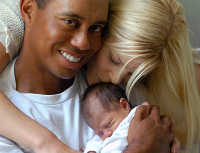 She vociferously challenged the large audience on our fear of children and young people and our increasingly negative attitudes towards them, stressing how this in turn only serves to generate a negative sense of self amongst the most vulnerable in these groups, who actually most need the support, care and understanding of adults.
Her thoughts on the stereotyped vision of the single parent and dysfunctional offspring through to the 21st century's far broader definition of the term 'family' were extremely thought provoking. It was worrying to hear her discuss how the drawbacks of the vetting and barring process of adults working with children potentially endangered the development of the inter-generational bridges which could help those most needing assistance.
Statistics can be mind-numbing at times, but I found Prof. Byron's use of them to be highly supportive of her argument - and certainly very sobering for us to consider.
Changing perceptions on the risks that children can and should take provided an especially fascinating slant to the lecture: We may not let our kids play outside nowadays, but by diverting them to the technological world of online - are we in fact exposing them to a far greater potential danger? Feedback afterwards from the audience suggested many important aspects were not covered such as for example the commercial sexualisation of children at an early age. But time was against us.
Definitely a must-hear lecture for anyone who has children, who works with them and who cares about the development of our future generation.
Saturday morning - coffee time
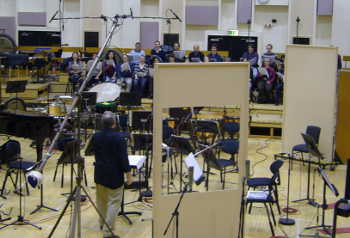
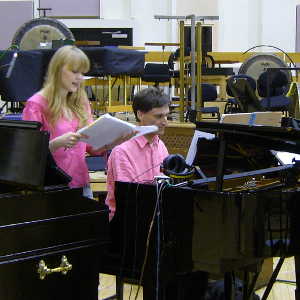
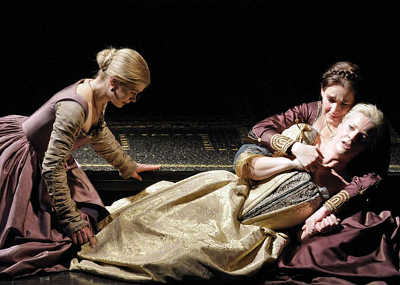
Words and Music has always been one of my favourite Radio 3 programmes, so it was a real treat to be able to watch this special edition being recorded for Free Thinking last night here at The Sage Gateshead. A constellation of local stars ensured a sparkling evening, full of moments both poignant and humorous.
Entitled 'Family Portraits' and structured in three parts: Portrait of an Ideal Family; Portrait of a Family in Turmoil and Portrait of a 21st Century Family, the programme also paid homage to a variety of north-eastern writers and musicians with their inimitable philosophy of life.
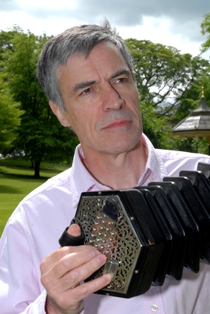 From my point of view I found that the greatest musical impact throughout the first two sections of the programme seemed to come from the folk music-related elements. They certainly packed a visceral punch with the help of Alistair Anderson's evocative pipes and concertina playing and Emily Portman 's emotionally moving singing. Initially I felt the string quartet, (members of the Northern Sinfonia) were a little nervous with their extracts of Schubert and Dvorak somehow feeling rather disjointed from the evening's thematic plan, with the literary contributions theatrically read by Gina McKee and Donald McBride making a far deeper impression.
However, after the shocking outburst of Philip Larkin's This be the Verse, opening the 2nd section, the string quartet seemed to finally coalesce with the rest of the performing ensemble and the intensity of the evening noticeably increased. An especially heartfelt rendition by Emily Portman of her own song Little Longing with expressive accompaniment from cellist Gabriel Waite was a highpoint of the evening for me.
A comic yet moving dialogue between father and daughter by featured Festival writer Karen Laws opened the final section, adding to the intensity of writing from Sylvia Plath and Ted Hughes amongst others, a gritty extract from a Philip Glass string quartet cleverly seemed to epitomise the fractured 21st century family and finally a fantastic duo between Alexandra Raikhlina (violin) and Alistair Anderson on accordion brought the evening to a rousing and positive conclusion. I'll definitely be listening again to this excellent programme.
Saturday afternoon
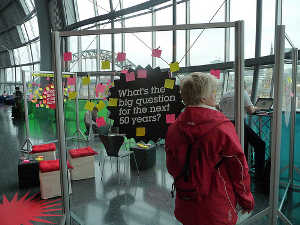
I'm perched on a cube in the Interactive Hub at The Sage, hunched over my laptop to briong you the latest from Free Thinking. There is a great atmosphere all around the building - a constant reverberant buzz of people from kids to adults exploring the many events going on all the time today in the building. Whether you want to pick the minds of an expert, or participate in the foyer events - it is all go right now. I certainly am starting to feel that my brain is exploding - but that's a good thing for me!
Free Thinking - Dan Cruickshank - Building Memories
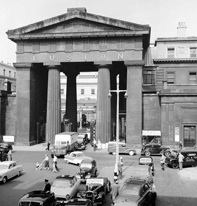 Right from the start of this session it was pretty clear to all of us in the hall that here was a man with a passion and he wanted to tell us all about it. Dan Cruickshank has the infectious enthusiasm of someone with extremely strong opinions on his subject and it certainly makes for entertaining listening. I've always had a kind of vision of architecture as being 'frozen music', I'm interested in it but it doesn't have the excitement of say, a Mahler symphony - but here was someone who has the ability to bring what might seem a rather niche subject of retracing lost architecture vividly alive!
He spent much time telling us about his involvement in the efforts to restore the Euston Arch, which up to the 1960s formed a centrepiece grand entrance to Euston Station in London. He vehemently described its demolition as an act of vandalism and we were left in no doubts about his feelings on the matter. It was a fascinating story to hear of how a large proportion of the Arch had been dismantled and used as a breakwater in a river! The ongoing campaign to restore the Arch began...
Leading on from this was the thorny question of whether one should restore buildings in a historically correct way, rather than look to the future with new architecture. I wasn't alone in feeling that the presenter of this programme was trying to dominate the direction of the lecture/discussion - perhaps promoting his own personal agenda rather than allowing Mr Cruickshank to fully share his philosophy. However, there did follow a fascinating exchange of views relating to the recently completely rebuild of the Frauenkirche in Dresden, which was destroyed by Allied bombers in WW2. Mr Cruickshank vociferously defended his corner in arguing that the view of many of the people of Dresden was that the Frauenkirche reconstruction was a recreation of a meaningful moment in the city's history, it was seen as highly personal and symbolical to them of a final end to the horrors of WW2.
There were numerous enticing snippets of thought being thrown out by Mr Cruickshank and rather than spill all the beans here - my best recommendation is to listen yourself on Night Waves on Radio 3.
The Q&A was far too short on this segment of Free Thinking but did throw up some thoughtful gems on good and bad architecture in Newcastle/Gateshead...! The biggest laugh of the session came from an audience member suggesting that in the spirit of renewal and rebirth the Palace of Westminster should be destroyed and rebuilt elsewhere - up north!
I enjoyed Dan Cruickshank's thoughts and ideas much more than I had originally envisaged and it has encouraged me to do some more background reading into architecture both new and traditional.
Early Sunday morning
Free Thinker: Gwen Adshead - The Woman's Right to be Evil
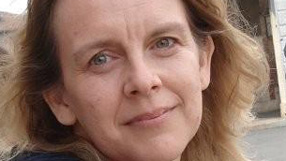 Not that I want to give any false impressions here, but this was one event high on my 'unmissable' list for Free Thinking. Ms Gwen Adshead is Consultant Psychotherapist at Broadmoor high security psychiatric hospital and works with people in violent and frightening states of mind.
A considerable amount of time in Ms Adshead's talk was spent detailing definitions of what actually constitutes evil. What do we mean when we talk about evil, and more specifically - what about evil in women? Interestingly, however, the first impression which immediately came across from Ms Adshead was her immense sense of personal calmness, which I guess is a prerequisite for working in such a challenging area. Perhaps for my taste there was a little too much concentration on definitions of our generalised perception of evil, and rather less than I had expected on specific examples of women who commit evil behaviour and their treatment. Nevertheless her comments were always salient and thought provoking. It was especially refreshing to discuss such an emotionally charged subject (which sadly so often provokes the most lurid tabloid headlines) in a completely non-sensationalist way.
Ms Adshead drew on historical examples of evil - such as the Nazi regime in Germany - and I personally found one of the best aspects of her talk was how she presented us with facts and statements which demanded our deeper consideration. Perhaps the most shocking discovery was that whilst men in the criminal justice system have many rehabilitation programmes, women do not. She was obviously concerned that often not enough is done to help women earlier on before they commit crimes - something which neatly tagged along with points made in Tanya Byron 's opening debate.
This is a programme I would recommend very highly to anyone intrigued, as I am, by the workings of the inner mind. One of Ms Adshead's final comments was on how one has to be fascinated by the degree to which we are ourselves fascinated by this thorny subject. Kudos has to go to the Free Thinking Festival for allowing audience and listeners to encounter people like Gwen Adshead.
This talk will be broadcast on BBC R3 Night Waves on Tuesday 27th October at 21.15.
Monday afternoon
The Free Thinking Interview - David Miliband
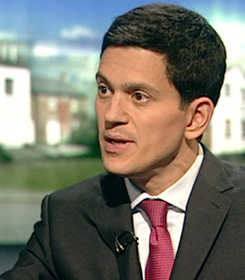 My father was a senior civil servant in Whitehall for 23 years, so politics and government were an integral part of my adolescence. As a result I quickly developed a healthy cynicism when it comes to observing politicians. If only the public knew what REALLY goes on behind the scenes...
So it was with a determinedly neutral approach that I sat down to watch Foreign Secretary David Miliband's interview, deftly handled with firmness and humour by Night Waves presenter Philip Dodd. Being a local MP, Mr Miliband appeared very relaxed with the supportive audience. The atmosphere might have been rather different in a Tory stronghold. I'd feared that this event might end up being nothing more than a bland procession of this week's Labour Party sound-bites but was pleasantly surprised that was not the case. Mr Dodd's questioning enabled us to delve deeper into the Foreign Secretary's character and personal philosophy and I found it fascinating to hear his view on the 'special relationship' between the USA and UK, as well as the very emphatic way in which he reaffirmed Britain's continuing leadership role in world international affairs.
'How does one learn to become a Foreign Secretary?' was one of Philip Dodd's lines of questioning. Mr Miliband talked of advice he had received from Madeleine Albright - first female US Secretary of State, as well as an unnamed previous British Foreign Secretary. He spoke with an obvious sense of awe and respect of the historical significance of his post. Inevitably the role of British troops in Afghanistan and Iraq arose and I felt he dealt with this thorny issue with the diplomatic smoothness that one obviously needs to succeed in politics.
Philip Dodd ought to have spent a little more time exploring Mr Miliband's cultural heritage - we got only a brief and tantalising glimpse of his Polish family roots and the major influence his parents had on his life.Given the rather tame Q & A session at the end of the interview, the time would have been better spent on exploring this area. I have to admit that I came out of the lecture feeling that Mr Miliband might well be Britain's next Labour Prime Minister... Keep an ear open for the broadcast on Night Waves on Tuesday 3 November and let us know what YOU think.
Monday evening
William Orbit's Guide to Listening
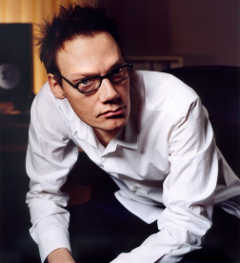 Everything was going so well at Free Thinking. But I'm afraid that this was the first disappointing event of my packed weekend. At first glance, it looked so promising: A Grammy Award-winning music producer in what was billed as a unique event to show us how we might hear things in a new way. Unfortunately, the act didn't live up to its billing. It is rather disconcerting when a speaker confesses that he has been putting the event together as he came up in the train. I couldn't clearly see Night Waves presenter Matthew Sweet's face at this point but it would have been interesting to observe.
Combine a BBC R3 production team and a stunning venue with excellent acoustics, what better than to demonstrate the topic of the talk with lots of aurally stunning sound clips? What did we get? Three woefully short, tantalising sonic bursts of what might have been: A brilliant short extract of one of William Orbit's mixes - including a snippet from Beethoven's 5th Symphony; a demonstration of the manipulation of sound by the record producer with a vivid display of how the addition of reverb will change the effect of a simple percussion beat; finally an eardrum battering comparison of a punk track on vinyl and CD, showing how sound compression really makes a difference.
Each of these aural examples lasted around 30 seconds, the rest of the talk centred on discussions of the role of the record producer, development of technology and some personal insight from Mr Orbit into what goes on during recording studio sessions. He also answered questions from the audience at the end. But in my view his efforts did not impress at all in comparison to other Free Thinking speakers
Wednesday
Debate: Sports v The Arts: Which is the greatest human achievement?
The Northern Rock Foundation Hall audience was buzzing with anticipation as the panel took the platform and one had the feeling this was going to be a match of two halves. Kicking off the debate was our excellent referee/presenter Philip Dodd and we heard a beautifully made sound montage of sports and cultural 'moments'. Initial views appeared strongly polarised with arts being high culture and sports, popular culture. I had a private bet with myself that the 'beautiful game' of football would be mentioned within the first minute of the debate - and so it was. There was much comment from Simon Pryde and Martin Kelner on the community spirit generated by sport, or more specifically football and the way in which a game can bring 40000 people 'together'. Edith Hall - a historian of ancient Greece took the opposite view, arguing that it isn't simply about numbers, arts and the community have just as valid a reach, for example with an art exhibition going around the world. Ms Hall had many valid points to make - especially her fears of the nationalist I.D. and tribal mentality generated by sport, the 'we will BEAT you mentality', but it was a pity that she felt she had to raise her voice to make them, simply giving her a rather hectoring tone which wasn't a fair reflection of her arguments. I did like her comment suggesting that sport is the opium of the masses for the 21st century.
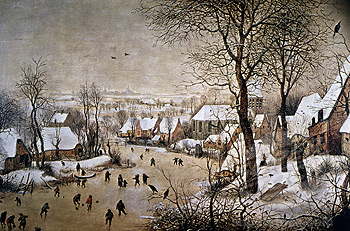 Ed Smith rather sensibly felt he was sitting on the fence in the argument and as the thoughts flew rapidly from one side of the debate to the other, often with added spin, it was apparent that the sides were equally matched. I loved the fast flowing often witty comments, the frequent spontaneous supportive applause for speakers from the audience and the passion with which everyone defended their corner. In a rare introspective moment of the debate, historian Bill Feaver spoke with touching eloquence about a painting depicting people playing ice sports in a snowy winter landscape - painted by Pieter Bruegel - back in the 16th century. It is actually one of my own personal favourite pieces of art and Mr Feaver's point really struck home how sport and art really can't be torn apart in the search for the greatest human achievement.
I can't recommend this debate highly enough; it had everything - the time went by in a flash!
Look away now if you don't want to know my impression of the final score:
Sports 3 Arts 3 so no-one ended up feeling sick as a parrot. This debate will undoubtedly make great radio, do remember to tune in to Night Waves on 5th November at 21.15.
Thursday
Free Thinker: Tom Shakespeare - Art as a Tool for Thinking
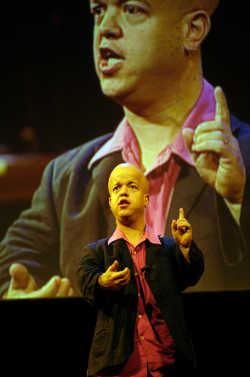 Tom Shakespeare is one of these people who leave you in awe at the brilliance of the human mind. His lecture for Free Thinking was no exception and I have to confess that at the bottom of my notes I wrote: 'must Listen Again to really understand this.' At times I was carefully pondering the deeper implications of one comment, only to quickly realise he'd moved onto something completely different and equally intellectually demanding. This was high velocity thinking!
Mr Shakespeare sought to challenge our view of what art is for and to push his argument that with the world currently changing so fast, art can be used to help us approach scientific problems. He spoke of the need to turn to visual art, to relate it back to our lives, rather than the domination of the spoken word. He stressed how the average person doesn't really relate to statistics so that was why one could turn to art instead to make a point. I was impressed with Mr Shakespeare's great use of visual imagery in a radio medium - he paints with words - but frustrated, as his always cogent examples flew by before I had time to jot down the names of the artists involved. I wanted to press a 'pause' button so I could digest his statements properly.
I was especially fascinated by one part of Mr Shakespeare's lecture where he emphasised how the arts can be used to explain and demystify disability and its effects on people. He obviously feels that art could do even more and went on to discuss the role of the artist in society and ended his lecture with a provocative quote by Einstein: 'If you want your children to be intelligent, read them fairy tales. If you want them to be more intelligent, read them more fairy tales.' The discussion with presenter Matthew Sweet was wide-ranging and full of salient points which warranted a debate of their own, I came out of this session feeling the need to totally re-evaluate my preconceived notion of the arts/science relationship. The programme will be broadcast on Night Waves during November - I can't wait to hear it..

 |11:11 UK time, Friday, 30 October 2009








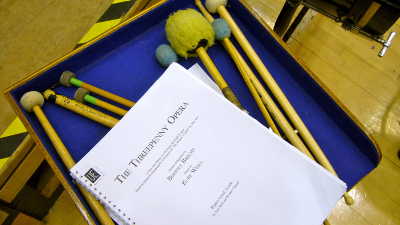 Most people can hum the tune of 'Mac the Knife', some people may even know a few of the words and may perhaps substitute 'doo-bee-doo-bee-doo' for the rest.