
All eyes on June after an 'average' May
The very warm spell which has dominated our weather in recent days has come to an end, with rain affecting much of northern England today.
It's a wet end to a month which has seen a remarkable change from extreme cold to extreme warmth.
And it's a good example of how statistics can hide big swings in the weather.
Because statistically temperatures, sunshine and rainfall for May have turned out to be around normal.
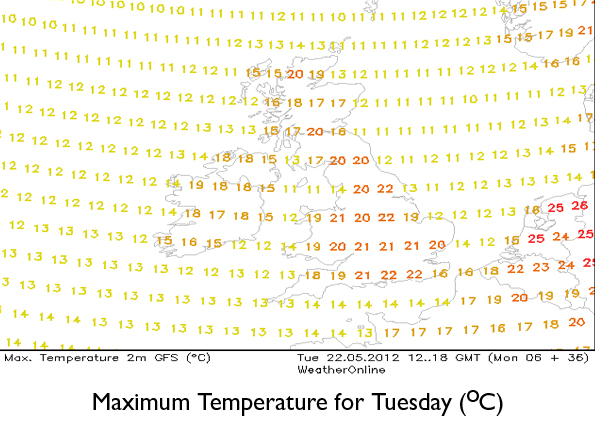
But this masks a very cold first half of May, with some sharp frosts and heavy rain which brought an end to drought restrictions in parts of Yorkshire; and a very warm second half of May which saw temperatures of 27C (81F) across the region.
Weather Action's widely publicised forecast of the coldest, or near coldest May in 100 years in parts of the country, which appeared in The Express, has turned out in the end to be wide of the mark - despite what was a very cold first half - because of the heat which developed in the last 10 days.
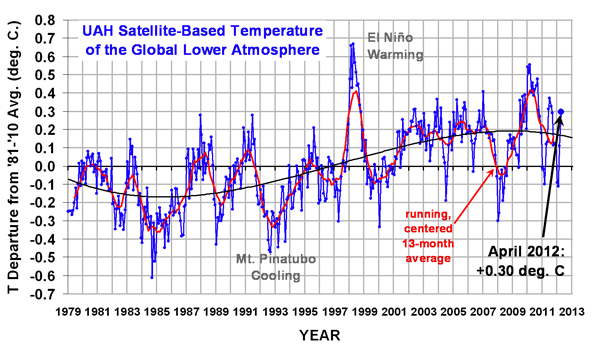
The switch from one extreme to another in May follows March which was one of the warmest, driest and sunniest on record, and April, which was the wettest on record, continuing the very polarised weather we have been experiencing.
All eyes are now on June - and there's a strong indication that the first half of the month will be very unsettled, with low pressure bringing showers or longer spells of rain, some of which may be heavy at times.
More specifically for the Jubilee weekend northern Britain should have mostly dry weather, but parts of southern Britain could experience a washout on Sunday, with some of the rain continuing into Bank Holiday Monday.
Just how far north the rain gets on Sunday is very uncertain at the moment, but there is a risk of it pushing as far north as the Humber before it returns south later in the day - although the precise northern extent is open to considerable doubt at the moment.
Follow me on twitter @Hudsonweather
 Hello, I’m Paul Hudson, weather presenter and climate correspondent for BBC Look North in Yorkshire and Lincolnshire. I've been interested in the weather and climate for as long as I can remember, and worked as a forecaster with the Met Office for more than ten years locally and at the international unit before joining the BBC in October 2007. Here I divide my time between forecasting and reporting on stories about climate change and its implications for people's everyday lives.