A taste of radio: First impressions of a TV producer

Charles Miller
edits this blog. Twitter: @chblm
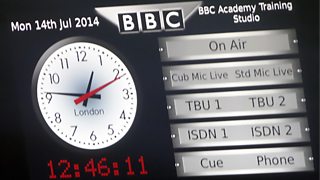
BBC Academy radio training studio
Very droll. As a TV producer for many years, I've struggled to gather as many decent shots as I can to make a programme, not to mention carting around heavy, hot, fragile lights just to show a person talking in a room. So I’m probably over-sensitive to the idea, even in jest, that no pictures are somehow an improvement.
I’ve been thinking about pictures on radio because I’ve been on a three-day course to learn about radio production. We had to create a radio feature using whatever storytelling techniques we could think of: recorded sounds, music, real conversations rather than formal interviews, readings, archive, sound effects, whatever.
And though I hate to admit it, I’m now somewhat more convinced about the truth of the original joke. Or at least I now accept that using sound to suggest a place or activity that a listener can visualise is an important part of making something work on radio.
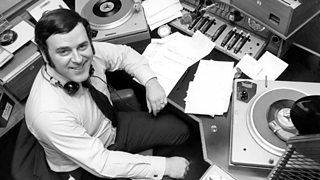
Making radio look easy: Terry Wogan,1969
1. The recording kit must be simple when you only have to worry about sound.
Well, up to a point. Except that the Nagra recorders we used were annoyingly heavy and enclosed in Velcro and plastic cases through which you have to plug XLR leads and headphones. They record on cards, which I would have thought would mean they’d be much lighter than the old recorders that had to include moving machinery. But no: the Nagra was still heavy and the leads invariably got tangled up in its strap, or tried to trip me up just as I wanted to look professional when approaching irritable members of the public for a vox pop.
2. Radio editing software must handle sound really well compared to video editors.
We used something called Startrack, which comes within the bigger Dira system, to keep and transmit clips. I can’t really complain about it on the basis of two days use, except to say that its interface is not pretty and it apparently can’t ‘scrub’ audio (let you hear it as you adjust backwards or forwards slowly to find the exact start of a word, for instance). And that one of our course participants lost all of her editing and her rushes through some kind of back-up failure. She just had to imagine how her final piece would have turned out (though to be fair I couldn’t say for sure that this was Startrack’s fault, rather than some other part of the unfathomable system).
3. There can’t be much to do in a radio studio compared to the complexity of TV
We had a chance to try being studio managers behind the desk of a training studio while our colleagues played the roles of presenter and newsreader. Even with everything organised for us (such as having the clips set up in the right order and only requiring the pressing of a spacebar to start), the hand, eye and foot coordination (foot to activate the presenter’s cue light) felt a bit like playing one of those old cinema organs. If you could just about keep up with the script, the clips, the cues, the timing and the faders, you had to wonder what part of your brain would be left to think about the content of the programme - or, God forbid, how you might change anything if something unexpected happened.
I suppose it’s like driving a car: you can only start wondering about the route once keeping it on the road has become almost subconscious.
But it was fun. I’m starting to think of subjects I could make radio programmes about. And I have a new respect for the apparent smoothness of 24-hour radio, now I know it’s held together with Velcro, unnaturally large microphones, bloody-minded machinery and people nonchalantly cueing presenters with their feet.
