BBC College of Journalism launches French, Hindi, Indonesian and Turkish sites

Najiba Kasraee
editor of the BBC Academy's language websites
The College of Journalism's 15 international language sites support the World Service.
The BBC College of Journalism has today launched four more language websites: in French, Hindi, Indonesian and Turkish.
The new sites are freely available around the world. Each covers journalistic skills, editorial values and law, and impartiality in the use of language.
They are the result of close cooperation between the College of Journalism and the BBC World Service, and have been created to support BBC journalists working in the language services. They also offer help and advice to other journalists around the world.
To enhance the content, we have created illustrations for each website to reflect the special nature of each language and culture.
French
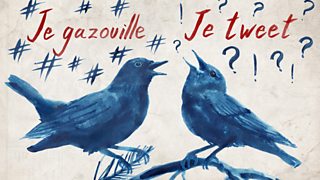
In the language category of the French site we aim to gather the wealth and experience of the BBC’s French service in a single place that can be used by everyone interested in impartial and correct language.
Below you can see an example of the linguistic dilemma of creating new words. Should you use the English word ‘tweet’ or the French equivalent ‘gazoville’? (We recommend ‘tweet’.)
Another example of the importance of accuracy in language is the French site’s glossary, a resource developed over many years by the BBC Afrique Service. We have presented it with specially designed images reflecting the French language and Africa.
Hindi
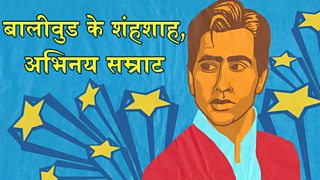
On the Hindi site we have used images to show the importance of the use of impartial language in news production. The advice is: “We must be careful with the use of words. If you call someone a superstar, someone else may have also been referred to as that, which could be confusing.” The character in the image is the famous Bollywood actor Dilip Kumar who is usually called the “Shahenshah”, or the “King of Bollywood”.
I am particularly proud of the trilingual glossary in English, Hindi and Urdu - an excellent resource for BBC journalists in India and Pakistan who would like to report for the audience across the border.
The site has been developed by the BBC Hindi and Urdu services, and we are making it available online and releasing it to the public for the first time.
Indonesian
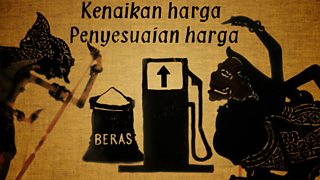
The image below illustrates an article on euphemisms. The advice is to be clear: if you say the price of sugar has been fixed, this does not explain the story clearly: did the price rise or fall?
The Indonesian site explains how the BBC selects a story, verifies and commissions it, and promotes it on different platforms.
Turkish
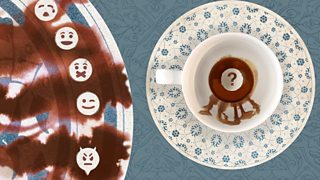
In the language section of the Turkish site you can find guidance on the impartial use of language, grammar, spelling, and the influence of foreign words and social media on the Turkish language.
The illustration below is for an article about the effect of social media on Turkish and whether emoticons can express feelings well in the writing language.
In the skills section we also have tips from experts on how to identify issues such as self-censorship. Haluk Sahin, a Turkish academic in Istanbul, explains how self-censorship is implemented and how it can be dealt with.
All of these new sites have a separate section on BBC standards. Here users can find out about key editorial values which constitute the foundation of good journalism, such as how to be accurate, impartial, independent and accountable in your reports, and which stories need to be covered in the public interest.
The latest launches bring the total number of free College of Journalism international language websites to 15, adding to: Arabic, Burmese, Chinese in Simplified form, Chinese in Traditional form, Hausa, Pashto, Persian, Russian, Swahili, Urdu and Vietnamese.
The BBC College of Journalism’s English website
Free access to College of Journalism’s international language websites
