After I left the BBC - I became a novelist
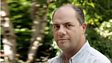
Alex Gerlis
is a novelist and a former BBC journalist. Twitter: @alex_gerlis
We launch an occasional series about post-BBC lives with a blog by novelist Alex Gerlis.
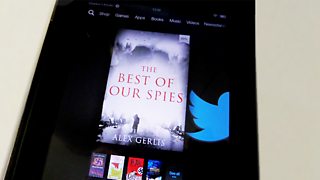
Alex was a BBC journalist for more than 25 years, mostly in television news. He left his last job, as head of training at the BBC College of Journalism, in 2011. His first novel, The Best of Our Spies, was published in December 2012. He has also written a Kindle non-fiction single about D-Day, The Miracle of Normandy, and is finishing The Swiss Spy, a prequel to his first novel.
You know someone is leaving the BBC when you receive a LinkedIn request from them. They’re now a media consultant, you learn, invariably at a consultancy known by their name followed by ‘Media’ or something similar.
I know because I did it. A few weeks before leaving the BBC, I joined LinkedIn and announced that I was now “Alex Gerlis Media”. Indeed for a while I did some media consultancy. But the truth is, in my heart I hadn’t left the BBC to be a media consultant. What I really wanted to do was to write. I am very fortunate that I am now able to do that full time. If you have that in mind too, the advice below may be of some marginal help.
In May this year there was an interesting feature on the BBC News website in which the literary agent Jonny Geller listed his top 10 tips for being a successful agent. Tip number five was to look for career writers. “I’m interested in people who are obsessed with writing, who cannot not write,” he wrote. “It's a very peculiar and distinct little group of people who will make their living as a writer.”
I ought to declare an interest here: Jonny is joint chief executive at my literary agent Curtis Brown. Notwithstanding the connection, I agree with him. I think that for a writer, particularly of fiction, the urge to write is an overwhelming one. While writing may be a vocation and certainly fulfils a creative urge, that doesn’t mean it should be approached in anything other than a professional manner. Writing should be seen as a job and not a hobby. It is not something that is nice to have on a ‘to do’ list, somewhere between running a half-marathon and finally getting round to fixing the garden fence.
Since my first novel was published I have lost count of the number of people who have approached me to say they are writing a book, or have an idea for a book, or would like to write one in the future. Very few have actually written a book. Without wanting to sound too harsh, I think there is a tendency to see writing as something that one can naturally ‘fall into’. I met someone the other day who said they had always wanted to write a novel. “The only thing is,” he said in all seriousness, “I’m hopeless at writing.” He wanted to know whether I thought that could be a problem.
So, when asked for advice by potential novelists, I invariably say to ‘just write it’. This may sound obvious, but not when you consider the plethora of advice and tips on writing that are available.
Potential writers are avid consumers of ‘how to write a novel’ books and eager readers of newspaper, magazine and online articles purporting to reveal the secret to writing. The problem to me is that too much of the advice is formulaic, and is as much about how to get published as how to write. But people lap up advice on how many words you should write a day and for how many hours; whether the plot comes before the characters or vice versa; how many sample chapters to send to an agent and how long a synopsis should be.
The secret is that there is no secret - no hidden formula which will make the successful completion of your novel a mere formality. The truth is that you should write when and how it best suits you, and in a genre you are interested in. I specialise in espionage thrillers set in World War II that are based firmly on historical fact. I approach the historical context as a work of journalism, ensuring that anything presented as fact is accurate and has at least two sources. I find that this research creates a framework which helps the natural development of the plot and characters.
But what comes first? For me, there are three keys factors to novel writing and I think they are all interlinked. The plot has to be clever and credible, and have twists and turns - but not ones that are unlikely. The characters should be interesting and have enough emotional depth to come across as authentic. And, finally, there’s the writing: make it to the point and avoid cliché (like the plague, I suppose one could say).
My personal approach is to come up with a true event from the war (one that works well in terms of locations) and then develop the plot and the characters - but in a way that involves constantly adjusting the two: how would character X behave in such a situation?
A couple of other points that may help: I cannot see the value in writing the first two or three chapters and then assuming they will be in any way representative of how the novel will turn out. The truth is that your novel should develop and need to be adjusted constantly. What started out as the opening may need to be moved or altered. Likewise, don’t worry too much about the ending: you don’t need to know the ending before you start. I find the end almost appears before you as the plot develops and the characters become people you know, and whose behaviour you can predict.
One last thought: I think that having worked for the BBC helps, especially if you were a journalist or programme-maker. First, because agents and publishers are probably more likely to at least look at a manuscript from someone with your kind of background, as they will assume that you can write. And, second, many of the skills that we learn as journalists and programme or content makers transfer into writing, such as the ability to express oneself in an entertaining and concise manner.
