What's Pashto for ‘googly’? Why Afghan cricket fans won’t be stumped for long

Emal Pasarly
is multimedia editor at the BBC Pashto Service
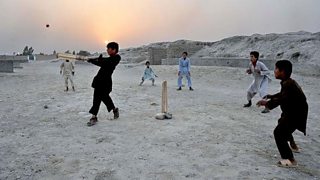
Cricket is a relatively new game for Afghans. Many people are just starting to understand its terminology and regulations. Young Afghan refugees came to learn about the sport in Pakistan, and subsequently brought the game back home.
Right from the beginning the dilemma for media organisations reporting the story in Pashto was whether to keep the terminology in English - as they do in India, Pakistan and Bangladesh - or to translate it into Pashto.
I remember well back in the 1990s, as a sports presenter in the BBC Pashto Service, having the task of translating cricket terms into Pashto. The main logic behind it was that we were broadcasting to a nation which did not speak English. My mission was to come up with translated words for ‘runs’, ‘batsman’, ‘bowler’ and much more besides.
The challenge was to choose a Pashto alternative which would not only deliver the correct meaning but reflect action in the game. Therefore runs became ‘manda’ - literally meaning running - and umpire became ‘lobsar’, meaning the overseer of the game.
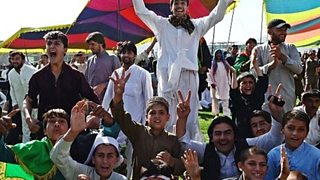
Afghans celebrate their team's victory over Kenya to reach the Cricket World Cup
During the live-streaming of a game in 2008, BBC Pashto online received more than 10,000 emails. Most of them were asking very basic questions:
What are ‘manda’? What does ‘jorawankay’ (batsman) mean? What is a ‘topachawnkay’ (bowler)? And what on earth does a ‘lobsar’ do?
As different media organisations, inside and outside Afghanistan, were all using their own Pashto translations of the English cricket terms, it became critical not only to start trying to unify the terminology but to come up with a very basic explanation of how the game is played.
One way was to answer these emails while broadcasting live coverage of the game. The second step was to create a sport dictionary which was published on the College of Journalism’s Pashto site.
Following consultation with colleagues and linguists, we in the BBC have started an ‘Ask the audience’ survey. We’ve also been contacting other major media organisations, inside and outside Afghanistan, in order to play our part in this struggle for clarity.
The College of Journalism’s Pashto site, soon to be relaunched in a new format, will promote the updated version of our Pashto sport dictionary, and that will be available to everyone around the world for free.
We hope all of this will create a unified Pashto language style for the game of cricket - at which Afghanistan is doing rather well.
And ‘googly’? Like ‘cricket’ itself, it’s one of those terms that needs no translation.
