Five lessons we’ve learnt from online news video in 2015

David Hayward
is a video consultant. Twitter: @david_hbm

Reporter Paul Ronzheimer’s Periscope footage of fleeing refugees was edited into a 16-minute film by German newspaper Bild
It has been quite a year for online news video. There have been enormous steps forward in technology, storytelling, the use of platforms and most importantly – how to make it pay.
But it’s also clear there is a big divide in who is getting it right and who is getting it very wrong. As I’ve written before, the new kids on the block and the digital native news organisations are streaking ahead.
A number of the more imaginative and creative broadcasters are making valiant efforts to keep pace – and in some cases are leading the charge in developing new technology and telling excellent stories with it.
The problems still lay with the publishers, legacy press and traditional newspaper groups. I sense an air of platitude, claiming that ‘yes they need video’, but then failing to grasp what really works and what doesn’t.
These are the key areas where I have seen movement in the past 12 months - and the lessons that can be learnt from them doing it well - in no particular order:
The numbers three and 8,000,000,000
Two numbers stand out. Three and 8 billion - far apart, but intrinsically linked. You only have three seconds to grab the attention of viewers, which becomes incredibly important when you realise there are 8 billion videos viewed on Facebook every day. (Yes, I know there’s much discussion about autoplay and the validity of this figure – but it’s still very impressive.)
The mobile newsroom
The mobile has become an ever more powerful tool. You can now shoot 4k video on mobiles at 75 Mbps with the FiLMiC Pro app. To put that into context, the top-end broadcast TV requirement for Europe is 50 Mbps.
We’ve known for some time that a mobile phone with the right sound kit now also proves to be a robust live platform. The coverage of the refugee crisis in the past few months has seen Periscope come of age (pictured above) as a newsgathering and live broadcasting tool.
Re-versioning
News organisations now understand the different platforms available to them – and who is watching them. Video is no longer about producing one film and clipping it into different durations and aspect ratios to suit different online platforms - YouTube, Facebook, Twitter and Instagram, WhatsApp and Snapchat. Each platform requires a different way of telling the story.

BBC Panorama’s excellent documentation of the refugee crisis on Snapchat (above) is a good example that raises the uncomfortable truth: sometimes it’s OK to film in portrait rather than landscape. Oh how we have moved on!
360 and virtual reality
Clearly this area is still far from mainstream – but for how long? There is a great deal of work going into virtual reality and 360 filming. BBC News Labs and the New York Times are experimenting widely. Could this be the next big thing?
How to make it pay
Publishers are quite rightly terrified of ad blocking. Essentially the traditional online ad is dead and should be consigned to the great digital graveyard in the sky.
Native advertising is the way forward and it can pay: create content that people want to share; tell stories that are engaging and draw people in. Make native advertising content part of your strategy and there is a bright future.
Philip Trippenbach from Edelman has some wise words here: “There’s only one answer: don’t interrupt the content they’re consuming with ads. Create the content they want to consume.”
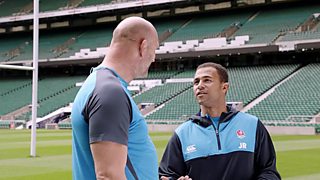
There are several examples of success in this field. Samsung must have been delighted, at the number of times its ads with Jack Whitehall, Martin Johnson and Lawrence Dallaglio et al, were shared during the Rugby World Cup 2015 (Dallaglio and Jason Robinson are pictured below in a kicking masterclass video from the campaign). And BuzzFeed has been doing interesting work with Costa Coffee in the run up to Christmas. There’s much to learn.
Add to this Facebook Instant Articles (albeit with a few teething problems) and the revenues from other social media platforms and you do have a real chance of making money.
But to make it happen, the legacy newspapers and publishers need to start again. It’s the perennial problem of turning the oil tanker - but they need to do it and at the moment it’s not being done quickly or comprehensively enough. There is still too much reliance on user-generated content (UGC) and agency footage. They are not taking advantage of tech developments – and not producing the right video of the right story for the right platform.
There is a chink of light in the regional press: Trinity Mirror is advertising for 12 video editors and producers. Can they deliver the radical overhaul that is needed?
Our other blogs by David Hayward
Virtual reality, 360 video and the future of immersive journalism

